
- 2020 GDP Collapse: The pandemic triggered the sharpest single-year GDP collapse in modern history.
- Silicon Valley Bank Collapse (2023): Depositors pulled billions in hours, leading to the bank's implosion in roughly a day.
- Shadow Banking Sector: Now accounts for nearly half of all global financial assets, posing systemic risks.
Experts would likely conclude that traditional economic models are insufficient for modern financial crises, advocating for strategic adaptability and proactive crisis preparation inspired by Sun Tzu's principles.
Sun Tzu in the Central Bank: Ancient Strategy for a New Financial War
CAMBRIDGE, MA – June 03, 2026 – The era of predictable economics is over. For two decades, a fragile stability has been shattered by a relentless succession of shocks: the 2008 global financial crisis, the 2020 pandemic that triggered the sharpest single-year GDP collapse in modern history, and the subsequent inflationary surge that caught the world’s monetary authorities flat-footed. In this new landscape of extreme uncertainty, are the old playbooks obsolete?
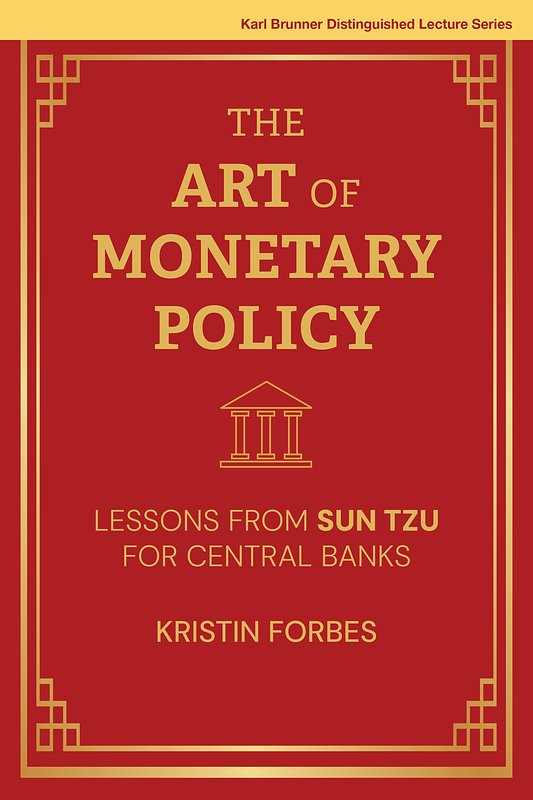
According to Kristin Forbes, a distinguished professor at the MIT Sloan School of Management and a former member of the Bank of England's Monetary Policy Committee, the answer is a resounding yes. In her provocative new book, The Art of Monetary Policy: Lessons from Sun Tzu for Central Banks, Forbes argues that the rigid formulas and historical models that once guided policymakers are no longer sufficient. Instead, she turns to the 2,500-year-old wisdom of Chinese general Sun Tzu, proposing that the art of war offers a more fitting strategic framework for navigating the financial battlefields of the 21st century.
“In the last two decades, we’ve completely reshaped how central banks work and created an array of new tools,” Forbes explained. “Most of that has happened during acute crises, with decisions made under pressure in ways similar to operating in the fog of war.” It’s this “fog”—the radical uncertainty and unprecedented speed of modern crises—that demands a fundamental shift from science to art, from rigid calculation to strategic adaptation.
The New Speed of Financial Warfare
Historically, bank runs were slow-motion disasters, unfolding over weeks as panicked depositors formed physical queues outside branch doors. That timeline offered regulators a window, however narrow, to intervene. That window has now slammed shut. The 2023 collapse of Silicon Valley Bank serves as the definitive case study for this new reality. Fueled by frantic messages on social media and private group chats, depositors pulled billions in a matter of hours using digital banking apps. The entire institution imploded in roughly a day.
“That’s not enough time to come up with a response plan from scratch,” Forbes noted, highlighting a critical vulnerability in the modern financial system. This digital contagion means that confidence, the bedrock of banking, can evaporate almost instantaneously. Central banks, traditionally deliberative bodies, are now forced to operate at the speed of a tweet.
To counter this, Forbes champions a concept familiar to military strategists: wargaming. She urges central banks to move beyond standard economic forecasts and actively run coordinated, real-time crisis simulations. These exercises would force policymakers to map out the detailed mechanics of their response well in advance, answering critical questions before a crisis hits: Which specific assets would be purchased in an emergency? How would liquidity facilities be structured and priced? And, crucially, how would these emergency measures be unwound once stability returns? This proactive preparation, a core tenet of Sun Tzu's philosophy, is essential for surviving a fight that can be lost before the first official meeting is even convened.
Sun Tzu's Six Principles for Central Bankers
At the heart of Forbes's thesis is the conviction that victory in this new environment depends not on a single, perfect model, but on comprehensive preparation and tactical flexibility. Adapting Sun Tzu’s strategic concepts, she outlines six key principles for modern central banking:
- Plan for a range of scenarios: Develop detailed contingency plans for various crises, rather than relying on a single baseline forecast.
- Prepare for external shocks: Acknowledge that massive global disruptions—from pandemics to geopolitical conflicts—are now a frequent and unavoidable feature of the economic landscape.
- Establish resilience: Build a strong defensive position by fortifying the financial system before a crisis, ensuring banks and other institutions can withstand initial blows.
- Choose the right tools for each crisis: Maintain interest rate adjustments as the primary monetary weapon, treating unconventional options like quantitative easing as specialized, secondary tools for specific circumstances.
- Maintain flexibility: Cultivate the operational agility to pivot tactics rapidly as economic conditions and the nature of the crisis evolve.
- Evaluate trade-offs: Consciously weigh the long-term consequences and systemic risks of any emergency action, avoiding short-term fixes that create larger future problems.
This framework represents a profound shift. It moves away from the idea that a central bank can precisely steer the economy and towards the more realistic goal of building a system robust enough to absorb inevitable shocks. “Today, policymakers operate under extreme uncertainty," Forbes said. "We have models that worked in the past, but with each new shock and changes in the global economy, you have to keep options open.”
The Hidden Costs of 'Free Lunches'
Forbes’s call for a re-evaluation of trade-offs is particularly pointed when it comes to the unconventional tools deployed over the last 15 years. Quantitative Easing (QE), the large-scale purchase of government bonds and other assets, was instrumental in stabilizing markets during the 2008 and 2020 crises. However, its prolonged use created what Forbes calls heavy “backend costs.”
Initially deployed for financial stability, QE's mission crept into achieving broader monetary policy goals, often viewed as a “free lunch” with little downside. The reality, as we now see, was far more complex. The massive expansion of central bank balance sheets constrained their ability to raise interest rates swiftly when inflation returned, contributing to the recent surge. It has also led to substantial operating losses for some central banks as the value of their bond holdings fell, creating political headaches in an era of high government debt.
Compounding the risk is the migration of financial activity from highly regulated banks to the less-supervised world of non-bank financial institutions (NBFIs), or the “shadow banking” system. This sector, which includes hedge funds, pension funds, and private equity, now accounts for nearly half of all global financial assets. While individually managed, these institutions are highly interconnected and prone to synchronized asset sell-offs during a panic, as seen in the March 2020 “dash for cash.” Forbes warns that failing to “wargame” how shocks ripple through this opaque sector is a critical oversight.
Forbes also takes aim at the fixation on hyper-precise 2.0% inflation targets, arguing it sets central banks up for failure by forcing them to react to short-term global noise outside their control. She advocates for more pragmatic approaches, such as targeting core inflation over the medium term or adopting a tight band of acceptable inflation, which would allow policymakers to focus on underlying domestic pressures without overreacting to temporary global spikes.
Forging a More Resilient Framework
Moving forward, Forbes argues for a framework that is more proactive, more globally aware, and more disciplined. Interest rates must be restored as the primary, front-line defense against economic fluctuations. Unconventional tools, while necessary in a crisis, should be treated like specialized military equipment: designed from the start with clear objectives and, most importantly, pre-planned exit strategies to avoid long-term structural distortions.
This is not a call to abandon models, but to recognize their limits. It is a demand for humility and preparedness in the face of a complex world where shocks are the new normal. The lessons of the past two decades, filtered through the strategic lens of an ancient general, offer a powerful guide for safeguarding our economic future.
"Ultimately, the goal is to be ready for whatever surprises come next—even though the response will be more of an art than a science," said Forbes. "By studying the larger strategic lessons of the past two decades, central banks can build the resilience needed to protect our economies from the next inevitable crisis."