
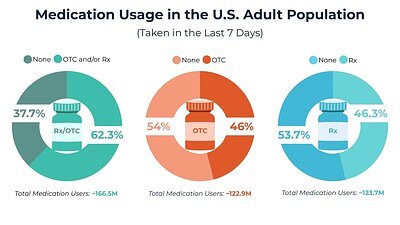
- 46% of U.S. adults use at least one OTC product weekly
- 166.5 million American adults use some form of medication in any given week
- Top 4 most-used medicines are OTC pain relievers: acetaminophen (29.4%), ibuprofen (22.3%), aspirin (15.8%), and naproxen (6.9%)
Experts conclude that OTC medications are a foundational pillar of American healthcare, with consumers actively managing their health through a combination of prescription and non-prescription drugs, highlighting the need for informed self-care and expert guidance.
Study: OTC Drugs Are a Pillar of American Daily Healthcare
WASHINGTON, D.C. – February 18, 2026 – For millions of Americans, managing health is a daily, and often private, routine. A new landmark study now pulls back the curtain on this reality, revealing that over-the-counter (OTC) medications are not just a supplement but a foundational pillar of how the nation stays well. The research, published in the peer-reviewed JAMA Network Open, found that nearly two-thirds of U.S. adults use at least one medication weekly, with an astonishing 46% reaching for an OTC product.
These findings paint the most detailed picture to date of America’s medicine cabinets, suggesting a quiet revolution in self-care is well underway. The study, titled Prevalence of Over-the-Counter and Prescription Medication Use in the US, surveyed 21,000 adults and provides a powerful counter-narrative to the idea that healthcare only happens in a doctor's office. It shows a populace actively engaged in managing its own health, often blending clinician-prescribed treatments with readily accessible OTC remedies.
A New Portrait of Medication Use
Conducted by researchers including principal investigator Jody Green, Ph.D., the study intentionally broke from traditional methods. Instead of tracking prescriptions filled or products sold—metrics that don't confirm if a medicine was actually taken—this research captured a seven-day snapshot of self-reported use. This provides a far more intimate and accurate view of real-world behavior.
"Usually, medication evidence comes from prescriptions dispensed by pharmacies or products sold," said Dr. Green, "but in this study we focused on what people actually used in the past seven days, which provides a clearer picture of how American adults manage their health conditions in daily life."
The results were striking. In any given week, approximately 166.5 million American adults are using some form of medication. The prevalence of using an OTC product (46.0%) was nearly identical to that of a prescription drug (46.3%), a statistic that underscores the complementary roles these medicines play. Americans are not simply choosing one over the other; they are creating a personalized healthcare continuum, using prescription drugs for chronic or serious conditions while relying on OTCs for the aches, pains, allergies, and fevers of everyday life.
From Prescription Pad to Pantry Shelf
A closer look at the most-used medications reveals the profound dominance of OTC products. The top four most-reported medicines were all common, non-prescription pain relievers: acetaminophen (used by 29.4% of respondents), ibuprofen (22.3%), aspirin (15.8%), and naproxen (6.9%). In fact, six of the top ten most-used medicines are available over the counter, a list that also includes the antihistamine diphenhydramine and the heartburn remedy omeprazole.
This list tells a story of both consumer trust and smart regulatory evolution. Many of these now-commonplace OTCs were once available only by prescription. Their journey to the open shelves of pharmacies and supermarkets is the result of the FDA's Rx-to-OTC switch process, which allows drugs with a proven track record of safety and efficacy to become more accessible.
"It's also notable that several of the most commonly used OTCs on the list were once only available by prescription," noted Scott Melville, President and CEO of the Consumer Healthcare Products Association (CHPA), the trade group that represents OTC manufacturers. "Their appearance on the list among the most commonly-used medicines is a great example of how smart regulatory changes can expand consumer access to safe and effective treatments for better self-care."
The enduring popularity of drugs like acetaminophen and ibuprofen, whose top rankings have remained unchanged for roughly 25 years, highlights the deep-seated reliance on these products for managing common ailments.
The Policy Prescription for a Self-Care Nation
The study's implications extend far beyond the home and into the halls of Congress and regulatory agencies. As policymakers grapple with the twin challenges of healthcare affordability and accessibility, the findings present a compelling case for leaning into the power of self-care.
"As policymakers consider new approaches to improve the accessibility and affordability of healthcare, it's important to recognize the vital role OTC medicines already play," Melville stated in the press release. He emphasized that supporting this role through "sound policy, regulatory rigor, and public education remains a CHPA priority."
Health economists have long argued that enabling consumers to safely self-treat minor conditions can generate significant savings by reducing unnecessary doctor's appointments and emergency room visits. This study provides real-world data to bolster that argument, demonstrating that consumers are already voting with their wallets and their actions. The challenge for policymakers is to create an environment that encourages responsible self-care while ensuring safety and efficacy, potentially by streamlining the Rx-to-OTC switch process for appropriate candidates.
The Empowered Patient and the Path Forward
Ultimately, this research confirms a major shift in the patient-provider dynamic. Americans are more empowered than ever to take an active role in their own health, a trend driven by increased access to information and a desire for convenience. OTC medications are a primary tool in this empowerment, offering immediate relief and a sense of control.
However, this empowerment comes with a crucial caveat: the need for education and guidance. With Americans frequently using a combination of prescription and non-prescription drugs, the risk of adverse interactions, particularly among older adults managing multiple chronic conditions, is a real concern. Independent medical experts stress that while self-care is beneficial, it must be informed care.
This highlights the expanding and vital role of pharmacists as the most accessible healthcare providers in most communities. They are uniquely positioned to counsel patients on the safe use of OTC products, check for potential drug interactions, and help individuals navigate the increasingly complex world of medication. The rise of the empowered patient does not diminish the need for expert guidance; it makes it more important than ever, ensuring that the path of self-care is both safe and effective.