
- 29,530 mangrove trees planted by 29,000 students in the Sundarbans
- 100 Ways to Earn ₹100 to Plant a Tree challenge engaged students in fundraising through service and entrepreneurship
- Mangroves sequester up to 10 times more CO2 than terrestrial forests, protecting against climate change
Experts agree that this initiative exemplifies a transformative educational model, combining hands-on environmental action with financial literacy and global citizenship, setting a scalable blueprint for youth-led conservation efforts.
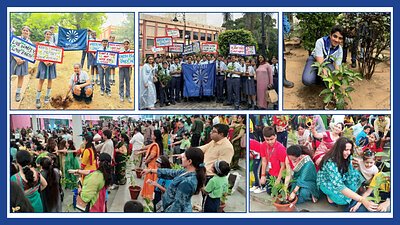
Students Plant a Forest: How 29,000 Youth are Saving the Sundarbans
MUMBAI, India – April 23, 2026 – In a powerful display of youth-led environmental action, nearly 30,000 students from the Ryan Group of Schools have successfully funded the planting of 29,530 mangrove trees in the Sundarbans, the world's largest mangrove ecosystem and a critical habitat for the endangered Bengal tiger. The initiative, a collaboration with the global education platform Upschool.co and environmental organization Grow-Trees, transforms a conservation project into a nationwide lesson in responsibility, financial literacy, and global citizenship.
This monumental effort moves education far beyond the confines of textbooks and classrooms, demonstrating a new paradigm where learning is directly connected to tangible, real-world impact.
Redefining the Classroom
At the heart of the project was a unique challenge titled "100 Ways to Earn ₹100 to Plant a Tree." Instead of a traditional donation drive, the program empowered each of the 29,530 participating students to take complete ownership of their contribution. They engaged in acts of service, sold handmade goods, organized community events, and developed creative micro-enterprises to raise the necessary funds. This approach transformed the tree-planting initiative into a profound exercise in project-based learning.
Students didn't just learn about environmental issues; they actively devised and executed solutions. The process instilled valuable lessons in financial planning, entrepreneurship, and the power of individual effort. It was a practical application of skills that often remain theoretical in a conventional curriculum. The vision for this innovative educational model was driven by Dr. Snehal Pinto, Director of Ryan Group, and Gavin McCormack, Co-founder of Upschool.co.
"This collaboration reflects a growing shift in education – where learning is not confined to theory but is deeply connected to meaningful action," said Dr. Snehal Pinto. "By combining academic learning with global responsibility, Ryan Group of Schools and Upschool are setting a compelling example for the future."
This hands-on approach fosters a sense of agency that experts believe is crucial for developing the next generation of leaders. When students see a direct line from their hard work—be it selling homemade lemonade or providing a community service—to a newly planted tree in a vital ecosystem hundreds of miles away, the lesson becomes deeply personal and unforgettable.
A Lifeline for the Sundarbans
The impact of these 29,530 mangroves extends far beyond their number. Planted in the ecologically fragile Sundarbans, a UNESCO World Heritage Site, these trees serve as a critical line of defense for both wildlife and human communities. Mangrove forests are one of nature's most effective barriers against climate change, acting as powerful carbon sinks that sequester vast amounts of CO2 from the atmosphere—by some estimates, up to ten times more than terrestrial forests.
Their dense, interlocking root systems stabilize coastlines, preventing erosion and absorbing the impact of storm surges and cyclones, a frequent and intensifying threat in the Bay of Bengal. For the millions of people living in the region, this natural shield is a non-negotiable part of their safety and resilience. Furthermore, the mangroves act as natural filters, purifying water and serving as essential nursery grounds for countless species of fish and crustaceans that support local livelihoods.
The initiative, conducted under the banner of Grow-Trees' "Trees for Tigers®" project, directly addresses the existential threat to the Sundarbans' most famous resident: the Royal Bengal Tiger. This unique population is the only one in the world adapted to living in a mangrove environment. However, their habitat is shrinking due to rising sea levels and human encroachment. By restoring and expanding the mangrove cover, the students' efforts help secure the territory and prey base necessary for the tigers' survival, potentially reducing human-wildlife conflict.
The Power of a Collaborative Blueprint
The project's success offers a powerful blueprint for large-scale social and environmental impact, built on a strategic three-way partnership. The Ryan Group of Schools, with its extensive network of over 150 institutions and a 50-year legacy, provided the critical mass of motivated students and the institutional framework to deploy the program.
Upschool.co, the global ed-tech platform, supplied the pedagogical innovation. Its model for purposeful, project-based education gave structure to the students' fundraising efforts, ensuring the initiative was as much about learning as it was about planting. This educational layer elevated the project from a simple charity activity to a transformative developmental experience.
Completing the trifecta was Grow-Trees, the on-the-ground environmental organization with deep expertise in reforestation. Through its established "Trees for Tigers®" program, Grow-Trees ensured that the funds raised were translated into effective, scientifically-sound planting operations. Their involvement guaranteed that the right species were planted in the right locations, managed by local communities to ensure long-term survival and sustainability. This synergy—combining educational reach, pedagogical expertise, and environmental implementation—created a model that is both scalable and profoundly effective.
A Generation in Action
This initiative does not exist in a vacuum. It is a powerful example of a growing global movement where young people are moving from awareness to action on the world's most pressing challenges. From climate strikes to local conservation projects, youth are increasingly demanding and creating change.
The "Trees for Tigers®" project stands out for its constructive, hands-on approach. It has shown nearly 30,000 young people that their individual choices and actions, when multiplied, can create a forest, protect a species, and fortify a community against environmental threats.
Each of the 29,530 mangroves planted in the Sundarbans is more than just a tree; it is a symbol of a student's effort, a lesson in responsibility, and a seed of hope. In fostering this connection between action and outcome, the initiative has cultivated something far more enduring than a forest: it has nurtured a generation of conscious, capable, and empowered citizens ready to build a more sustainable world.