
- $1.7 billion: The global orthopedic surgical robots market in 2024, projected to grow to $45 billion by 2032. - 2 million procedures: Performed across 46 countries using Stryker's Mako platform. - Handheld innovation: Mako RPS designed for sub-millimeter precision, targeting Ambulatory Surgery Centers (ASCs) and outpatient settings.
Experts view Stryker's Mako RPS as a strategic innovation that lowers barriers to robotic-assisted surgery adoption, potentially reshaping the orthopedic market by offering precision in a more accessible handheld format.
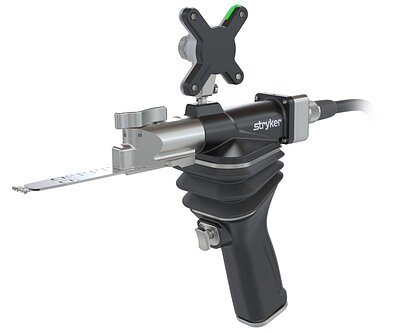
Stryker Unveils Handheld Robot to Expand Surgical Precision
PORTAGE, MI – February 09, 2026 – Medical technology giant Stryker today announced a significant expansion of its Mako robotics franchise with the limited market release of the Mako RPS (Robotic Power System) for Total Knee procedures. The new device is an intuitive, handheld robotic system designed to merge the precision of robotics with the familiar feel of a manual power tool, a move aimed at capturing a new segment of the orthopaedic surgery market.
This launch marks a strategic diversification for Stryker's highly successful Mako platform. Until now, Mako has been synonymous with its Mako SmartRobotics™, a robotic-arm assisted platform. The introduction of Mako RPS creates a second pillar, Mako Handheld Robotics, signaling the company's intent to make robotic technology more accessible to a broader range of surgeons and healthcare facilities.
"The Mako brand represents our relentless commitment to advancing orthopaedic patient outcomes through robotics leadership," said Mike Carlin, president of Stryker's Ortho Tech division, in a statement. "With nearly 20 years of experience in orthopaedic robotics and over 2 million procedures performed across 46 countries globally, Mako has established robotics as a standard of care, and we are thrilled to add Mako RPS to the Mako family."
A New Tool in the Surgeon's Hand
The Mako RPS is engineered to appeal directly to surgeons who are interested in the benefits of robotic technology but may be hesitant to adopt larger, robotic-arm systems due to their steep learning curve, operating room footprint, or departure from traditional surgical techniques. By mimicking the form and function of a conventional power tool, Stryker aims to lower the barrier to entry.
At its core, the system features a robotically enabled saw equipped with Stryker's patented active adjustment technology. This innovative feature allows the device to respond to a surgeon's hand movements in real-time, providing haptic guidance that keeps the saw blade precisely aligned with a pre-operative digital plan. This allows for the removal of bone without the need for traditional cutting blocks, which are physical guides placed on the bone. The result is a hybrid approach: the surgeon maintains tactile control and leads the procedure, while the robot provides a digital safety net to ensure sub-millimeter accuracy.
This design is particularly appealing for Ambulatory Surgery Centers (ASCs) and outpatient settings, which are a rapidly growing segment of the healthcare landscape. These facilities often have constraints on space and capital that can make acquiring a large robotic-arm system challenging. A smaller, more integrated handheld system like the Mako RPS presents a more viable path to adopting advanced surgical technology.
Reshaping the Robotics Battleground
Stryker's move into handheld robotics is not just an innovation; it's a calculated strategic play in a fiercely competitive market. The global orthopedic surgical robots market was valued at over $1.7 billion in 2024 and is projected to grow exponentially, with some estimates predicting it could exceed $45 billion by 2032. Stryker has long been a leader, but the handheld segment presents a new front in the battle for market share.
The most direct competitor for the Mako RPS is Smith & Nephew's CORI Surgical System, a handheld robotics platform launched in 2020. Like the Mako RPS, CORI is portable and targeted at ASCs, offering image-agnostic mapping and robotic guidance. Stryker's entry validates the handheld approach and intensifies competition, giving hospitals and surgeons more options but also forcing a clearer differentiation on features, workflow integration, and implant compatibility.
For Stryker, the Mako platform has historically served as a powerful "Trojan horse." The use of a Mako robot often requires the use of Stryker's proprietary implants. The Mako RPS continues this successful strategy, as it is designed for compatibility with the company's widely used Triathlon® Total Knee System. By providing a new, more accessible robotic pathway, Stryker can drive further adoption of its high-margin knee implants, solidifying its ecosystem and creating a significant competitive moat.
The Patient Impact: Precision Meets Familiarity
For the millions of patients who undergo total knee replacement surgery each year, the primary questions are about safety, recovery, and long-term outcomes. While extensive clinical data for the newly released Mako RPS is still forthcoming, the established track record of the broader Mako platform provides a strong indication of the potential benefits.
Robotic-assisted surgery, in general, has been shown to improve the accuracy of implant placement and alignment. Proper alignment is critical for the function and longevity of a knee implant, potentially reducing the risk of pain, instability, and the need for future revision surgery. Studies on Mako's robotic-arm systems have suggested benefits such as reduced pain, shorter hospital stays, and quicker recovery times due to the precision of the bone cuts and reduced damage to surrounding soft tissues.
The Mako RPS aims to deliver this same level of precision in a new format. By combining intraoperative planning with active robotic guidance, the system helps surgeons execute their surgical plan with a high degree of accuracy. For patients, this could translate into a more predictable surgical outcome and a knee that feels more natural and functions better for years to come.
Strategy and Adoption: Lowering the Barrier to Entry
Stryker's dual-platform strategy—offering both robotic-arm and handheld systems—is a sophisticated approach to market expansion. It acknowledges that a one-size-fits-all solution does not work for every surgeon or hospital. While the Mako SmartRobotics arm will likely remain the choice for institutions seeking a comprehensive, multi-application platform, the Mako RPS is poised to capture a different user.
The system is designed to integrate seamlessly into existing surgical workflows, working in concert with Stryker's Q Guidance System. This focus on ease of use and minimal disruption is intended to shorten the learning curve and accelerate adoption. By addressing the key barriers of cost, complexity, and workflow disruption, Stryker is effectively democratizing robotic technology.
As the limited market release progresses and the system is showcased at major industry events like the upcoming American Academy of Orthopaedic Surgeons (AAOS) 2026 Annual Meeting, the initial feedback from the surgical community will be critical. If the Mako RPS proves to be as intuitive and effective as designed, it could significantly accelerate the shift toward robotics as the undisputed standard of care for total knee replacement surgery across all types of healthcare facilities.
Topics & Related
Machine Learning
Related Company Pulse