
- 75% of test-drivers placed immediate orders after experiencing the ev¹ during global roadshows.
- 1,000 units per month production target at full capacity in Singapore's Jurong Innovation District.
- Q2 2026 projected for first customer deliveries, described as 'ambitious but not absurd' by analysts.
Experts view Strutt's ev¹ as a groundbreaking innovation in personal mobility, but caution that its long-term success hinges on flawless execution in production scaling, supply chain management, and regulatory compliance.
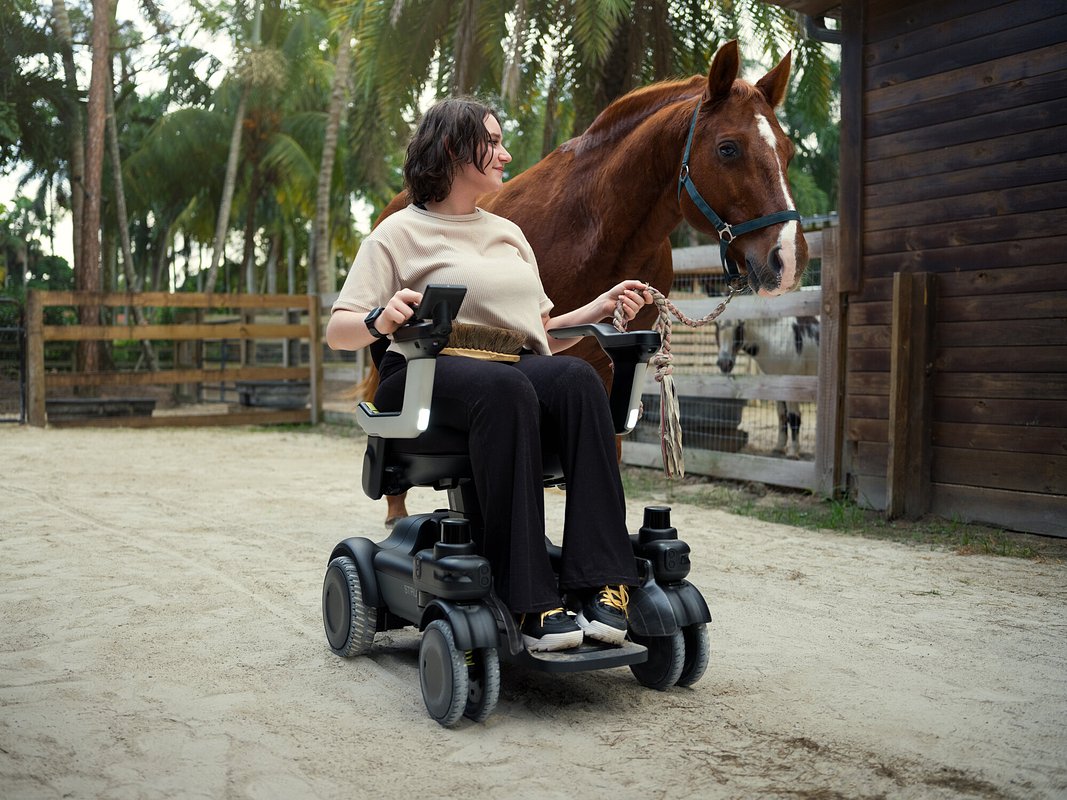
Strutt's Urban Gambit: Can It Deliver on Sky-High ev¹ Demand?
SINGAPORE – February 20, 2026 – A surge of global demand has propelled Singaporean robotics firm Strutt Inc. into the spotlight, as pre-orders for its flagship ev¹, dubbed the world's first "Smart Everyday Vehicle," have outstripped all initial projections within a month of launch. The company, already decorated with a Red Dot: Luminary and a CES Innovation Award, now faces the formidable challenge of converting hype into hardware and satisfying a customer base that has emerged faster and more enthusiastically than anticipated.
The immediate success signals a significant, previously untapped appetite in the personal mobility market. According to the company, the response was so strong that an astonishing 75% of participants in its global roadshow test-drives placed an order immediately after their experience. "The velocity of these pre-orders confirms that we've struck a chord with a community that has been underserved by traditional mobility options for far too long," stated Tony Hong, Founder and CEO of Strutt.
This overwhelming validation has prompted Strutt to accelerate its production timeline, a move that is both a testament to its confidence and a high-stakes gamble in a notoriously complex industry.
A New Category of Vehicle
What sets the Strutt ev¹ apart is its ambition to define an entirely new vehicle category, one that sits between advanced personal mobility aids and compact electric cars. It's engineered to deliver automotive-grade intelligence and safety in a form factor built for daily life, targeting a wide demographic that includes aging populations, busy urbanites, and individuals with mobility challenges seeking greater independence.
The vehicle's core is its "Co-Pilot" system, an AI-powered suite of autonomous features more commonly associated with full-sized self-driving cars. Integrating LiDAR, vision cameras, and ultrasonic sensors, the ev¹ creates a real-time 3D map of its surroundings. This enables sophisticated obstacle avoidance, automatic speed modulation, and assisted braking, significantly reducing the cognitive load on the user. Features like "Glide" mode can auto-plot a course through complex indoor spaces, while "ev-Pilot" allows for riderless autonomy, including a "Follow Mode" that lets the vehicle trail its owner.
This advanced sensing is paired with robust mechanical engineering. The ev¹’s "Quad-Drive System" incorporates an Electronic Stability Program (ESP) and an Anti-Lock Braking System (ABS) across four independently suspended wheels, providing stability and comfort on varied terrains, from smooth mall floors to uneven pavement. Powering the vehicle are Lithium Iron Phosphate (LFP) batteries, chosen for their superior safety profile and longevity over more common lithium-ion chemistries.
This fusion of award-winning industrial design and advanced robotics is what appears to be resonating so deeply with early adopters, who see the ev¹ not as a simple mobility device, but as a sophisticated tool for enhancing freedom and quality of life.
The Gauntlet of Mass Production
While celebrating its pre-order success, Strutt is now pivoting to the immense operational challenge of scaling production. In a statement, Hong emphasized a strategy of "scaling with discipline," acknowledging that long-term success hinges on reliability and support, not just rapid delivery.
To meet the demand, the company is executing a multi-pronged scale-up. It is establishing integrated R&D and manufacturing operations at JTC's Bulim Square facility in Singapore's Jurong Innovation District, with a goal of producing 1,000 units per month once fully operational. The plan involves reinforcing its upstream component sourcing, deepening collaboration with manufacturing partners, and implementing new logistics measures to prevent bottlenecks.
However, the path is fraught with industry-wide headwinds. The global EV supply chain in 2026 remains a volatile landscape, marked by constraints on critical battery materials like lithium, ongoing geopolitical trade tensions, and the ever-present risk of component shortages. While Strutt's use of LFP batteries may mitigate some exposure to cobalt and nickel volatility, it is not immune to broader market pressures. Analysts view the company's goal of beginning first customer deliveries in Q2 2026 as "ambitious but not absurd," highlighting the critical importance of its supply chain execution over the coming months.
The Co-Designer Revolution
Adding another layer to its strategy, Strutt is turning its first customers into development partners. All buyers in the initial production run will receive a special "Co-Designer Edition" of the ev¹, complete with a certificate commemorating their foundational role. This initiative is more than a clever marketing tactic; it's a core tenet of the company's community-driven innovation philosophy.
These early adopters gain access to an exclusive program within the "Strutt Drivers Club" social media group, receiving special discounts, priority delivery, and access to beta tests. Crucially, their feedback will directly influence the vehicle's evolution through over-the-air (OTA) software updates. This agile hardware development model, common in the software industry but rare for vehicles, allows Strutt to continuously refine features and add capabilities based on real-world user experience, ensuring the ev¹ "keeps getting smarter over time."
By fostering a sense of ownership and co-creation, Strutt is building a loyal community that is invested in the product's long-term success, a powerful asset for any brand entering a new market.
Navigating a Patchwork of Rules
Beyond production, Strutt faces the challenge of navigating a complex and fragmented regulatory landscape. As a new category of vehicle, the ev¹ doesn't fit neatly into existing classifications in many regions.
In its home market of Singapore, the ev¹ is designed to be compliant with the Land Transport Authority's (LTA) 2026 framework, likely positioning it as a Personal Mobility Aid (PMA). This classification comes with specific rules regarding speed, weight, and areas of use, which Strutt appears to have engineered for. The government's "Smart Nation" initiative, which supports technological solutions for an aging population, provides a favorable backdrop.
Internationally, the picture is less clear. European regulations for micro-mobility, for example, vary significantly from country to country, with different rules on speed limits, power output, insurance requirements, and where such devices can be ridden. The absence of a harmonized framework presents a significant hurdle for any company aiming for global expansion. Strutt's ability to adapt its vehicle's software and hardware to meet these disparate requirements will be critical for its success outside of Asia.
With pre-orders reopened to capture the wave of interest, all eyes are now on Strutt's execution. The company has successfully proven there is a market for its vision of intelligent personal mobility; now it must prove it can build the machines, manage the logistics, and navigate the rules to deliver on that vision.