
- Weight Reduction: Structural Battery Composites (SBCs) could slash a vehicle's total mass by 10-15%, with some projections indicating a battery system weight reduction of up to 40%.
- Range Boost: Research suggests SBCs could potentially boost an EV's driving range by as much as 70%.
- Market Growth: The global structural battery market is projected to grow from $1.3 billion in 2022 to over $5.7 billion by 2030.
Experts agree that Structural Battery Composites represent a transformative leap in EV technology, offering significant weight reduction and efficiency gains, though challenges in energy density, safety, and manufacturing must be overcome before widespread adoption.
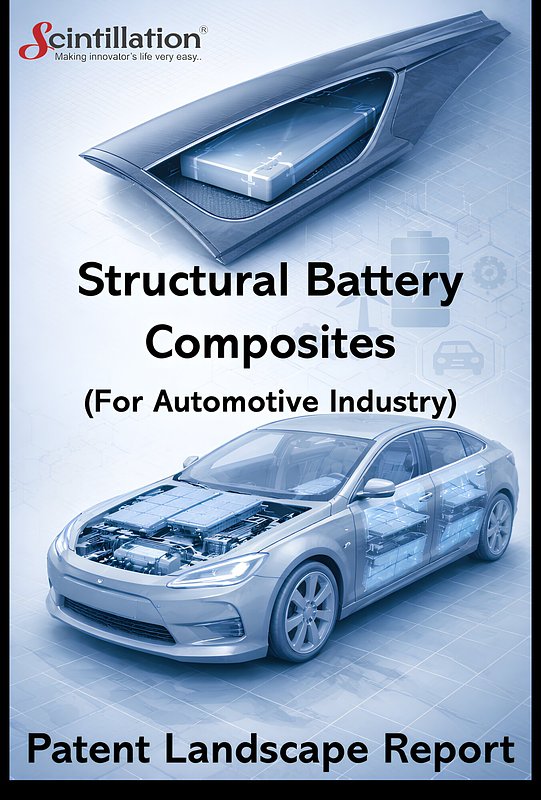
Structural Batteries: The EV Revolution Hiding in Plain Sight
MOHALI, India – February 16, 2026 – A quiet but profound transformation is brewing in the automotive world, one that could redefine the very essence of an electric vehicle. A new independent analysis by patent consultancy firm Scintillation Research has mapped the burgeoning intellectual property landscape for Structural Battery Composites (SBCs), a technology that promises to turn a car’s body panels, floor, and chassis into the battery itself.
This innovation moves beyond the current design paradigm, where a massive, heavy battery pack is a distinct component housed within a vehicle's frame. Instead, SBCs integrate energy storage directly into load-bearing structures, pursuing a long-held engineering dream of “massless” energy storage. The implications are staggering, suggesting a future of lighter, more efficient, and radically redesigned electric vehicles.
The End of the Battery Pack?
For more than a decade, the architecture of electric vehicles has been dictated by the battery pack. This heavy, skateboard-like platform provides a low center of gravity but also adds significant weight and design constraints. Structural batteries propose a fundamental departure from this model.
By embedding electrochemical materials—such as lithium-ion-conducting electrolytes and carbon fiber electrodes—directly into composite panels, the vehicle’s structure performs double duty. It provides mechanical strength and stores electrical energy simultaneously. The primary benefit is a dramatic reduction in weight. Industry research suggests that replacing passive structural parts with energy-storing ones could slash a vehicle's total mass by 10-15%, with some projections indicating a battery system weight reduction of up to 40%.
This weight saving translates directly into enhanced performance. Research from institutions like Sweden's Chalmers University of Technology, a pioneer in the field, has indicated that SBCs could potentially boost an EV's driving range by as much as 70%. Lighter vehicles are inherently more efficient, requiring less energy to move, accelerate, and brake. This could either extend range significantly or allow manufacturers to use smaller, less resource-intensive batteries to achieve current range targets, potentially lowering costs.
The Patent Gold Rush and the Race to Innovate
The report from Scintillation Research underscores that this technological frontier has become a fierce battleground for intellectual property. The comprehensive analysis of worldwide patents reveals a complex and rapidly evolving web of innovation, signaling that major automotive players and research institutions are racing to secure a dominant position.
The patent filings span a wide array of disciplines, highlighting the interdisciplinary nature of SBC development. Key areas of invention include:
- Manufacturing Processes: Innovations in Resin Transfer Molding (RTM), additive manufacturing, and hybrid processes are crucial for producing these complex, multifunctional components at scale.
- Electrolyte Chemistry: A major focus is on replacing flammable liquid electrolytes with safer and more durable alternatives like Gel Polymer Electrolytes (GPE) and Solid Polymer Electrolytes (SPE), which can also act as a structural binder.
- Fiber and Material Science: Patents cover the use of Carbon Fiber Reinforced Polymers (CFRP), where the carbon fibers act as both structural reinforcement and battery electrodes, as well as Glass Fiber (GFRP) and Aramid Fiber (AFRP) systems.
- Structural Architectures: Companies are patenting novel designs, from simple laminate structures to complex sandwich and textile-based architectures, to optimize both mechanical integrity and energy storage capacity.
This flurry of activity involves a mix of established automotive giants like Volvo, BMW, and Tesla, alongside leading research centers such as Chalmers University, KTH Royal Institute of Technology, and the Korea Advanced Institute of Science and Technology (KAIST). The intense competition to patent everything from fundamental material compositions to specific manufacturing techniques suggests that the path to market will be shaped as much by legal strategy as by engineering breakthroughs.
Hurdles on the Road to Commercialization
Despite the immense potential, the road to seeing structural batteries in mass-market vehicles is paved with significant challenges. One of the primary technical hurdles is the trade-off between mechanical performance and electrochemical performance. Currently, the energy density of most SBC prototypes, ranging from 30-90 Wh/kg, is lower than that of conventional high-performance lithium-ion batteries, which can exceed 200 Wh/kg. The central question is whether the massive weight savings at the vehicle level can compensate for the lower energy density of the materials themselves.
Safety is another paramount concern. Integrating the battery directly into the vehicle’s crash structure raises complex questions about performance during a collision. A damaged body panel could also be a damaged battery cell, creating risks of thermal runaway. Researchers are actively developing solutions, including self-healing polymers and structural designs that can safely deform and vent gases in an accident. The move toward solid-state electrolytes is also driven by safety, as they are far less prone to fire than their liquid counterparts.
Furthermore, the cost and complexity of manufacturing remain high. Carbon fiber is notoriously expensive and energy-intensive to produce, and the intricate process of integrating battery materials adds another layer of difficulty. Serviceability is also a key question: how do you repair or replace a section of the battery when it is also a piece of the car's chassis? Finally, a new set of global standards and regulations for testing, safety, and repair will be required before these vehicles can be sold to the public.
Even so, the momentum is undeniable. The global structural battery market is projected to grow from approximately $1.3 billion in 2022 to over $5.7 billion by 2030. Recognized by the World Economic Forum as a top emerging technology, SBCs represent a critical convergence of materials science, chemistry, and automotive engineering. While the first cars powered by their own bodies may still be several years away, the foundational work being done today is paving the way for a lighter, more efficient, and sustainable era of electric mobility.