
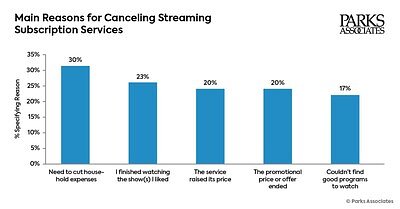
- 30% of consumers canceled streaming services in 2025 due to household expense cuts, up from 26% in 2020
- 34% of premium streaming subscribers who canceled reactivated their service within a year (2024)
- 55% of Netflix's new sign-ups opt for ad-supported plans
Experts agree that affordability has become the primary driver of subscriber loyalty in the streaming industry, with platforms needing to balance ad-supported pricing strategies against user satisfaction to retain customers.
Streaming's New Reality: Price Trumps Content in Battle for Viewers
PLANO, TX – February 10, 2026 – The golden age of streaming, once defined by lavish content budgets and exclusive blockbuster series, has entered a new, more pragmatic era. The primary battleground for subscriber loyalty is no longer the content library, but the price tag. New research reveals that economic pressures are forcing consumers to re-evaluate their digital subscriptions, making affordability the single most important factor in their decision to stay or cancel a service.
A landmark report from Parks Associates, Streaming Competition and Profitability: Pricing Models & Retention Strategies, highlights this dramatic shift. In 2025, a full 30% of consumers who canceled a streaming service cited the need to cut household expenses as the top reason, a notable increase from 26% in 2020. This data confirms a trend resonating across the industry: the content wars are giving way to the price wars.
"Consumers are no longer choosing between services, they're choosing between price points," said Michael Goodman, Director, Entertainment Research at Parks Associates. "Platforms that treat affordability as a retention strategy, not a discount tactic, are far better positioned to manage churn in this mature market."
The Rise of the 'Rotational' Viewer
With streaming now a baseline utility in 91% of U.S. internet households, consumers are becoming more sophisticated in how they manage this expense. The era of passively accumulating subscriptions is over, replaced by a strategic, active approach known as 'rotational viewing' or 'subscription cycling.'
Parks Associates' research found that nearly one in four subscribers admit to canceling a service immediately after finishing the specific show they signed up to watch. This behavior is corroborated by wider industry data, which shows a significant portion of new subscribers are actually returning customers. Subscription analytics firm Antenna reported that in the first nine months of 2024, over 34% of premium streaming subscribers who had canceled reactivated their service within a year. This cyclical pattern underscores that churn is often temporary, driven by a desire to optimize spending rather than a permanent rejection of a service.
This trend is particularly pronounced among younger demographics. A Samba TV report noted that about half of Gen Z and over 75% of Millennials plan to cycle through subscriptions to manage costs. Consumers are essentially treating streaming platforms like a revolving door, subscribing to binge a must-see series on Netflix, then canceling and moving to Max for its next big premiere. This behavior is a direct response to both rising subscription costs and a saturated market where the average streaming household maintains 5.8 different services.
The Ad-Supported Tightrope
In response to this price sensitivity, streaming giants have universally embraced a powerful, albeit perilous, retention tool: the ad-supported tier. Lower-cost plans with advertising have emerged as the single most effective incentive for retaining subscribers and winning back those who have churned. The strategy is working; Netflix, for instance, now sees 55% of its new sign-ups in available markets opt for its ad-supported plan.
Amazon Prime Video made a bold move by automatically enrolling its massive subscriber base into an ad-supported tier, requiring an extra fee for an ad-free experience. Disney+ and Hulu have found success with their bundled ad-supported offerings, with Hulu even reporting a drop in cancellations against the industry trend. More than half of all U.S. streaming subscribers now use at least one ad-supported plan, a clear signal that consumers are willing to trade their time for a lower monthly bill.
However, this strategy is a delicate tightrope walk. While ads keep subscribers on the books, they are also the biggest drag on customer satisfaction. According to Parks Associates, a staggering 70% of viewers complain that the same ads are shown too often. This isn't just a minor annoyance; separate research from Epsilon shows that excessive ad repetition makes consumers less likely to pay attention to ads (88%), less likely to respond to them (84%), and can even cause them to like the advertised brand less (76%). Platforms must therefore balance the revenue potential of advertising with the risk of alienating the very viewers they are trying to retain, carefully managing ad loads and frequency to avoid pushing subscribers away for good.
A New Value Equation
The pivot to price-consciousness forces streaming platforms to redefine their entire value proposition. With consumers meticulously optimizing their entertainment portfolios, a deep content library or a single hit show is no longer enough to guarantee loyalty. The new equation for success combines compelling content with flexible, transparent pricing and a tolerable user experience.
Companies are experimenting with a variety of tactics to lock in subscribers. Some, like Netflix, have strategically increased the price of ad-free plans to make the ad-supported option more attractive. Bundling services, like the Disney+/Hulu combination, offers clear savings and a simplified billing relationship. Others are exploring features like a 'pause' button, allowing subscribers to temporarily suspend their service without fully canceling, acknowledging the reality of rotational viewing and making it easier for them to return.
Ultimately, the streaming industry has matured from a land-grab phase of rapid expansion to a complex, competitive market focused on profitability and long-term customer value. Success is no longer measured solely by subscriber growth, but by the ability to build a sustainable model that viewers feel is worth the price of admission, whether that price is paid with their dollars or their attention.