
- 91% of union members voted to reject contract proposal
- Strike involves 46 workers at Salit Steel's Niagara Falls plant
- Company reportedly shifting operations with $15M–$20M investment in Welland facility
Experts would likely conclude that this strike represents a critical test for Canadian labour, highlighting tensions between corporate cost-cutting strategies and workers' efforts to preserve hard-won protections amid broader industrial shifts.
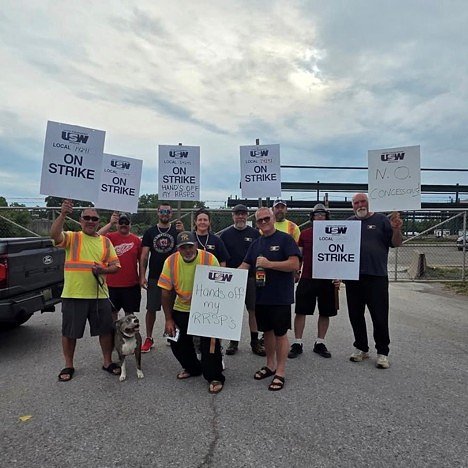
Steel Stalemate: A Small Strike Signals Big Shifts in Canadian Labour
NIAGARA FALLS, Ontario – June 26, 2026 – On a stretch of Stanley Avenue, a 24-hour picket line marks a quiet but deeply significant industrial battle. Forty-six members of United Steelworkers (USW) Local 14241-01 are on strike against Salit Steel, a family-owned company with roots stretching back to 1905. The dispute, which began on June 24, was triggered after an astounding 91% of the union members voted to reject a contract proposal they say would gut decades of hard-won protections. While the number of workers is small, the stakes are immense, offering a strategic glance into the future of labour relations, corporate strategy, and the fight to preserve the middle class in Canada’s industrial heartland.
The Line Drawn in the Sand
For the union, this is a defensive war. The USW and its members have been a fixture at Salit Steel’s Niagara Falls operations for approximately 70 years, a multi-generational relationship that has built not just steel products but a standard of living. The core of the dispute is the union’s charge that the company’s latest offer constitutes a demand for “rollbacks,” a term that signifies the erosion of wages, pensions, benefits, and workplace rights.
“Our members are proud of the work they do every day and want nothing more than to return to work with a fair agreement,” said Dan Plett, Unit Chair of USW Local 14241-01. His words capture the sentiment on the picket line: this isn't a grab for new concessions, but a fight to hold onto what they have. “We aim to protect the pensions, benefits and workplace rights that generations before us fought to achieve, while ensuring future workers have those same protections.”
This sentiment of legacy and future responsibility is a powerful motivator. The union is also keenly aware that this fight is not just for themselves. They see this as a stand to protect contract standards for their fellow USW members at Salit Steel’s other unionized locations in Welland and Burlington. A loss here, they fear, could trigger a domino effect. Kevon Stewart, USW District 6 Director, praised this resolve, stating, “These members are showing tremendous strength, unity and determination. They are standing up for fairness, dignity and respect – not only for themselves, but for the next generation of workers.”
Business Strategy and the Bottom Line
While the union has been vocal, Salit Steel has remained publicly silent on the strike. A review of the company's public-facing communications reveals no statements regarding the labour dispute. This silence forces a deeper look into the company's operational strategy to understand its negotiating position. The most critical piece of context predates the strike by several months. In late 2025, reports surfaced that Salit Steel was already in the process of significantly scaling back its Niagara Falls operations. Citing challenges with residential noise limits and past municipal planning decisions, the company was reportedly shifting the bulk of its business to its facility in Welland, a strategic move estimated to cost between $15 million and $20 million.
Viewed through this lens, the current labour negotiation takes on a different character. Is the company’s tough bargaining stance a standard negotiating tactic, or is it a symptom of a facility that has been deprioritized in its long-term strategic plan? If the Niagara Falls plant is already slated for a reduced role, the company may have calculated that it has greater leverage to demand concessions or withstand a prolonged work stoppage. The operational disruption and financial losses from a strike at a secondary facility are far less damaging than at a primary one. This strategic context suggests the union is not just fighting a battle over contract terms, but potentially a battle for the very relevance of their workplace.
A Bellwether for Canadian Labour
This dispute at a single steel plant resonates far beyond Niagara Falls. It serves as a bellwether for broader trends shaping Canadian labour relations. Across the country, particularly in the manufacturing sector, unions are increasingly finding themselves in defensive positions, fighting to protect established contracts from erosion in the face of global competition, supply chain pressures, and persistent inflation. The USW has noted a rise in “aggressive employers hellbent on pushing down our wages and working conditions.”
The Salit Steel strike embodies this struggle. The union’s focus on preventing rollbacks and preserving pension and benefit plans is a narrative playing out in countless negotiation rooms. It highlights a fundamental tension: companies seeking to enhance flexibility and control costs in a volatile economy, and workers seeking stability and the preservation of benefits that have historically defined a middle-class manufacturing job. The outcome of this strike, and others like it, will influence collective bargaining trends for years to come. It will test the ability of organized labour to hold the line against concessions and could set precedents for how similar disputes are resolved across the industrial sector.
The Power of a Unified Voice
The greatest strategic asset the striking workers possess is their unity. The 91% vote to reject the company’s offer was not a narrow decision; it was a powerful and unambiguous mandate. It signals to the company that the membership is fully behind its bargaining committee and is prepared for a protracted fight. USW Staff Representative Tracy Nguyen emphasized this point, stating, “When workers speak with one voice, it sends a powerful message. These members are united in their commitment to securing a fair contract that respects their contributions and protects the standards they have worked hard to build.”
This solidarity is now being tested on the 24-hour picket line. It is here that the abstract concepts of fairness and legacy are translated into the tangible reality of standing together in all weather, for an unknown duration. For these 46 members, the fight is both personal and principled. It is about their own livelihoods, but also about the belief that the value they create should be fairly compensated and that the promises made to previous generations should be honoured for the next. The United Steelworkers have made it clear they will not let them stand alone, with the national union pledging to stand beside them until a fair agreement is reached.