
- $5 million in pre-seed funding raised by Furientis
- 200 interceptor missiles used by the U.S. Navy during the 2024 Red Sea crisis
- 6 flight tests and 10 static-fire tests conducted by Furientis in six months
Experts agree that Furientis' low-cost, mass-producible interceptor missiles could address critical U.S. defense shortages, offering a viable solution to the unsustainable economics of modern naval warfare.
Startup Furientis Unveils Plan to Fix U.S. Missile Shortage
LOS ANGELES, CA – May 14, 2026 – A defense technology startup named Furientis has emerged from stealth with $5 million in pre-seed funding and an ambitious mission: to solve the U.S. military's growing shortage of interceptor missiles. The company is developing low-cost, mass-producible defensive munitions designed to counter the unsustainable economics of modern naval warfare, where multi-million-dollar missiles are often used to destroy inexpensive drones.
The funding round was led by Silent Ventures, a firm specializing in national security technology, with participation from established players like Bessemer Venture Partners and SV Angel. The investment signals a growing confidence among venture capitalists that agile startups can address critical national security gaps faster and more efficiently than the traditional defense industrial base.
A Critical Cost and Quantity Problem
Recent global conflicts have exposed a dangerous vulnerability in the U.S. defense posture. The 2024 Red Sea crisis, where U.S. Navy destroyers fired more than 200 interceptors to protect shipping lanes from drone and missile attacks, brought the issue into sharp focus. This high operational tempo has severely depleted stockpiles of advanced interceptors like the Standard Missile-2 (SM-2) and the RIM-162 Evolved SeaSparrow Missile (ESSM).
“During the 2024 Red Sea crisis, the U.S. Navy used more than 200 interceptor missiles to defend ships against Iranian-backed threats,” said Brody Franzen, co-founder of Furientis. “That matters not only because of the cost imbalance — using $4 million missiles to intercept $40,000 drones — but also because of the scale challenge, with only around 200 of these interceptors delivered annually versus their thousands per year.”
This glaring disparity creates an unsustainable strategic and financial dilemma. Adversaries can overwhelm sophisticated naval defenses with swarms of cheap, easily produced drones and missiles, knowing that every shot a U.S. ship takes costs exponentially more. Research indicates that key stockpiles are dwindling, with some estimates suggesting it could take nearly a decade to replenish certain missile inventories at current production rates. Furientis aims to break this cycle by developing interceptors that are not only effective but also affordable enough to be deployed in large numbers.
From Commercial Space to the Battlespace
At the heart of Furientis are co-founders Brody Franzen and Aris Simsarian, who bring a decade of experience from the fast-paced world of commercial aerospace. Simsarian previously managed rocket engine testing at Virgin Orbit, while Franzen served as a senior engineer at Castelion, a startup building hypersonic missiles, after a tenure at Virgin Galactic. This background in rapid, iterative development—a hallmark of companies like SpaceX and Castelion—is central to the Furientis strategy.
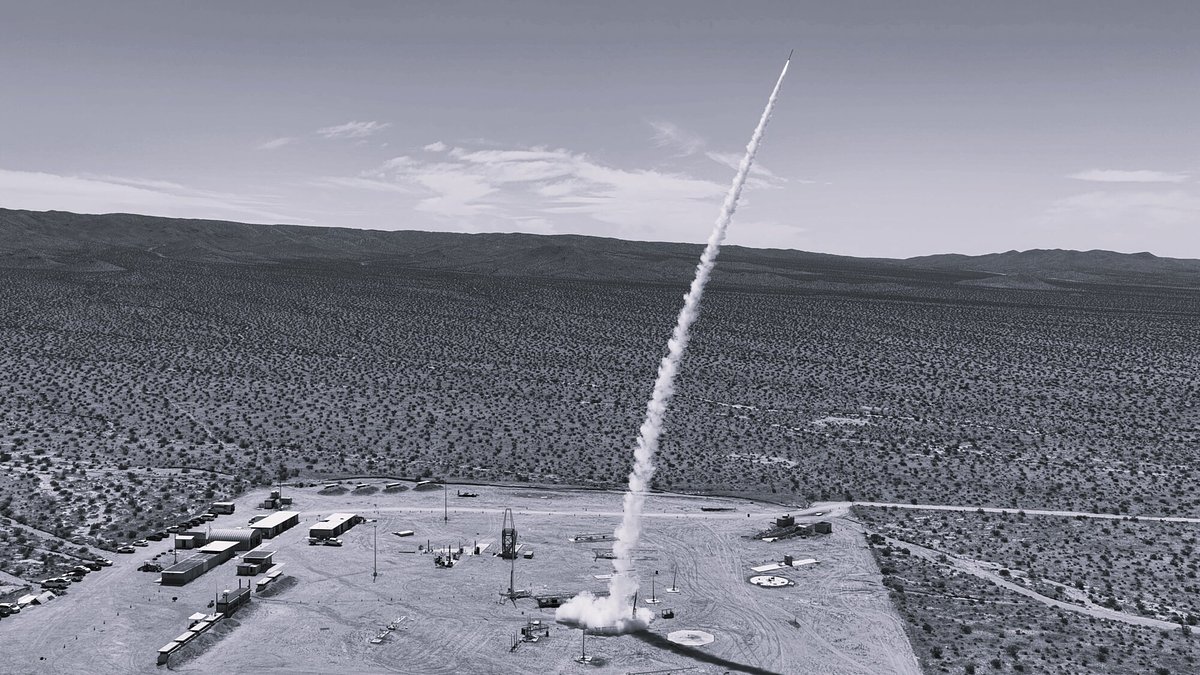
Operating from a 9,000-square-foot facility in Los Angeles, the company has already demonstrated an intense development pace. In just six months, it has conducted six flight tests and ten static-fire tests of its demonstrator missile, a cadence rarely seen in the traditionally slow-moving defense sector. This “spiral development” model, which emphasizes quick iteration in close collaboration with end-users, is designed to deliver a viable product much faster than the years-long timelines common in Pentagon programs.
“Brody and Aris have significant experience across design, propulsion, and testing, and they’ve structured the company around quick iteration in lockstep with end users,” noted Jackson Moses, Managing Partner of Silent Ventures. “This combination gives them a legitimate path to scale production. Their low price point provides a credible pathway to procurement.”
Forging a Path to Pentagon Procurement
For any defense startup, securing funding is only the first hurdle; navigating the Pentagon's complex procurement process is the ultimate challenge. Furientis appears to be making early inroads by building credibility and demonstrating its capabilities directly with the military.
The company has already established a Cooperative Research and Development Agreement (CRADA) with the Naval Postgraduate School (NPS). This partnership allows Furientis to test and refine its systems with direct feedback from naval experts, helping to mature the technology and align it with government reference architectures.
“Forming CRADAs with industry partners like Furientis allows us to address that gap at the NPS through testing and rapid iteration of viable solutions,” said Maj. Dillon Pierce, Ph.D., a research professor at the Naval Postgraduate School. “It also broadens the defense industrial base to deliver capabilities at greater speed and scale — a win-win.”
Further validating its approach, Furientis was recently named one of five finalists in the Tactical Missile Innovation Challenge, a competition run by NPS and the Office of Naval Research. The startup competed alongside established giants like Kratos and the well-funded defense disruptor Anduril, which was ultimately named the winner for its development methodology. Being recognized in such a competitive field provides significant validation for a company that was, until today, operating in stealth. With its new funding, Furientis plans to expand its production capacity, accelerate its testing schedule, and grow its engineering and manufacturing teams, positioning itself as a key new player in the race to re-arm America.