
- $118 billion: USPS net losses since 2007
- 517 million units: Elvis Presley stamp sales (1993), with 124 million saved as collectibles
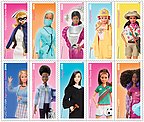
- 10 stamps: Barbie Forever stamp series featuring various careers
Experts would likely conclude that the USPS's Barbie stamp initiative is a strategic, revenue-driven move to address financial instability, leveraging pop culture and collectible appeal to generate profit through the 'breakage factor'.
Stamping for Survival: Why the USPS is Betting on Barbie
WASHINGTON – June 05, 2026 – This summer, the United States Postal Service will release a new series of Forever stamps celebrating Barbie, the iconic Mattel doll. The official announcement positions the release, featuring 10 stamps of Barbie in various careers, as a tribute to a "symbol of limitless possibilities." While the sentiment is undeniably true, a deeper analysis reveals a far more pragmatic and urgent motivation. This collaboration is not merely a cultural nod; it is a calculated maneuver in the USPS's protracted battle for financial solvency, a strategic deployment of one of America's most powerful brands to prop up one of its most essential, and troubled, institutions.
The first-day-of-issue event, strategically set for the 2026 National Barbie Doll Collectors Convention in Austin, Texas, underscores the dual nature of this initiative. It is simultaneously a celebration for enthusiasts and a targeted marketing campaign for the Postal Service. As the 250-year-old federal establishment grapples with a business model the Government Accountability Office has deemed unsustainable, it is increasingly turning to the power of pop culture to not only stay relevant, but to generate crucial revenue.
The Philatelic Lifeline
To understand the significance of the Barbie stamps, one must look beyond the mailbox and into the USPS's balance sheets. The agency, which receives no tax dollars for its operating expenses, has reported staggering net losses, accumulating over $118 billion since 2007. Declining first-class mail volume, coupled with rising operational costs and legacy benefit obligations, has created a perfect storm of financial distress. The organization's 10-year "Delivering for America" plan aims to reverse this tide, but it's a monumental task.
This is where commemorative stamps play a surprisingly critical role. They are a unique product line where a portion of the goods sold are intentionally never used for their primary purpose. This phenomenon, known as the "breakage factor," represents pure profit for the Postal Service. When a collector or fan buys a sheet of Barbie stamps and files it away in an album, the USPS has realized revenue without incurring the cost of processing and delivering a single letter. In a year like 2010, when stamp sales totaled $8.8 billion, the estimated 6% of stamps that went unused translated into a significant financial windfall.
The undisputed champion of this strategy remains the 1993 Elvis Presley stamp, which sold approximately 517 million units. An estimated 124 million of those were saved, not used, making it an enormous revenue generator. The USPS is undoubtedly hoping to capture a similar lightning in a bottle with Barbie, an icon with arguably broader generational appeal and a new wave of cultural capital following the blockbuster success of the 2023 film. The decision to issue all commemoratives as "Forever" stamps since 2011 further de-risks the strategy, ensuring the product never becomes obsolete due to postage rate hikes—a lesson learned the hard way after a $1.2 million loss on an over-supply of The Simpsons stamps in 2009.
From Dollhouse to Balance Sheet
For this strategy to work, the chosen icon must possess immense cultural and commercial power. Barbie is, in this respect, the perfect partner. Since her debut in 1959 as a "Teenage Fashion Model," she has evolved into a global brand powerhouse by masterfully mirroring, and often anticipating, societal shifts. Mattel has curated Barbie's resume to include over 250 careers, transforming her from a simple doll into a dynamic platform for the "You Can Be Anything™" message.
She was an astronaut in 1965, four years before Neil Armstrong walked on the moon. She was a surgeon in 1973, when few women were in the field. She has been a computer engineer, a game developer, a police officer, and a presidential candidate. This constant evolution has allowed the brand to remain relevant and aspirational for over six decades. Each new career is not just a new outfit; it is a reinforcement of the brand's core message and a new entry point for consumers.
The USPS is tapping directly into this powerful brand narrative. The 10 career-themed stamps are a direct extension of Mattel's long-term marketing, leveraging decades of cultivated goodwill and brand recognition. For Mattel, the collaboration further cements Barbie's status as a piece of indelible Americana. For the Postal Service, it represents an opportunity to sell a product infused with meaning, nostalgia, and empowerment—qualities that command a premium far beyond the simple value of postage.
A Masterclass in Targeted Execution
The implementation of the Barbie stamp launch demonstrates a sophisticated understanding of modern marketing and brand activation. Holding the first-day-of-issue ceremony at the National Barbie Doll Collectors Convention is a brilliant tactical decision. This guarantees a receptive, enthusiastic audience of super-fans who are the most likely demographic to purchase stamps in bulk for collecting purposes. The event, described as "interactive" and promoted with its own hashtag (#BarbieStamps), is designed to generate a groundswell of organic social media buzz, extending its reach far beyond the convention walls in Austin.
This is not simply selling stamps at the post office; it is creating a cultural event. By aligning with the passionate collector community, the USPS is maximizing its chances of turning these stamps into coveted memorabilia. Every collector who attends the convention, every fan who shares the hashtag, becomes a part of the Postal Service's revenue-generating apparatus. It is a human-centered strategy that recognizes the value of community and shared passion in driving commercial success. While a single stamp series will not solve the USPS's deep-seated structural and financial challenges, the Barbie collaboration is a powerful case study in how an legacy organization can innovate within its constraints, leveraging strategic partnerships to secure its future, one Forever stamp at a time.