
- Over 30 years of experience: Veteran trucking expert Alan Sinn highlights the critical role of permits, planning, and specialized training in hazmat transport.
- Multi-layered regulations: Federal and state agencies enforce strict rules, including Hazardous Materials Safety Permits (HMSP) for high-risk materials.
- Specialized workforce: Hazmat drivers undergo rigorous training, including TSA security assessments and federal ELDT programs.
Experts agree that the safe transport of hazardous materials in St. Louis relies on a meticulously orchestrated system of permits, route planning, specialized equipment, and highly trained drivers, ensuring public safety while supporting economic needs.
St. Louis's Lifeline: The Unseen Logistics of Hazmat Transport
ST. LOUIS, MO – June 16, 2026 – Every day, thousands of trucks traverse the arteries of the St. Louis region, their cargo forming the lifeblood of the area's manufacturing and energy sectors. While most of these shipments pass unnoticed, a critical subset moves under a veil of immense preparation and regulatory scrutiny: hazardous materials. The safe transport of chemicals, fuels, and industrial waste is not a matter of chance but a meticulously orchestrated process, a high-stakes balancing act between economic necessity and public safety.
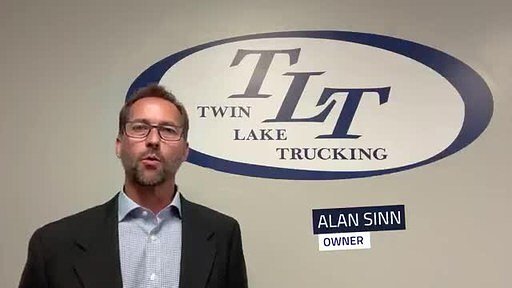
In a recent feature by the media platform HelloNation, veteran trucking expert Alan Sinn pulled back the curtain on this complex world. His insights reveal that the foundation of safety is laid long before a truck's engine ever starts. It’s a system built on permits, planning, and people—a system that protects communities by mastering the details.
A Labyrinth of Law: More Than Just Paperwork
The phrase “hazardous materials permit” might conjure images of bureaucratic red tape, but in reality, it represents a carrier's verified readiness to handle materials that pose significant risks. As Alan Sinn, an Operations Manager at Twin Lake Trucking with over three decades of experience, emphasizes, these requirements are non-negotiable and foundational. He stresses that compliance must be met “before loading begins and at every stage of operations.”
A common misconception is that a single permit covers all aspects of hazmat transport. The reality is a multi-layered regulatory framework. At the federal level, the Department of Transportation’s Pipeline and Hazardous Materials Safety Administration (PHMSA) sets the comprehensive Hazardous Materials Regulations (HMR). These rules dictate everything from how a substance is classified and packaged to the specific placards that must adorn the outside of a vehicle. For motor carriers, the Federal Motor Carrier Safety Administration (FMCSA) enforces these rules on the road.
For certain high-risk materials, such as explosives or substances toxic by inhalation, carriers must secure a Hazardous Materials Safety Permit (HMSP) from the FMCSA. This permit isn’t for the driver; it’s for the company, and it serves as a federal stamp of approval, confirming the carrier has robust safety programs, a satisfactory security plan, and a clean compliance record. Without it, the most dangerous materials legally cannot move.
This federal oversight is mirrored at the state level. The Missouri Department of Transportation (MoDOT) requires carriers moving hazardous waste to obtain a specific state license, ensuring alignment with environmental protection goals. This rigorous, multi-agency oversight demonstrates that a hazmat permit is far more than a piece of paper; it’s a testament to a carrier’s commitment to a culture of safety, backed by documented procedures and verifiable compliance.
Charting a Safe Course Through the Gateway City
Nowhere are the stakes of logistical planning higher than in a dense, historic urban environment like St. Louis. Defined by its major river crossings, aging infrastructure, and interwoven industrial and residential zones, the city presents a unique navigational challenge. As Sinn’s interview highlights, route planning is not merely about finding the shortest path but the safest one.
“In many cities, especially in St. Louis, some roads and corridors cannot be used by certain hazardous loads,” the HelloNation article explains. “Older neighborhoods, tunnels, and restricted streets require careful consideration.”
Local ordinances in both St. Louis City and St. Louis County supplement federal and state guidelines by establishing designated routes and, more importantly, restricted areas. These no-go zones are strategically identified to keep high-risk shipments away from sensitive locations like schools, hospitals, and densely populated areas. A missed detail in route planning isn't just an inconvenience; it can lead to a truck being rerouted through unprepared communities, creating unnecessary risk and causing significant delays and fines. For a region whose economy depends on the timely flow of industrial goods, such disruptions have a real financial impact on both shippers and carriers.
The challenge is compounded by the constant need to adapt. A road closure, an accident, or a sudden change in weather can force a driver to deviate from a pre-approved route. This is where robust contingency planning becomes critical. A well-prepared carrier has already identified and vetted alternative routes that still comply with all local, state, and federal restrictions, allowing the driver to make safe, compliant adjustments on the fly.
The Last Line of Defense: Specialized Gear and Skilled Hands
While permits and plans create the strategic framework for safety, the execution depends on two final, critical elements: the equipment and the driver. Transporting hazardous materials often requires specialized hardware far beyond that of a standard dry van. Reinforced tanks, sealed and pressurized containers, or temperature-controlled refrigeration units are custom-selected based on the specific material being moved. This equipment is a primary containment strategy, engineered to prevent leaks and mitigate risks even in the event of an incident.
However, the most crucial component is the human one. A hazmat truck driver is a highly trained and vetted professional. To even qualify, a driver must obtain a special HazMat endorsement on their Commercial Driver's License (CDL). This process involves passing a specialized knowledge exam and, critically, undergoing a comprehensive federal security threat assessment conducted by the Transportation Security Administration (TSA). As of 2022, new drivers must also complete an extensive Entry-Level Driver Training (ELDT) program from a federally registered provider before they can even take the endorsement exam.
This intensive training prepares drivers to be more than just operators; they are the first line of defense. They are trained to inspect their loads meticulously, verify shipping papers and placards, and understand the specific risks of the materials they carry. They are taught to remain calm and follow strict protocols in emergencies, acting as on-site managers of any potential incident until first responders arrive. This level of professionalism and preparation is an unseen safeguard that protects every community a hazmat truck passes through.
Ultimately, the system functions best when all parties—shippers, carriers, and regulators—operate with transparency and shared understanding. As Sinn’s experience shows, when a carrier effectively communicates the requirements for permits, routing, and equipment, the shipper can better prepare loads and schedules. This partnership, built on a foundation of rigorous planning and expert execution, is what allows the vital but volatile materials that fuel our modern world to move safely and efficiently through the heart of the nation.