
- Price Disruption: SparkPNT's TX2 receiver launched at $1,249.95, compared to the 2025 market average of $6,800 for high-precision GNSS receivers.
- Modular Design: Facet FP line features interchangeable GNSS modules, enabling upgrades and repairs with standard tools.
- Open-Source Access: Firmware is open-source, allowing deep customization and community-driven improvements.
Experts would likely conclude that SparkPNT's open-source, repairable, and affordable approach to high-precision PNT technology has the potential to disrupt the industry, democratizing access while challenging long-standing proprietary ecosystems.
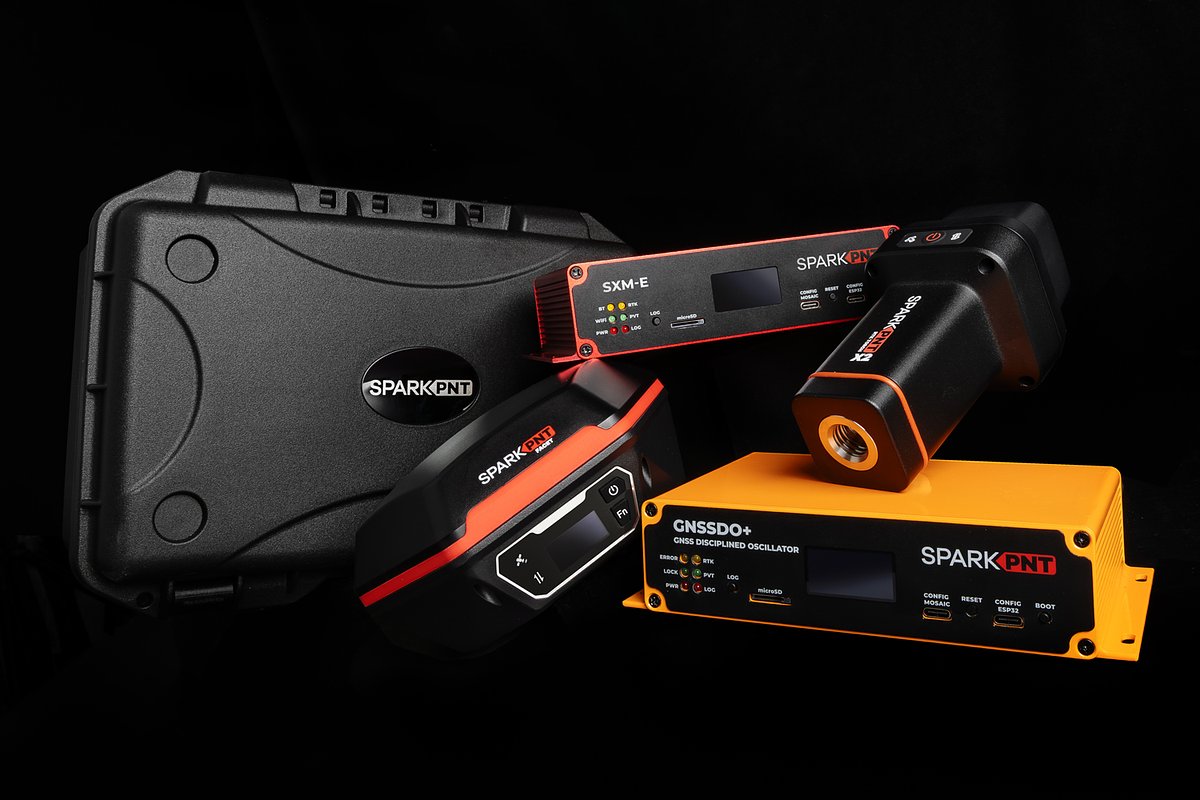
SparkPNT Challenges GPS Titans with Open-Source, Repairable Tech
BOULDER, CO – June 17, 2026 – For decades, obtaining centimeter-level location accuracy has been the exclusive domain of organizations with six-figure equipment budgets. The tools for precision surveying, autonomous vehicle guidance, and advanced agriculture have been dominated by a handful of giants, sold as expensive, proprietary "black boxes." Today, a new company born from the heart of the do-it-yourself electronics movement is challenging that paradigm. SparkPNT, a newly launched subsidiary of hobbyist and professional favorite SparkFun Electronics, is officially entering the high-precision Positioning, Navigation, and Timing (PNT) market with a radically different approach: what if professional-grade gear was affordable, open-source, and designed to be repaired, not replaced?
This move marks a significant strategic pivot, taking the ethos of accessibility that SparkFun has championed for over 20 years and applying it to a high-stakes industrial sector. "We aren't just launching a new line of GNSS products, we are launching an adaptable, future-proof PNT platform that gives industrial, logistics, robotic, and agricultural sectors commercial-grade precision at a fraction of standard costs," said Glenn Samala, CEO of SparkFun Electronics. The launch isn't just a product release; it's a statement of intent to dismantle the walled gardens that have defined a critical infrastructure technology.
A New Blueprint: Own, Upgrade, Repair
The most profound aspect of SparkPNT's strategy is its direct rejection of the disposable, locked-down nature of modern electronics. The company's entire product line is built on a simple, powerful philosophy: "Own. Upgrade. Repair." This is a stark contrast to an industry where a firmware update, a simple component failure, or the release of a new satellite constellation can render a $15,000 device obsolete.
Take the new Facet FP line of modular GNSS receivers. Instead of a sealed unit, the devices are designed to be opened with a standard Phillips head screwdriver. Inside, the core GNSS module—the brain of the operation—is interchangeable. A customer can start with one performance level and later swap in a more advanced module from a different manufacturer as their needs or budget change. This modularity not only extends the product's lifespan but also provides a level of flexibility previously unheard of in this field. If a component fails, SparkPNT pledges to sell replacement parts, empowering users to perform their own field repairs rather than facing costly and time-consuming manufacturer service.
This approach has massive implications for total cost of ownership. Industries like agriculture and construction, which operate in harsh environments where equipment damage is a reality, can now view their positioning tools as serviceable assets rather than fragile liabilities. It’s a practical application of the “right to repair” movement, scaled up for the systems that build and feed our world.
Cracking Open the Proprietary Code
Beyond physical repairability, SparkPNT is attacking the proprietary software and firmware that have kept users locked into single-vendor ecosystems. For decades, the high-precision market has been characterized by closed systems where users have little to no control over the device's inner workings. This lack of access stifles innovation and prevents users from tailoring equipment to specific, novel applications.
SparkPNT founder Nathan Seidle frames the mission as one of liberation. "For decades, the high-precision positioning and surveying markets have been dominated by proprietary ecosystems," he stated. "Our goal is to provide field-ready high-precision systems that utilize an open-source and customizable architecture, putting true ownership in the hands of the user."
This is not just a marketing claim. The company provides open-source firmware for its products, with links to public GitHub repositories readily available in its documentation. For a researcher developing a new drone navigation algorithm, a robotics company integrating a custom sensor suite, or a university teaching the next generation of surveyors, this access is transformative. It allows for deep customization, transparent performance analysis, and community-driven improvements—a collaborative model that has been the engine of progress in the software world but has remained rare in industrial hardware.
The Price of Precision Plummets
The most immediate and disruptive impact of SparkPNT's launch will be on price. The claim of providing "commercial-grade precision at a fraction of standard costs" is not an exaggeration. An analysis of the market shows a stark difference. The new SparkPNT TX2, a rugged, IP67-rated quad-band RTK receiver designed for field surveying, is launching at $1,249.95.
To put that in perspective, the average market price for a high-precision GNSS receiver in 2025 was approximately $6,800. Fully integrated systems from established leaders like Trimble or Leica Geosystems frequently range from $10,000 to over $20,000 per unit. By offering centimeter-level accuracy for a price closer to a high-end smartphone than a new car, SparkPNT is poised to democratize precision. This price point makes advanced technology accessible to smaller farms, independent surveyors, startups, and university research departments that were previously priced out of the market. It fundamentally changes the economic calculation for deploying high-precision systems at scale.
The Power of a Mature Platform
While SparkPNT is a new name, it is not a typical hardware startup. As a wholly-owned subsidiary of SparkFun, the company launches with an enormous strategic advantage. It inherits over two decades of its parent company's institutional knowledge in product design, global supply chain management, and high-volume manufacturing. This eliminates the formidable barriers to entry that crush many young hardware companies.
This backing provides immediate credibility and operational stability. Customers aren't betting on an unproven entity; they are buying into a system supported by what Samala calls a "mature manufacturing powerhouse that knows how to deliver at scale." SparkPNT can leverage SparkFun’s established distribution channels to reach a global audience from day one. This synergy of a disruptive, open-source philosophy with a robust, established operational backbone makes SparkPNT a uniquely formidable new player.
By combining affordability, user ownership, and a powerful manufacturing base, SparkPNT is doing more than just selling new devices. It is presenting a compelling case for a new way of building the foundational technologies our economy relies on, suggesting that the most resilient systems are not the most locked-down, but the most open.