
- 173 participants in the inaugural 2025 event
- 90% of jscreen customers pay nothing out-of-pocket for hereditary cancer testing due to insurance or financial aid
- 12.4% of young Black women with breast cancer in Florida carry a BRCA mutation, higher than non-Hispanic white women
Experts agree that integrating genetic screening with community fitness events is an innovative and effective way to increase accessibility and awareness of genetic health risks, particularly in diverse populations.
South Florida Initiative Blends 5K Race with Lifesaving DNA Screening
BOCA RATON, FL – December 19, 2025 – A partnership between two leading health nonprofits is set to transform how South Florida residents approach their long-term health, blending a community fitness event with accessible, cutting-edge genetic screening. National nonprofit jscreen and the locally-founded Mathew Forbes Romer Foundation (MFRF) have expanded their multi-year collaboration, launching a significant public health initiative aimed at preventing genetic diseases through education and early detection.
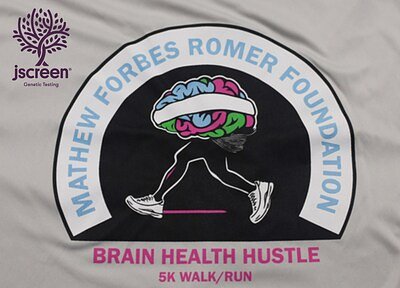
The cornerstone of this initiative is the 2nd Annual MFRF "Brain Health Hustle," a 5K walk/run scheduled for Sunday, January 11, 2026, at South County Regional Park in Boca Raton. More than just a race, the event will serve as a hub for a large-scale genetic testing event, providing participants with direct access to information that could shape their health decisions for generations to come.
Democratizing Access to Your DNA
Under the banner "Unzip Those Genes — Your DNA. Your Decisions. Your Future," the initiative seeks to demystify genetic screening and empower individuals to take a proactive role in their health. A key barrier to genetic testing has often been cost and accessibility, an issue this partnership directly confronts. Jscreen, which transitioned to an independent nonprofit in late 2024 after its founding at Emory University, is known for its model of providing affordable, at-home testing kits coupled with expert telehealth genetic counseling.
While genetic testing through some providers can cost several hundred to over a thousand dollars, jscreen leverages insurance and financial assistance to make screening widely available. For the "Brain Health Hustle" event, participants can sign up for testing with a special discount code (2026MFRFBHH), further reducing the financial burden. Jscreen's standard self-pay price is a competitive $249, but the organization reports that over 90% of its hereditary cancer test customers pay nothing out-of-pocket due to insurance coverage and financial aid. This pricing structure stands favorably against competitors like Color and Invitae, making the partnership's offer particularly compelling for the South Florida community.
"We are proud to deepen our partnership with the Mathew Forbes Romer Foundation to bring essential genetic education and testing to South Florida," said Karen Grinzaid, Executive Director of jscreen. "Knowledge is power—and when families understand their genetic risks, they can take meaningful action to protect their health and the health of future generations. Our shared mission is to make testing affordable, accessible, and actionable for every family who needs it."
Beyond the Finish Line: A Race for Awareness
The choice to pair a health screening with a 5K is a strategic one, designed to engage the community in a positive, health-oriented environment. The inaugural "Brain Health Hustle" in 2025 proved the concept's success, drawing 173 finishers and numerous other supporters who participated in the walk/run and visited sponsor booths, which included on-site genetic screening. The positive feedback and community turnout have set a strong precedent for the upcoming event.
On January 11th, the day will kick off with the genetic testing event from 7:00 a.m. to 10:00 a.m., followed by the 5K at 7:30 a.m. This integrated approach creates a unique, low-pressure setting for individuals and families to learn about genetic health. By removing the clinical feel and embedding it within a vibrant community gathering, the organizations hope to lower the barrier to entry for those who might otherwise be hesitant to seek out genetic testing. The event is designed to be family-friendly, with options for competitive runners, walkers, and those simply wishing to support the cause, ensuring a broad and diverse audience hears the message of proactive health management.
Decoding Disease Prevention in South Florida
The screening offered at the event is comprehensive, covering two critical areas of genetic health. The Reproductive Carrier Screening tests for over 260 hereditary conditions, such as Tay-Sachs disease and cystic fibrosis, that parents could unknowingly pass on to their children. The Hereditary Cancer Screening analyzes more than 60 genes, including the well-known BRCA1 and BRCA2 genes, to identify inherited risks for cancers of the breast, ovary, prostate, pancreas, and more.
This initiative is particularly relevant for South Florida's diverse population. Regional studies have highlighted the prevalence of specific genetic mutations in the area. One study of young Black women with breast cancer in Florida found that 12.4% carried a BRCA mutation, a higher rate than typically seen in non-Hispanic white women. Another study focused on South Florida's Hispanic/Latino population identified a 5.1% prevalence of BRCA variants, underscoring the need for accessible screening across all communities. By bringing these tests directly to the population, the partnership provides a vital tool for early detection and prevention.
Crucially, jscreen's process includes post-test genetic counseling via telehealth, ensuring that anyone who receives a positive result is not left to interpret the complex information alone. Licensed genetic counselors help individuals understand their results, the implications for their family, and the next steps for medical management or surveillance, adhering to the highest ethical standards of care.
"Partnering with jscreen allows us to fulfill a critical part of our mission: preventing and detecting genetic diseases through education, awareness, and early testing," stated Kevin Romer, President of MFRF. "Together, we are giving families life-saving information and reinforcing our long-standing commitment to brain health, community wellness, and advancing medical breakthroughs."
This collaborative effort reflects a modern approach to public health, one where knowledge is placed directly in the hands of the people, empowering them to build healthier futures for themselves and their families.