
- Silver's 2025 Surge: 128% year-to-date gain, reaching an intraday high of $66.894 per ounce.
- Gold's Record High: Peaked at $4,381.65 per ounce in October 2025.
- Central Bank Gold Purchases: 220 tonnes acquired in Q3 2025 alone.
Experts agree that the historic rally in gold and silver is driven by persistent geopolitical instability, economic uncertainty, and unprecedented industrial demand, particularly for silver, with forecasts suggesting further price appreciation in 2026.
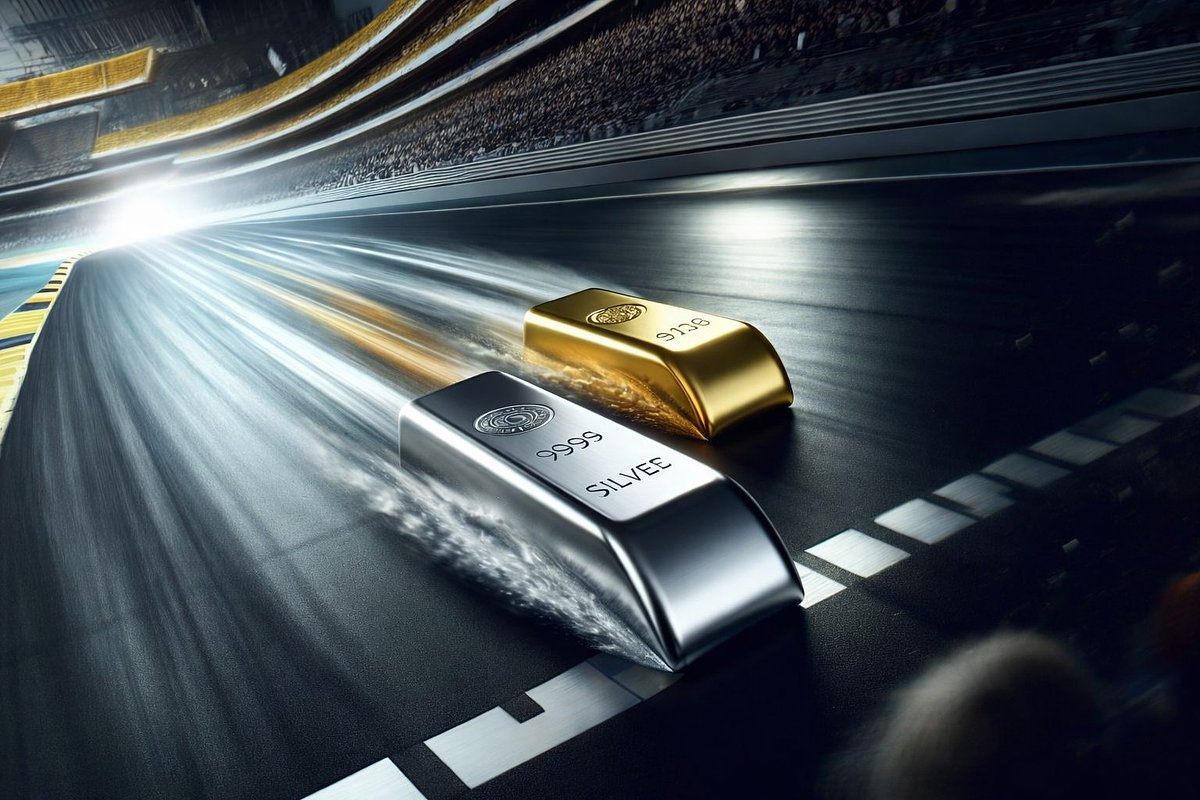
Gold and Silver Shatter Records as Global Crises Fuel Historic Rally
LONDON, UK – December 18, 2025 – Precious metals have delivered a landmark performance in 2025, shattering records as a perfect storm of geopolitical tension, persistent economic uncertainty, and a technology-driven industrial boom propelled prices to historic heights. Silver, in particular, has emerged as the year's standout performer, rocketing an astonishing 128% year-to-date, far outpacing gold's already impressive 66% gain.
This year's rally saw gold methodically break through major psychological barriers, surpassing $3,000 per ounce in March before climbing past $4,000 in early October and setting an intraday peak of $4,381.65 later that month. Silver's ascent was even more dramatic. After languishing below a four-decade resistance level, the metal decisively broke through $50 per ounce in October, triggering a surge that culminated in an intraday high of $66.894 on December 17. The explosive moves reflect a fundamental market shift, with demand soaring from central banks, industrial consumers, and retail investors alike, all seeking refuge and opportunity in a turbulent world.
The Perfect Storm: Geopolitics and Economic Fears
The unprecedented demand for precious metals is rooted in a global landscape fraught with instability. Escalating geopolitical friction has been a primary catalyst, reinforcing gold's traditional role as the ultimate safe-haven asset. Ongoing conflict in Ukraine, a fragile peace in the Middle East, and rising tensions over Taiwan have kept investors on edge. This climate of uncertainty has been amplified by aggressive trade policies and unpredictable international relations, leading to what market analysts describe as a "supercharged geopolitical environment."
In response, central banks have accelerated their diversification away from dollar-denominated assets, embarking on a gold-buying spree. According to the World Gold Council, central banks purchased a staggering 220 tonnes of gold in the third quarter alone, continuing the momentum into the final months of the year. Nations like China, Poland, and Turkey have been notable buyers, seeking to insulate their reserves from currency volatility and sanctions risk. Some nations, including Russia and India, have also reportedly increased their silver holdings, a significant deviation from the norm where central bank interest is almost exclusively focused on gold.
Compounding these geopolitical risks is a precarious global economic outlook. Stubborn inflation, soaring sovereign debt levels, and slowing growth have driven investors toward the perceived safety of hard assets. The U.S. Federal Reserve's decision to implement three interest rate cuts in 2025, with markets pricing in more for 2026, has further bolstered the case for non-yielding assets like gold and silver by weakening the U.S. dollar, which has lost approximately 10% of its purchasing power against other G7 currencies this year.
Silver's Ascent: A Tale of Two Demands
While gold's rally has been formidable, silver's explosive outperformance is a story of unique, dual-sided demand. Long considered gold's more volatile counterpart, silver has cemented a new identity as both a monetary metal and an indispensable industrial commodity. This dual role has been the engine behind its 128% surge.
Over half of all silver demand now originates from industry, a figure set to grow as the world embraces green technology and artificial intelligence. Silver is a critical component in solar panels, with photovoltaic applications representing one of the fastest-growing demand sectors. It is also essential for electric vehicles and the vast data centers required to power the AI revolution. This surging industrial consumption has run headlong into a constrained supply, resulting in the fifth consecutive year of a structural market deficit. The Silver Institute projected the 2025 deficit to be one of the largest on record.
The supply-demand imbalance has created a significant physical market squeeze. Inventories in major hubs like London and at the COMEX exchange have plummeted to historic lows, adding upward pressure on prices. In recognition of its vital role in modern technology and supply chain security, the U.S. government has officially designated silver as a critical mineral, further underscoring its strategic importance and providing another long-term tailwind for its valuation.
The Retail Rush to Physical Metal
The tectonic shifts in the precious metals market have not gone unnoticed by everyday investors. A significant surge in retail interest has provided a powerful undercurrent to the 2025 rally, with individuals seeking to protect their wealth and capitalize on the upward momentum. Solomon Global, a UK-based bullion dealer, reported a 122% year-on-year increase in sales for October, a figure that reflects a broader market trend of individuals turning to physical gold and silver.
For many, silver has become the asset of choice. With gold's price pushing well above $4,000 an ounce, silver's relative affordability offers a more accessible entry point for those looking to diversify their portfolios. Investors are drawn to silver's dual-demand narrative, which offers not only the defensive characteristics of a precious metal but also the significant upside potential of a critical industrial commodity in short supply.
Gold remains the cornerstone for many long-term wealth preservation strategies, valued for its unparalleled history as a store of value and its tax-efficient status in many jurisdictions. However, the retail rush indicates a growing conviction that in an era of currency debasement and market volatility, direct ownership of physical metals provides a tangible layer of financial security that paper assets cannot.
A Glimpse into 2026: New Highs on the Horizon?
As 2025 draws to a close, market participants are looking to whether the powerful tailwinds that drove this year's rally will persist. With geopolitical tensions showing no signs of abating, central banks continuing their accumulation, and silver's industrial demand set to accelerate, the fundamental case for precious metals remains firmly intact.
Bullish forecasts for 2026 abound. Paul Williams, Managing Director of Solomon Global, stated that recent price action is based on fundamentals, not speculation. "Under current conditions, we see gold continuing to trend higher, with the potential to reach $5,000 an ounce by the end of 2026," he said, adding that "a $100 silver price by the end of 2026 is certainly within the realm of possibility."
This optimistic outlook is not an outlier. It aligns with forecasts from several major financial institutions, including J.P. Morgan, Bank of America, and HSBC, which have all cited $5,000 as a plausible target for gold. Analysts see silver's deep structural deficit as a powerful force that will continue to underpin its price. While volatility is a given, the convergence of safe-haven demand and a technology-fueled industrial revolution has fundamentally reset expectations for where precious metals could be headed next.