
- Stock Surge: Solidion's stock skyrocketed 440% in a single day following patent announcements. - Patent Portfolio: The company holds 130 U.S. patents on anode materials and 385 patents overall. - Energy Density: Solidion claims a 90% silicon content in its composite anodes, a potential breakthrough in energy storage.
Experts would likely conclude that Solidion’s technological innovations are promising, but its valuation and speculative surge raise concerns about sustainability and execution risks.
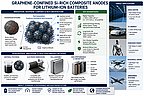
Solidion’s Battery Patents: Powering Space and a Speculative Surge
DALLAS, TX – June 08, 2026 – In a market hungry for technological breakthroughs, few stories ignite investor imagination like a revolutionary battery. This past week, Solidion Technology (NASDAQ: STI) provided the spark. The Dallas-based firm saw its stock skyrocket over 440% in a single day following a cascade of announcements detailing new patents poised to power everything from humanoid robots to AI data centers in Earth orbit. The company’s vision is as vast as space itself, targeting the burgeoning “lunar economy” with its next-generation power cells.
For investors, the narrative is intoxicating: a small American company with a deep intellectual property portfolio creating a critical technology for the future. But as the stock price detaches from terrestrial fundamentals, the key question for our readers is whether this is a genuine inflection point or a speculative bubble fueled by hype. The Nguyen Report has dug into the patents, the financials, and the competitive landscape to deconstruct the opportunity and identify the red flags.
Deconstructing the Innovation
At the heart of Solidion’s promise is a solution to one of the battery industry’s most persistent challenges: moving beyond the graphite anode. While graphite has been a reliable workhorse, its energy storage capacity is reaching a theoretical limit. Silicon is the heir apparent, capable of holding ten times more lithium ions, but it comes with a fatal flaw—it swells dramatically during charging, causing the anode to crack and degrade, killing battery life.
Solidion claims to have overcome this with a patented, three-pronged strategy for its silicon anodes. First, it encapsulates silicon within porous graphene balls, a structure designed to accommodate the swelling. This allows for an unprecedented 90% silicon content in the composite, a figure that, if scalable, would represent a massive leap in energy density. Second, the company employs a proprietary “silane-gas-free” manufacturing process. This is a critical advantage, as the conventional method uses silane gas—a highly explosive, costly, and difficult-to-source feedstock. By eliminating it, Solidion promises a safer, cheaper, and more scalable production path. Finally, the entire process is built on a foundation of supply-chain security. The graphene is produced from biomass by an affiliated company, Global Graphene Group, using feedstock abundant in North America.
This anode technology is the centerpiece of a formidable intellectual property fortress. The company now holds 130 U.S. patents on anode materials alone, part of a broader portfolio exceeding 385 patents. Recent announcements have also spotlighted other key innovations, including a “lithium metal anode protection platform” and the “Extreme-Climate Battery Technology” (Gen-ECB). The latter is particularly noteworthy, using graphene’s thermal properties to enable batteries that operate reliably in temperatures ranging from a cryogenic -80°C to a scorching +60°C—a clear signal of the company’s ambitions beyond terrestrial applications.
From Earthly EVs to the Lunar Economy
While competitors like Enovix and Sila Nanotechnologies are heavily focused on the fiercely competitive electric vehicle market, Solidion is executing a shrewd flanking maneuver. Instead of chasing high-volume, low-margin automotive contracts, it is targeting niche, high-value sectors where performance, not price, is the primary driver. The company’s press releases read like a sci-fi novel: humanoid robots, unmanned aerial vehicles, and space-based AI data centers.
This strategy is particularly evident in its Gen-ECB platform, which the company explicitly markets for the lunar economy and low-Earth orbit (LEO) applications. The ability to function in extreme temperatures and withstand radiation makes it a compelling solution for satellites, lunar rovers, and off-world habitats. One source familiar with the technology noted that reliable power is one of the biggest bottlenecks for commercial space ventures, and a battery that eliminates the need for complex and heavy heating systems could be a game-changer.
This focus on high-margin, frontier markets allows Solidion to prove its technology and generate revenue without getting crushed in the EV price wars. It’s a classic “beachhead” strategy: establish dominance in a specialized market before expanding into the mainstream. It also aligns perfectly with national strategic priorities, positioning the company as a key enabler for both commercial space exploration and defense applications.
A Red Flag on the Balance Sheet?
For all the technological promise, a forensic look at Solidion’s financials raises critical questions. The recent stock surge has pushed its valuation into territory that seems to price in, as one analyst put it, “absolute best-case scenarios.” While the company just celebrated its first-ever quarterly revenue—a significant commercial milestone—its balance sheet tells a more cautionary tale.
Research reveals a history of significant R&D cash burn and negative free cash flow, typical for a deep-tech company but a risk nonetheless. More concerning is the negative shareholders' equity, which has resulted in a price-to-book ratio of 33.5x, more than ten times the industry average. This indicates that investors are betting almost entirely on the intangible value of its patents and future potential, not its current assets.
The company is aware of its capital needs. On June 7, Solidion announced a $35 million private placement with an institutional investor. While a vote of confidence, it is also a dilution event and highlights the ongoing need for cash to fund the long road from pilot production to mass commercialization. The market is rife with speculation about potential partnerships with NASA or SpaceX, but until those contracts are signed, the company’s valuation remains precariously balanced on future promises.
The Geopolitical Power Play
Perhaps Solidion's most compelling advantage is one that can’t be easily measured in a lab: its alignment with American industrial and security policy. In an era defined by geopolitical competition and fragile global supply chains, Solidion’s commitment to a domestic ecosystem is a powerful differentiator. Its headquarters in Texas and pilot facilities in Ohio place it squarely within the U.S. industrial heartland.
More importantly, its silane-free process and use of biomass-derived graphene insulate it from the supply chain vulnerabilities that plague the battery industry, which remains heavily dependent on foreign-sourced materials and processing. By developing a domestic, end-to-end solution for a critical next-generation technology, Solidion is not just building a better battery; it is building a strategic asset.
This positioning makes the company an attractive partner for government agencies and defense contractors. The ability to secure a U.S.-made, high-performance power source for satellites, drones, and other critical systems is a matter of national security. As Washington pushes to reshore critical manufacturing capabilities, Solidion finds itself in the right place, with the right technology, at the right time. The question is whether it can execute on its ambitious plan before the speculative fervor wanes or the capital runs out.