
- 43 gigawatts: Record new utility-scale solar capacity expected in 2026.
- 10% failure rate: Solar panels failing damp heat tests, risking premature degradation.
- 8.3% degradation: Modules showing unacceptable UV radiation damage.
Experts agree that while solar expansion is critical for renewable energy, systemic reliability issues threaten long-term profitability and project bankability, demanding stricter quality control and performance verification.
Solar's Growth Paradox: A Looming Reliability Crisis Threatens the Boom
FREMONT, CA – June 03, 2026 – The solar industry is in the midst of an unprecedented boom. Driven by the voracious energy demands of artificial intelligence, widespread electrification, and industrial expansion, the U.S. is on track to install a record 43 gigawatts of new utility-scale solar capacity in 2026 alone. This surge represents a monumental victory for renewable energy. Yet, beneath the surface of this explosive growth, a critical tension is building. A new report reveals that the very hardware underpinning this multi-billion dollar expansion may harbor a systemic weakness, threatening the long-term profitability and reliability of these crucial assets.
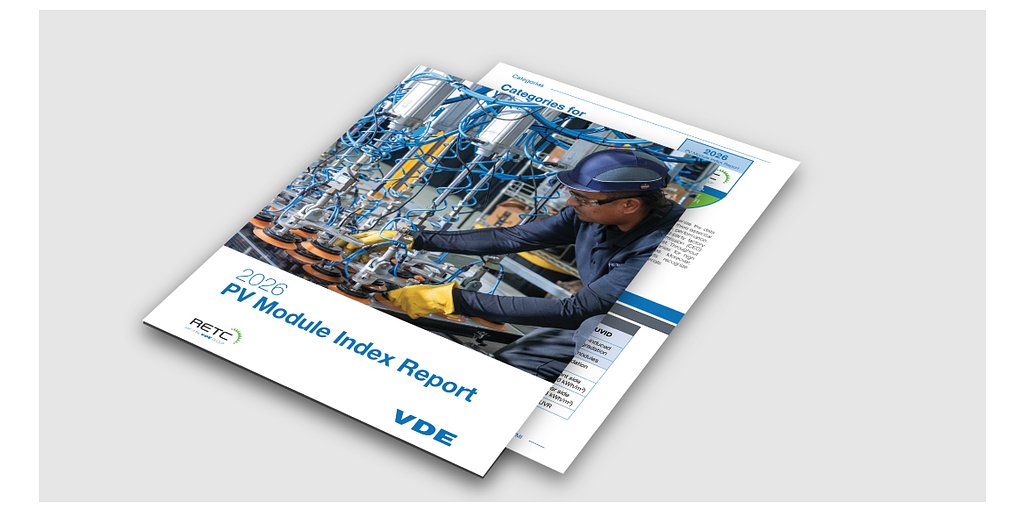
The 2026 PV Module Index (PVMI) report, released by the independent testing lab RETC, serves as a stark reality check. It highlights a troubling trend of performance failures and premature degradation in a significant percentage of solar panels subjected to rigorous, long-term stress tests. The findings signal a pivotal moment for the industry, forcing a shift in focus from the sheer scale of deployment to the far more complex calculus of long-term performance, risk, and ultimate bankability.
Red Flags on the Production Line
For years, the solar narrative has been one of falling costs and rising efficiency. The RETC report, however, peels back the veneer of this success story to reveal potential vulnerabilities. The lab’s extended testing protocols, which simulate decades of real-world wear and tear, uncovered what it terms “red-flag” results in multiple critical categories.
Most alarming is the finding that over 10% of module samples failed a 2,000-hour damp heat test, which simulates prolonged exposure to high heat and humidity. For assets expected to perform for 25 to 35 years in punishing environments from the Texas heat to Florida's humidity, such a failure points to a high risk of premature material breakdown, corrosion, and power loss. This isn't a minor defect; it's a potential Achilles' heel for long-term energy production.
Furthermore, for the second year running, roughly 8.3% of modules showed unacceptable levels of degradation from ultraviolet (UV) radiation. This type of degradation can cause materials to crack and yellow, impeding the panel's ability to absorb sunlight and reducing power output over time. RETC also observed a year-over-year increase in failures across tests for potential-induced degradation (PID), mechanical load stress from wind and snow, and thermal cycling. These are not abstract technicalities; they are the very mechanisms that can turn a high-performing, revenue-generating asset into a costly liability.
From Deployment to Durability: A New Calculus for Profit
The report's findings confirm a strategic shift that is quietly reshaping the mechanics of power and profit in the solar sector. The era of a frantic, gold-rush-style deployment at any cost is giving way to a more sober, mature focus on asset performance and risk management. With trillions of dollars being funneled into clean energy infrastructure, investors, financiers, and asset owners are no longer satisfied with a manufacturer's datasheet. They are demanding proof of long-term durability.
“What we are seeing is an industry moving from a deployment story to a performance and risk management story,” said Cherif Kedir, CEO of RETC. “Certifications require products to meet a minimum baseline standard; however, they do not necessarily address how assets will perform throughout their projected lifetime in the field, specifically in recent years, under increasingly extreme conditions.”
This shift has profound financial implications. A solar project's value is predicated on a predictable stream of revenue from selling electricity over several decades. Unexpected degradation rates or premature failures can decimate project economics, jeopardizing loan repayments and investor returns. Consequently, the concept of “bankability” is increasingly tied not just to a manufacturer's name, but to its performance in independent tests like the PVMI. A poor showing can make it significantly harder and more expensive to secure financing and insurance, while top performers gain a crucial competitive advantage.
The Manufacturing Treadmill: Quality vs. Quantity
The root of these emerging reliability issues lies in the immense pressure on the global supply chain. The breakneck pace of manufacturing expansion, the constant push for higher efficiency through new technologies like TOPCon cells, and the relentless drive to reduce costs have created a high-stakes environment where quality control can falter.
As manufacturers race to scale production, they are introducing new materials and designs whose long-term behavior may not be fully understood. The trend towards using thinner glass and novel encapsulants to cut costs can, if not perfectly engineered and tested, compromise a module's physical robustness and resilience. With new factories and supply lines coming online rapidly to meet demand and geopolitical incentives, maintaining consistent quality across every production batch becomes a monumental challenge.
“In 2026, solar is now both critical infrastructure and a commoditized product, which makes quality differentiation paramount for long-term reliability, consistency, and performance,” Kedir noted. This commoditization paradox is central to the industry's challenge: how to mass-produce a high-tech product at low cost without sacrificing the long-term quality that underpins its value.
The Arbiters of Bankability
In this complex landscape, independent testing labs like RETC have become the de facto arbiters of quality and, by extension, bankability. Their reports are no longer just technical documents for engineers; they are essential due diligence for financiers and investors. By subjecting modules to stresses far beyond standard certification, they provide a crucial, data-driven forecast of future performance.
The recognition of 13 manufacturers as “Overall Highest Achievers” in the 2026 report is more than a plaque on a wall; it's a powerful market signal. It tells developers and their financial backers which products have demonstrated superior resilience, providing a measure of confidence in a market fraught with uncertainty. As the solar industry continues its vital role in the energy transition, this rigorous, independent verification will be the bedrock upon which a truly reliable and profitable future is built.