
- €0.45 per kWh: Current electricity price in Germany driving demand for energy independence. - 80%: Estimated proportion of new residential solar installations in Germany paired with battery storage. - 30 minutes: Time required to commission the entire SolarEdge Nexis system, a significant reduction from previous standards.
Experts view the SolarEdge Nexis system as a groundbreaking solution for German home energy independence, combining modular design, high efficiency, and rapid installation to meet the country's evolving residential solar and storage needs.
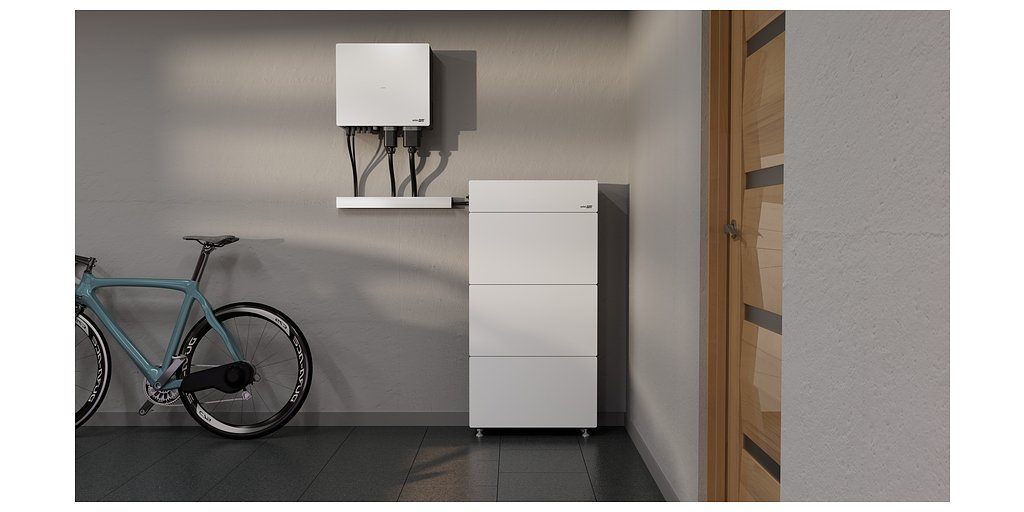
SolarEdge Nexis: A 'Lego' Approach to German Home Energy Independence
MUNICH, Germany – March 19, 2026 – As Germany accelerates its ambitious energy transition, global smart energy leader SolarEdge Technologies has launched a new residential solar and storage system poised to reshape the home energy landscape. The commercial debut of the three-phase SolarEdge Nexis system in Germany introduces a radically simplified, modular approach designed to meet the country's surging demand for energy self-sufficiency.
At a time when German households face electricity prices hovering around €0.45 per kilowatt-hour and a strong desire for independence from volatile energy markets, the new system offers a powerful combination of high efficiency, user-friendly scalability, and unprecedented ease of installation.
A Market Ripe for Innovation
The launch of SolarEdge Nexis is strategically timed. Germany's residential solar market is not just growing; it's evolving. Driven by supportive government policies like the recent Solarpaket 1, which simplifies regulations, and a zero VAT rate on residential solar and battery systems, homeowner adoption is skyrocketing. Today, an estimated eight out of ten new residential solar installations in Germany are paired with a battery storage system, as consumers look to maximize the use of their self-generated power.
This shift has created a clear demand for solutions that are not only powerful but also flexible and future-proof. Homeowners are no longer just installing solar panels; they are building integrated home energy ecosystems that often include EV chargers and heat pumps. SolarEdge’s new platform is engineered for this new reality, providing a scalable foundation that can grow with a household's needs.
Redefining Installation: The 'Lego-Like' Approach
The most striking innovation of the SolarEdge Nexis system is its radical simplification of the installation process. The company has targeted one of the biggest bottlenecks in the industry—installation time and complexity—with a new design philosophy that installers are calling a “gamechanger.”
At the heart of this is the system's new modular battery. Comprised of 4.9 kWh Lithium Iron Phosphate (LFP) blocks, the battery stack features a “Lego-like” design and a proprietary Simple-Click™ architecture. This allows installers to click each lightweight block into place within moments, creating a secure, wiring-free connection. A single installer can quickly build a battery stack, dramatically reducing on-site labor.
This modularity extends to the system's capacity, which can be scaled from a single 4.9 kWh block up to four stacks per inverter, for a total potential capacity of 78.4 kWh. This gives homeowners exceptional flexibility to start with a smaller system and expand it later as their energy needs increase.
The entire system, which includes the new inverter, battery, and backup interface, is designed for rapid commissioning. By integrating components like DC surge protection and a built-in antenna, SolarEdge claims the entire system can be commissioned in under 30 minutes, a stark reduction from the hours it could previously take.
Tom Glauner, Director of Renewable Energy at the German installation firm Elektro Ostkamp, who installed a system in his own home, commented on the process in the company's official release. “Installation and commissioning have never been faster or simpler, with full home backup delivered in just four-part numbers and simple click-on battery blocks that require no additional wiring,” he stated. “As a result, we can now offer homeowners a highly sophisticated PV and storage solution, combining advanced features with the ease and speed of installation.”
The Technology Under the Hood
Beyond its physical design, the Nexis system incorporates significant technological advancements to boost performance. The new three-phase inverter, available up to 20kW, is more compact and powerful than previous models. It utilizes advanced Silicon Carbide (SiC) switches, a next-generation semiconductor material that reduces the inverter's size and weight while increasing power density and efficiency.
SolarEdge claims this new design delivers up to 20% higher efficiency in low-power conditions compared to leading European competitors and achieves an industry-leading 99% weighted efficiency. This is crucial for maximizing energy harvest, especially on cloudy days or during early morning and late evening hours.
Further enhancing system performance is the new Battery Optimizer technology. This feature manages the battery at the individual block level, improving low-power efficiency by activating only the necessary blocks. It also continuously balances the state of charge across all blocks and can isolate a single block if an issue is detected, ensuring the resilience and longevity of the entire battery system.
Empowering the German 'Prosumer'
In a competitive German market featuring established players like SMA, Enphase, and Varta, SolarEdge Nexis aims to differentiate itself through this unique combination of extreme modularity, high efficiency, and installation speed. While competitors also offer modular solutions, the scale of Nexis's expandability and its wiring-free, click-together design set a new benchmark for user-friendliness.
The system is perfectly aligned with the rise of the German energy 'prosumer'—households that both produce and consume their own energy. With its AI-driven MySolarEdge App, homeowners can monitor and control their energy flows, synchronizing their solar production with EV charging and other smart home devices to maximize self-consumption.
Furthermore, the system is built for the future of the grid. Its full-home backup capability provides energy security during outages, and its smart management features position it for participation in Virtual Power Plants (VPPs). As Germany continues to build a decentralized energy grid, aggregated residential battery systems like Nexis will play a critical role in providing stability and flexibility, offering homeowners a potential future revenue stream while supporting the nation's renewable energy goals.
Topics & Related
Battery Storage
Solar Panels
Related Company Pulse