
- Cost Reduction: SmartRent claims its Virtual Intercom can reduce hardware and installation expenditures by up to 85%. - Market Opportunity: The global PropTech market is projected to grow from $45 billion in 2025 to $115 billion by 2033. - Deployment Simplicity: The system can be deployed by simply placing a QR code, making it scalable for secondary entry points.
Experts would likely conclude that SmartRent's hardware-free intercom system represents a disruptive innovation in property technology, offering significant cost savings and scalability, though it introduces new security and reliability considerations that will need careful management.
SmartRent's Virtual Intercom Ditches Hardware for QR Code Access Control
PHOENIX, AZ – June 16, 2026 – For decades, the building intercom has been a fixed, physical object—a metal box with buttons, wires, and a speaker, bolted to a wall. SmartRent (NYSE: SMRT), a major player in the property technology space, is betting that its future is as ephemeral as a QR code. The company has launched Virtual Intercom, a browser-based entry system that completely removes physical hardware from the visitor's side of the equation, aiming to disrupt a market long defined by high costs and complex installations.
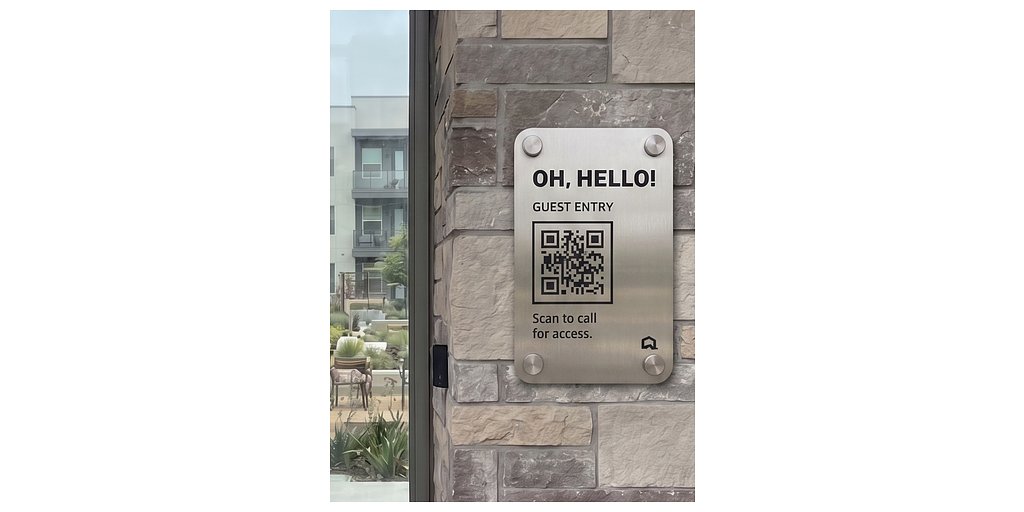
Instead of a dedicated intercom panel, visitors at a SmartRent-equipped property will now be greeted by a simple sign with a QR code. A quick scan with their smartphone camera launches a web-based directory, allowing them to initiate a video call to the resident. The resident, in turn, receives a push notification on their existing SmartRent app, from which they can see and speak to their guest before granting entry with a single tap. It's a system that leverages the technology already in everyone's pocket to solve a long-standing industry problem.
Shattering the Hardware Bottleneck
The core challenge with traditional intercoms has always been the cost and complexity of hardware. Property owners looking to install or upgrade these systems face a daunting financial proposition. High-end video intercoms can cost anywhere from $3,000 to $10,000 per unit, and that's before factoring in the labor-intensive process of running wires, electrical work, and physical installation, which can add thousands more per entry point.
“For years, property operators have faced a double standard: intercoms are highly requested by residents, but the per-building hardware and wiring costs can make portfolio-wide installation economically impractical,” said Sangeeth Ponathil, Chief Information Officer at SmartRent. “Virtual Intercom removes the hardware bottleneck.”
SmartRent claims its solution can reduce typical hardware and installation expenditures by up to 85%. This bold claim is rooted in the system's fundamental design. By eliminating the need for physical entry panels, controllers, and dedicated wiring, the company circumvents the largest capital expenditures associated with access control. The primary costs shift from upfront hardware investment to what is likely a more manageable software-as-a-service (SaaS) subscription model, a move that aligns with broader trends in enterprise technology.
A Seamless Digital Handshake
Beyond cost savings, the Virtual Intercom is engineered for a modern, frictionless user experience. For visitors, including delivery couriers and service providers, the process avoids a common point of frustration: the need to download yet another proprietary app. The system uses WebRTC (Web Real-Time Communication) streaming technology, the same open-source protocol that powers video conferencing in web browsers like Chrome and Firefox. This allows for an instant, secure video call directly from the visitor's mobile browser.
For residents, the system integrates into the SmartRent app they already use to control thermostats, locks, and other smart home features. This unified approach is a key part of the value proposition, creating a single touchpoint for managing their living environment and building access.
However, this software-centric approach introduces new security and reliability considerations. The security of the system relies on more than just the encrypted WebRTC connection. Physical security for the QR code signage is paramount; a malicious actor could theoretically replace a legitimate code with a fraudulent one. Furthermore, the system's operation is entirely dependent on reliable internet connectivity for both the visitor and the property's backend systems. While this is increasingly a given, it marks a departure from older systems that could operate on dedicated, closed-loop wiring.
Redefining Value in a Competitive PropTech Market
SmartRent is not the first company to bring the intercom into the digital age. Competitors like ButterflyMX and DOOR (formerly Latch) have made significant inroads with sleek video intercoms that connect to smartphones. Yet, these solutions, while innovative, have largely retained a reliance on expensive, proprietary hardware at the door. SmartRent's hardware-free approach is a direct challenge to this incumbent model, betting that property owners will prioritize radical cost reduction and scalability over a physical touchscreen.
This move could significantly reshape the return-on-investment calculation for property technology. By deeply integrating with property management system (PMS) software, the Virtual Intercom automates directory management, a tedious manual task for property staff. When a resident moves out, their access and directory listing can be revoked automatically, enhancing security and operational efficiency. This level of automation, combined with the near-elimination of maintenance for physical entry hardware, presents a compelling financial case for owners and operators focused on boosting Net Operating Income (NOI).
This strategy is well-timed. The global PropTech market, valued at over $45 billion in 2025, is projected to grow to $115 billion by 2033, driven by a demand for solutions that streamline operations and cater to a tech-savvy resident demographic. SmartRent's innovation positions it to capture a significant share of this growth by offering an accessible entry point to smart building technology.
A Scalable Blueprint for the Future of Access
The true power of the Virtual Intercom may lie in its scalability. Because deployment is as simple as placing a QR code, the system can be affordably extended to countless secondary entry points—parking garages, side doors, pool gates, and auxiliary common areas—that would be cost-prohibitive to wire with traditional systems. This makes it an especially attractive solution for retrofitting older buildings where new infrastructure installation is a major barrier.
This launch is a clear expression of SmartRent's 'Vision 2028' strategic framework, which aims to transform its massive installed base of smart devices into a source of advanced property intelligence. The Virtual Intercom adds another critical layer of data and control to its unified ecosystem, reinforcing the company's position as a comprehensive platform for the rental housing industry.
By reimagining the most basic point of entry, SmartRent is making a statement about the future of property management. It suggests a future where expensive, single-purpose hardware is replaced by intelligent, flexible software that leverages the powerful computers we all carry. The humble intercom, a fixture of building lobbies for nearly a century, may have finally been unplugged.