
- 4 new probes added to measure both low and high concentrations of VOCs, enhancing indoor air quality (IAQ) monitoring.
- Guided workflows integrated to automate calculations and reduce human error in compliance testing.
- Smart building integration enables validation of automated HVAC systems, bridging reactive and proactive maintenance.
Experts would likely conclude that TSI's enhanced ventilation meters represent a critical advancement in building health diagnostics, aligning with stricter regulations and the growing demand for data-driven smart building management.
Smarter Air: How New Tools Are Redefining Building Health and Efficiency
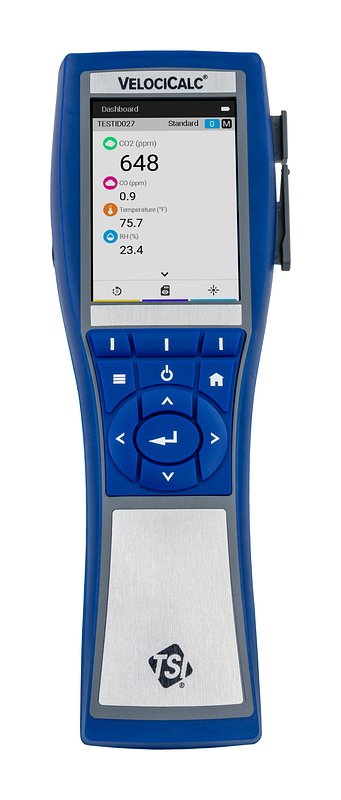
SHOREVIEW, MN – June 17, 2026 – This week, TSI Incorporated, a global leader in measurement instrumentation, announced a significant expansion of capabilities for its VelociCalc™ and Airflow™ ventilation meters. On the surface, it’s a story about a new product update—better probes, slicker software, and a more durable case. But to dismiss it as a niche industrial upgrade is to miss the bigger picture. This evolution in a handheld diagnostic tool is a direct reflection of powerful economic and social currents reshaping our built environment. The humble ventilation meter is becoming a critical weapon in the concurrent battles for public health, energy efficiency, and regulatory compliance.
Beneath the headlines of smart cities and AI-driven building automation lies the foundational need for accurate, ground-truth data. Today’s announcement reveals how the tools of the trade are rapidly evolving to meet this demand, moving from simple measurement devices to sophisticated diagnostic platforms. The move signals a broader industry transition where the health of our buildings—and by extension, their occupants—is no longer an afterthought, but a quantifiable, manageable, and increasingly valuable asset.
The Pressure for Precision
For decades, the job of a ventilation technician was relatively straightforward. But the world has changed. The confluence of a post-pandemic awareness of airborne pathogens, tightening energy efficiency mandates, and a growing body of research linking indoor air quality (IAQ) to cognitive performance has created a perfect storm of regulatory and market pressure. Building owners and facility managers are no longer just trying to keep the lights on and the temperature comfortable; they are managing complex ecosystems under intense scrutiny.
Regulatory bodies are a primary driver of this shift. Standards like ASHRAE 62.1, which sets the benchmark for ventilation rates in commercial buildings, are becoming more stringent and widely adopted into local building codes. In jurisdictions like California, the 2026 update to its Title 24 energy code is pushing the envelope on HVAC design, commissioning, and ventilation controls, demanding lower CO2 levels and a faster transition to high-efficiency electric systems. The EPA, meanwhile, regulates Volatile Organic Compounds (VOCs)—chemicals emitted from everything from cleaning supplies to new furniture—as toxic air pollutants under the Clean Air Act. Failure to monitor and control these elements is no longer just a health risk; it's a significant compliance and financial liability.
This new reality demands a new level of precision. Outdated tools and back-of-the-envelope calculations are insufficient. As one industry analyst noted, “We're seeing a compliance-driven transition away from traditional tools toward advanced, connected instruments. If you can't prove your building is performing to standard with reliable data, you’re exposed.” This is the environment into which TSI is deploying its enhanced meters.
A Swiss Army Knife for Building Diagnostics
The updates to TSI’s VelociCalc™ 9600 and Airflow™ TA500 series are a direct response to these market pressures. The most significant enhancement is the compatibility with four new probes, enabling the measurement of both low and high concentrations of VOCs. This is a game-changer. While CO2 has long been a proxy for indoor air quality, the ability for a technician to directly and accurately measure VOCs on-site provides a much more detailed and actionable picture of environmental health. This is critical for environments like hospitals, cleanrooms, and schools, where occupant vulnerability is high.
Beyond the new probes, the integration of guided workflows transforms the user experience and, more importantly, the quality of the output. The meters now walk technicians through complex, multi-point duct traverses according to industry standards like ASHRAE 111, EN 12599, and EN 16211. These workflows automate calculations, reduce the potential for human error, and ensure that tests are performed consistently and correctly every time. This dramatically lowers the training barrier and increases the productivity of field teams.
"The built-in guided workflows for common jobs help HVAC professionals increase productivity by enabling them to quickly progress through key measurement processes in a shorter time," said Ketan Mehta, Vice President of Sales and Marketing at TSI. This focus on efficiency is echoed in the physical design, with integrated magnets for hands-free work on ductwork and a ruggedized housing built for demanding job sites. Specialized models like the VelociCalc 9650 now also integrate with Duct Accreditation Systems, a crucial feature for certifying the integrity of systems in highly sensitive environments like pharmaceutical labs and semiconductor fabs.
While competitors like Testo also offer capable multi-function meters, TSI's strategy appears focused on creating an all-in-one diagnostic powerhouse. By combining advanced IAQ sensing (especially VOCs), compliant procedural workflows, and robust physical design, the company is positioning its devices as an indispensable toolkit for the modern building professional.
From Compliance Tool to Smart Building Enabler
Perhaps the most profound implication of this technological step-up is how it redefines the role of the handheld meter in the age of the smart building. Historically, these tools were used for periodic spot-checks or troubleshooting—a reactive approach to maintenance and compliance. The new generation of meters, however, serves as a crucial bridge to the proactive, data-driven management promised by smart building platforms.
Smart buildings rely on a constant stream of data to automate HVAC operations, optimize energy consumption, and ensure occupant comfort. While permanently installed sensors are a key part of this ecosystem, they cannot be placed everywhere. Advanced handheld meters provide the high-fidelity data needed to commission, calibrate, and validate these automated systems. A technician can use a VelociCalc meter to verify that the airflow reported by a sensor in the Building Automation System (BAS) is accurate, or to identify a rogue source of VOCs that the building’s systems need to address.
This creates a vital feedback loop. The data collected during routine maintenance and testing no longer lives and dies on a clipboard or in a standalone report. It becomes essential intelligence for refining the performance of the entire building. As buildings become more intelligent and responsive, the need for reliable, on-the-ground data for validation and diagnostics only grows. These advanced meters are not being replaced by smart buildings; they are becoming essential enablers for them.
The evolution of TSI's ventilation meters is a microcosm of a larger economic story. It demonstrates how technological innovation responds to regulatory pressure and shifting societal values, creating new efficiencies and capabilities. What was once a simple tool for measuring airflow is now a sophisticated instrument at the intersection of public health, energy policy, and digital transformation, providing the critical data needed to build healthier, smarter, and more efficient indoor spaces.