
- GPU Utilization: 20%–40% in large-scale AI clusters, leaving significant compute power idle.
- Synchronization Accuracy: SiTime's Elite 2 Super-TCXO achieves sub-nanosecond precision, 10X better than industry targets.
- Market Potential: $1.5 billion by 2030 for high-precision timing in AI data centers.
Experts agree that SiTime's Elite 2 Super-TCXO addresses a critical bottleneck in AI infrastructure, significantly improving GPU utilization and efficiency through unprecedented timing accuracy.
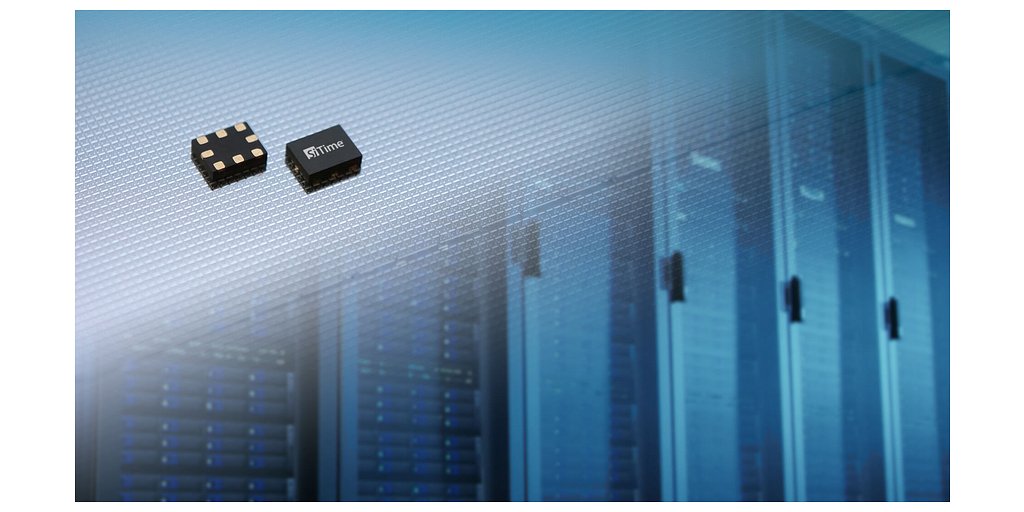
SiTime Unveils Chip to Solve AI's Hidden Efficiency Crisis
SANTA CLARA, CA – May 04, 2026 – As the artificial intelligence race accelerates, a silent and costly problem plagues the massive data centers powering the revolution: underutilized hardware. Now, precision timing company SiTime Corporation has announced a new component designed to tackle this inefficiency head-on, potentially unlocking billions of dollars in trapped value within AI infrastructure.
The company today unveiled its Elite 2 Super-TCXO, a micro-electro-mechanical system (MEMS) based oscillator engineered to provide unprecedented time synchronization accuracy for AI clusters. The announcement targets a critical bottleneck that has left some of the world's most powerful and expensive Graphics Processing Units (GPUs) sitting idle for more than half the time.
The Billion-Dollar Wait Cycle
Behind the curtain of generative AI's impressive capabilities lies a stark economic reality. Industry reports and analyses consistently find that GPU utilization in large-scale AI clusters can be shockingly low, often hovering between 20% and 40%. This inefficiency represents what SiTime's chief business officer, Piyush Sevalia, calls a "large and largely hidden tax on AI infrastructure."
The root of the problem lies in timing. Modern AI workloads, particularly for training large models, are distributed across thousands of GPUs that must work in perfect harmony. These processors exchange massive amounts of data in tightly orchestrated time slots. Even minuscule timing errors between them can force the entire system to pause, creating wait cycles to prevent data corruption. In more severe cases, these synchronization failures can lead to GPU timeouts and system-wide restarts, bringing costly operations to a grinding halt.
As AI clusters grow in size and complexity, this challenge is magnified. The industry has been racing towards a target of 10-nanosecond time synchronization across a cluster, a significant leap from the current standard of approximately one microsecond. Failure to achieve this precision directly caps GPU utilization, meaning organizations are paying for compute power they cannot effectively use. For a hyperscaler operating tens of thousands of GPUs, this hidden tax can translate into hundreds of millions of dollars in wasted capital and operational expenditure.
A Nanosecond-Scale Solution
SiTime's Elite 2 Super-TCXO aims to demolish this barrier by delivering synchronization accuracy an order of magnitude better than the industry's goal. The company states the device enables sub-nanosecond synchronization, a feat made possible by its advanced MEMS technology and sophisticated temperature compensation.
"We collaborated closely with leading AI system architects at hyperscalers and silicon providers," said Piyush Sevalia in the company's announcement. The conclusion of that collaboration was that a superior oscillator could fundamentally improve cluster-wide synchronization. "The device delivers sub-nanosecond synchronization, 10X better than target, which is enabled by its exceptional thermal and short-term stability," he continued.
Key technical specifications underscore the performance leap. The Elite 2 boasts a frequency temperature slope (dF/dT) of ±2 ppb/°C, making it up to 25 times more stable against temperature changes than competing solutions. Its short-term stability, measured by Allan Deviation (ADEV), is as low as 6 × 10⁻¹², a critical factor for maintaining a steady clock over the brief intervals relevant to GPU communication. These features allow the chip to minimize time errors, which in turn helps to unlock higher system utilization and better performance per watt.
Furthermore, the MEMS-based design inherently avoids problems that plague traditional quartz crystal oscillators, such as activity dips and micro jumps, which can introduce unpredictable timing jitter. The silicon-based component is also more resistant to physical stressors like shock and vibration, enhancing reliability within the demanding environment of a high-density data center. All this is delivered in a package as small as 3.2 mm × 2.5 mm, a crucial advantage for space-constrained AI accelerator cards and modules.
The Foundational 'Heartbeat' of Future AI
The launch comes as the market for high-precision timing in AI data centers is poised for explosive growth, with SiTime projecting a cumulative market size of $1.5 billion by 2030. This growth is driven by the relentless scaling of AI infrastructure and an industry-wide push for greater efficiency and sustainability.
"AI networks must operate with extremely high efficiency to fully utilize expensive GPU resources," noted Sameh Boujelbene, vice president at Dell'Oro Group. Boujelbene highlights that as AI hardware refreshes at a much faster cadence than traditional infrastructure, "time synchronization accuracy becomes increasingly important to sustaining performance across rapidly evolving data center architectures."
This sentiment reflects a broader shift in thinking, where timing is no longer an afterthought but a first-order design decision. As AI clusters scale from thousands of GPUs today toward a potential future of one million interconnected units, the role of a stable, shared 'heartbeat' becomes non-negotiable. Precise synchronization is the foundation upon which reliable, scalable, and efficient AI is built. By ensuring every component operates in lockstep, data centers can maximize the useful work performed for every watt of energy consumed—a critical metric as the power demands of AI continue to skyrocket.
SiTime is positioning the Elite 2 not just as a component, but as a strategic enabler for the future of AI. The company has announced that the new Super-TCXO is sampling now with key customers, with full commercial production anticipated for the third quarter of 2026. By providing a solution that addresses one of the most fundamental bottlenecks in AI computing, this tiny silicon device is poised to have an outsized impact on the performance, cost, and scalability of artificial intelligence for years to come.