
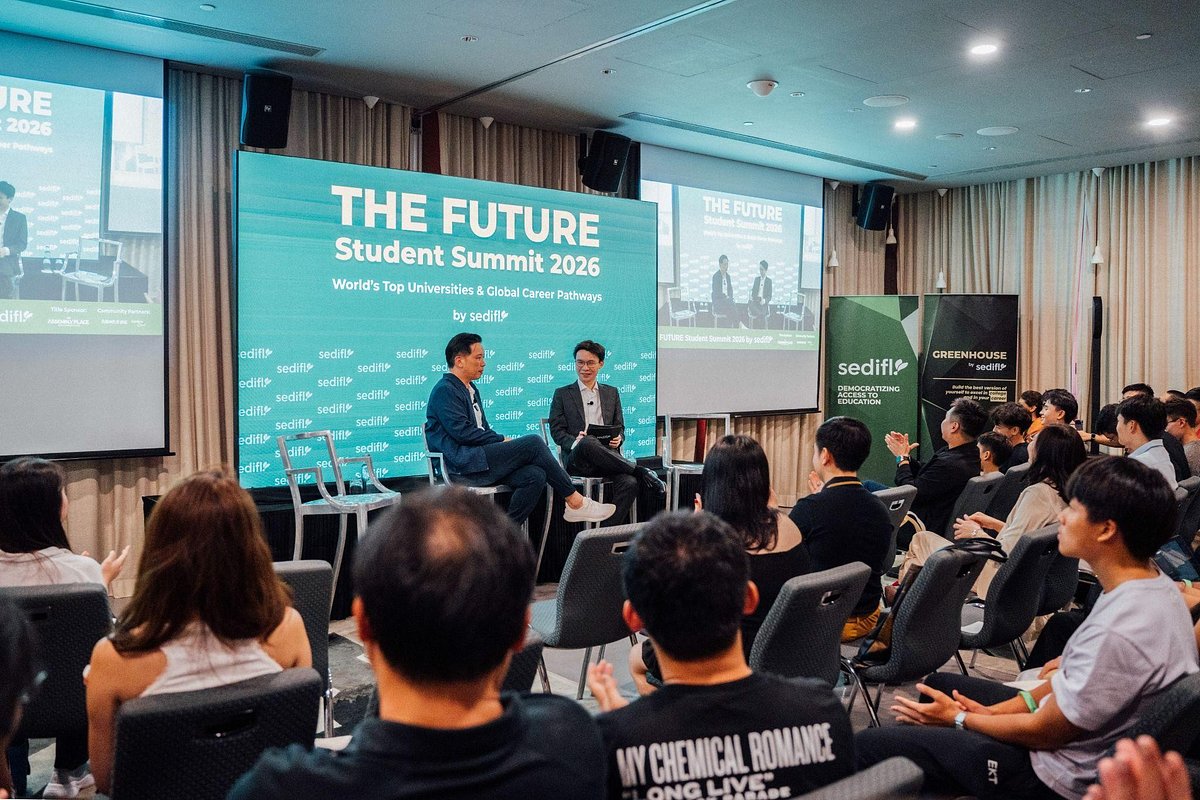
- 400+ attendees at THE FUTURE Student Summit 2026 in Singapore.
- 100% acceptance rate to Global Top 20 colleges for Sedifly’s students (self-reported).
- 2027 mandate: All Singapore IHLs will require AI ethics and application modules.
Experts agree that Singapore's focus on cultivating human skills—creativity, adaptability, and emotional intelligence—alongside AI literacy is a strategic response to technological disruption, aligning with global workforce trends.
Singapore’s Bet on Human Skills in the Age of AI
SINGAPORE – June 22, 2026 – As artificial intelligence continues its relentless march into every corner of industry and education, a powerful counter-narrative is solidifying within Singapore: the future will be won not by those who can compute fastest, but by those who can think, adapt, and connect most effectively. This message echoed through the halls of the JW Marriott Hotel Singapore South Beach this week, where Minister of State Alvin Tan addressed a packed room of over 400 students at THE FUTURE Student Summit 2026.
Hosted by the global EdTech firm Sedifly, the oversubscribed event brought together high school students, venture capitalists, and government leaders to confront a critical question: What does it take to succeed in a world being fundamentally reshaped by technology? MOS Tan’s answer was a direct challenge to the anxieties of a generation facing unprecedented uncertainty.
“You have every right to feel indignant, but you also have agency,” he stated, urging students to take ownership of their future. “You will have an opportunity to use those tools rather than to have the tools use you.” It was a call to action that framed AI not as a replacement for human intellect, but as a catalyst for elevating uniquely human qualities.
More Than Grades: A National Push for Future-Ready Skills
Minister Tan’s remarks are not an isolated sentiment but a clear reflection of Singapore's national strategy. Faced with the dual pressures of global competition and technological disruption, the government is championing a “human-centred approach” to AI. The Ministry of Education (MOE) has been cautious in its rollout of AI tools, particularly for younger students, to protect the development of foundational skills. The focus is on using AI to “enable learning,” not “supplant” it.
This philosophy is being hardwired into the educational system. Beginning in 2027, all students in Singapore's Institutes of Higher Learning (IHLs) will be required to complete modules on AI, focusing on ethical use and practical application within their specific disciplines. This initiative, coupled with a massive expansion of AI-related courses by SkillsFuture Singapore, signals a concerted effort to cultivate what MOS Tan has previously termed “AI Bilingualism”—the ability to speak both the language of business and the language of the machine.
Experts from organizations like the World Economic Forum have long validated this direction, with reports consistently highlighting creativity, analytical thinking, resilience, and emotional intelligence as the most critical skills for the future workforce. The consensus is clear: as AI handles routine and analytical tasks, the premium on human judgment, strategic thinking, and interpersonal skills will only increase. The summit’s agenda, which featured prominent investors like Jeffrey Paine of Golden Gate Ventures and Mohan Belani of e27, reinforced this by emphasizing that success is no longer defined by academic scores alone, but by a student’s capacity for continuous learning and navigating ambiguity.
The Sedifly Blueprint: Mentorship for Elite Admission
At the center of the summit was its organizer, Sedifly, a one-year-old EdTech firm that has quickly made a name for itself in the competitive college admissions space. The company’s founder and CEO, Joash Lee, outlined a vision to provide students with more than just information. “They need clarity, exposure, mentorship, and a strong support system,” he explained.
Sedifly’s model is built on what it calls the “Aptitude Cultivation framework,” a mentorship-driven program focused on long-term profile development for admission into elite universities. The firm reports impressive outcomes, including that 100% of its students were accepted to Global Top 20 colleges and that its team has secured over 150 offers from US T20 and UK G5 schools. While these powerful statistics are a cornerstone of the company’s positioning, they are self-reported, as independent audits are not publicly available.
Nonetheless, the company's approach taps into a growing demand from parents and students for a more holistic preparation strategy. By pairing students with mentors and focusing on experiences beyond the classroom—a point also stressed by MOS Tan—Sedifly aims to build the kind of profiles that stand out in a hyper-competitive global landscape. The summit itself served as a powerful demonstration of this philosophy, moving the conversation from mere application tactics to broader life strategy.
Beyond the Classroom: Summits as the New Nexus for Learning
The palpable energy at the event, which required two additional broadcast rooms to accommodate the crowd, points to a broader trend in education. Students are increasingly seeking direct engagement with the industries they hope to one day lead. The summit provided a vibrant platform for precisely that, with networking lounges and a “Meet the Strategist” booth offering practical guidance alongside high-level inspiration.
For attendees, the value was tangible. “One key takeaway for me was that successful businesses are built not only on great ideas, but also on persistence and a willingness to learn from setbacks,” shared Zhang Kaixin, a Banking and Finance student from Ngee Ann Polytechnic. Her sentiment was echoed by Amit Kamdar, a sales leader at Autodesk, who noted the critical importance of “balancing technological advancement with human development.”
By bringing together figures from government, venture capital, and established tech companies, events like THE FUTURE Student Summit serve as a crucial bridge between the structured world of academia and the dynamic reality of the modern economy. They provide a forum where the abstract skills discussed in policy papers—adaptability, strategic thinking, relationship-building—are personified by the leaders on stage.
Building on this momentum, Sedifly plans to expand its programs and will make an appearance at the upcoming Young PAP 40th Anniversary Conference, an event expected to draw over 1,200 attendees with Prime Minister Lawrence Wong delivering the keynote. This continued engagement underscores a shared understanding that preparing the next generation is a collective responsibility, one that requires a constant dialogue between educators, industry builders, and the students themselves.