
- 250% increase in zero-emission heavy truck deployments since mid-2023 (CALSTART).
- 460% surge in commercial van deployments in the first half of 2023.
- 182,000 DC fast chargers needed by 2030 to support 33 million EVs (NREL).
Experts view SINBON's entry into the U.S. fleet electrification market as a strategic move to address critical infrastructure gaps, leveraging advanced charging technologies to support rapid industry growth.
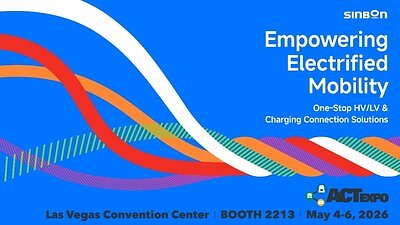
SINBON Targets US Fleet Market with High-Power Charging Tech
LAS VEGAS, NV – March 30, 2026 – As the engine of American commerce increasingly hums with electricity, a pivotal new player is stepping onto the scene. Taiwanese electronics integrator SINBON Electronics is making its inaugural appearance at the Advanced Clean Transportation (ACT) Expo this May, signaling a significant strategic push into the burgeoning U.S. commercial fleet electrification market. The company arrives not just with a booth, but with a formidable arsenal of advanced charging technologies aimed at solving the sector's most pressing challenges.
For years, SINBON has operated as a key, if often unseen, force in global electronics. Now, its debut at North America's largest fleet technology conference marks a deliberate move to become a trusted partner in building the backbone of the U.S. electric vehicle ecosystem. The company will not only exhibit its solutions on the show floor but will also take the main stage for a keynote presentation on May 5, a move that underscores its ambition to be a thought leader in the high-stakes world of transportation electrification.
The High-Stakes World of Fleet Electrification
The transition to electric for commercial fleets is no longer a distant concept; it's a rapidly accelerating reality fraught with both immense opportunity and significant hurdles. The zero-emission heavy truck market has seen explosive growth, with industry reports from groups like CALSTART noting a 250% increase in deployments since mid-2023. The commercial van segment is also a major driver, with deployments surging over 460% in the first half of 2023 alone. This momentum is fueled by a combination of corporate sustainability goals, potential long-term cost savings, and a patchwork of government incentives.
However, this rapid growth is straining the very infrastructure needed to support it. The National Renewable Energy Laboratory (NREL) estimates the U.S. will need around 182,000 DC fast chargers by 2030 to support a projected 33 million EVs. As of late 2023, the country had installed less than 11% of that target. For commercial fleets, the challenge is magnified. They require high-power, high-reliability charging solutions that can minimize downtime and handle the massive energy demands of medium- and heavy-duty vehicles—a far more complex proposition than residential or consumer-grade charging.
Fleet operators face a daunting landscape of high upfront costs, complex utility interconnections, and grid capacity limitations. It is within this challenging environment that ACT Expo serves as a critical nexus, bringing together manufacturers, fleet managers, and infrastructure providers to find viable solutions. SINBON's entry into this arena is timed to address these exact pain points.
An Unsung Hero's Technical Arsenal
While household names in the automotive and energy sectors often dominate headlines, the success of fleet electrification hinges on the specialized components developed by technology integrators like SINBON. The company is showcasing solutions designed specifically for the rigors of commercial use, moving beyond standard charging hardware to address issues of speed, efficiency, and durability.
Central to its offering are its advanced charging cables. SINBON's product roadmap includes both CCS1 and NACS (North American Charging Standard) liquid-cooling cables. This liquid-cooling technology is critical for commercial applications, as it allows for significantly higher power transfer without the risk of overheating. This translates to faster charging times, a crucial factor for fleets where vehicle uptime is directly tied to revenue. Underscoring its leadership in this area, SINBON recently achieved the world's first UL certification for a liquid-cooling system capable of supporting up to 1 megawatt of charging power, a testament to its focus on safety and reliability in high-power applications.
Furthermore, the company's early and successful development of a mass-produced NACS inlet is a key strategic advantage. With many North American automakers and charging networks coalescing around the NACS standard, SINBON's market-validated component positions it as a ready-to-integrate partner for a large swath of the U.S. market. This focus on specialized, high-performance components sets it apart in a competitive landscape that includes larger, more diversified firms like Delta Electronics and TE Connectivity, allowing SINBON to carve out a niche as an expert in the most demanding charging applications.
Sustainability as a Driving Force
SINBON's push into the U.S. market is framed not only as a business strategy but as an extension of its core corporate philosophy centered on sustainability. The company arrives at ACT Expo with a robust and verifiable ESG (Environmental, Social, and Governance) track record, lending credibility to its mission of enabling cleaner mobility. This commitment is woven into its operations, from product design to its own energy consumption.
Company sustainability reports show tangible progress. By 2024, SINBON had reduced its Scope 1 and 2 greenhouse gas emissions by nearly 29% compared to its 2021 baseline, putting it on a firm path to meet its near-term reduction goals. It has also made significant investments in renewable energy, with self-owned solar installations now totaling 3MW and renewable sources accounting for 9.5% of its total electricity consumption. In 2024 alone, the company invested over $38 million in research and development, a 22% year-over-year increase, to fuel further innovation in sustainable solutions.
This deep-seated commitment to ESG is becoming an increasingly important differentiator. For fleet operators and partners looking to build resilient and responsible supply chains, working with a component manufacturer that shares and documents its sustainability goals is a significant value-add. By connecting its advanced charging products to a proven dedication to carbon management and ethical practices, SINBON presents itself as a holistic partner in the green transition. As the industry gathers in Las Vegas, SINBON's debut is poised to be more than just an exhibition; it's a clear statement of intent to help build the backbone of America's electric freight future.