
- 300 participants enrolled in the RELIEV-CM2 trial across 28 sites in 18 months, validating high unmet need in chronic migraine treatment.
- 5 new Category III CPT codes secured for the neurostimulator procedure, effective January 2027, signaling medical establishment recognition.
- $108 million in funding and FDA Breakthrough Device Designation (2021) supporting ShiraTronics' development.
Experts would likely conclude that ShiraTronics' dual milestones—rapid trial enrollment and proactive CPT code acquisition—position its implantable neuromodulation system as a promising, differentiated solution for chronic migraine, though regulatory and reimbursement hurdles remain.
ShiraTronics Signals a New Era for Migraine with Dual Strategic Wins
MINNEAPOLIS, MN – June 02, 2026
In the world of medical innovation, progress is rarely a single breakthrough. More often, it's a series of meticulously planned steps that build momentum, signaling a market shift long before a product hits the shelves. Minneapolis-based ShiraTronics, Inc. just demonstrated a masterclass in this strategy, announcing two concurrent milestones that do more together than either could alone. The clinical-stage company has completed enrollment in its pivotal trial for an implantable chronic migraine therapy and, in parallel, secured a dedicated set of billing codes from the American Medical Association (AMA).
This one-two punch of clinical validation and administrative groundwork sends a powerful message to patients, physicians, and investors: a new category of treatment for one of the world's most debilitating conditions is not just coming, it's being woven into the very fabric of the healthcare system.
The Patient Pull: Validating a Desperate Need
First, the clinical milestone. ShiraTronics concluded enrollment for its RELIEV-CM2 pivotal study, a rigorous, double-blind, sham-controlled trial evaluating its Implantable Extracranial Neuromodulation System (IENs). The company enrolled 300 participants with chronic migraine across 28 sites in the U.S. and Australia in just over 18 months. To the casual observer, this may seem like standard procedure. To those familiar with the chronic migraine space, it’s a resounding validation of an enormous unmet need.
Historically, enrolling patients in chronic migraine trials has been notoriously difficult. Yet, ShiraTronics saw every single one of its clinical sites both enroll and implant participants at a rapid clip. This wasn't just a success in trial management; it was a direct referendum from a patient population that has long been underserved. These are individuals who have often cycled through numerous treatments—from CGRP inhibitors to Botox—without finding adequate relief.
"As the national co-principal investigators for RELIEV-CM2, we have seen firsthand how many people with chronic migraine remain inadequately served despite the real advances of recent years," said Drs. Samer Narouze and Brian Grosberg in a joint statement. "Completing pivotal enrollment in a rigorous, randomized study of this design is a significant step, and the engagement we saw across sites reflects how much need remains for new, evidence-based options."
This sentiment was echoed by ShiraTronics CEO Rob Binney. "The pace of pivotal enrollment told us, directly, that the unmet need is real," he stated. This patient demand provides a powerful tailwind as the company moves toward analyzing the data from its earlier RELIEV-CM Pilot Study, which showed durable reductions in monthly headache days and a favorable safety profile.
Paving the Path to Market: The Strategic CPT Code Play
While patients and clinicians were voting with their participation, a different kind of validation was happening behind the scenes. The AMA's CPT Editorial Panel accepted a set of five new Category III CPT codes for the specific bilateral supraorbital-occipital neurostimulator procedure used in the trial. These codes, effective January 1, 2027, are more than just administrative boilerplate.
Category III codes are tracking codes for emerging technologies. They don't guarantee insurance coverage or payment, which remains at the discretion of payers. However, their establishment before FDA approval is a brilliant strategic move. It signals that the medical establishment recognizes this procedure as a distinct, novel intervention, not merely a variation of an existing one. It creates the foundational infrastructure needed for data collection on utilization and outcomes, which is critical for eventually securing reimbursement and converting these temporary codes to permanent Category I status.
"When a procedure earns its own dedicated codes, it means the people who define how medicine is described have looked at it and concluded it is differentiated from prior procedures," explained Dr. Joshua Rosenow, a neurosurgeon and investigator in the RELIEV-CM2 trial. "That recognition carries real weight. It says the procedure we are evaluating in RELIEV-CM2 is a novel advance, and that the framework to describe it accurately is already taking shape."
This proactive approach to market access addresses a common pitfall for medical device companies, where a brilliant technology fails to gain traction due to a lack of a clear path to reimbursement. ShiraTronics is building the road as it builds the car.
A Purpose-Built Solution in a Crowded Field
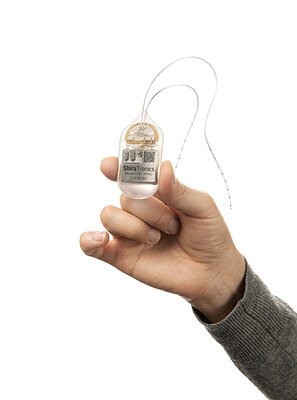
The technology at the heart of this strategy is the first device purpose-built for chronic migraine within the IENs category. While the market has non-invasive external devices and repurposed spinal cord stimulators, the ShiraTronics system is a fully implantable neurostimulator. Implanted just under the skin in a minimally invasive procedure, it is designed to deliver continuous, targeted electrical stimulation to the trigeminal and occipital nerve complexes, which are heavily implicated in migraine attacks.
The design philosophy is simple but profound: a therapy that works for the patient, not one that asks the patient to work for it. Once implanted, the device delivers therapy discreetly in the background, aiming to prevent migraines around the clock without the daily routines, external hardware, or compliance burdens of other treatments. For a patient population exhausted by the constant management of their condition, this 'set it and forget it' approach could be transformative.
The Long Road from Breakthrough to Bedside
With $108 million in funding and an FDA Breakthrough Device Designation received in 2021, ShiraTronics has a solid foundation. The completion of trial enrollment is a significant de-risking event that moves the company closer to its planned readout sequence and a subsequent Premarket Approval (PMA) submission to the FDA—the most stringent regulatory pathway for a medical device.
Challenges certainly remain. A PMA review is a long and arduous process, and even with CPT codes in place, securing favorable coverage decisions from insurers will be the next major battleground. However, by synchronizing its clinical and commercialization strategies, ShiraTronics has created a powerful narrative. As CEO Rob Binney noted, it's "One vote from the people living with this disease and the clinicians who care for them. One vote from the institutional infrastructure that defines how medicine recognizes new procedural categories."
With these two votes of confidence secured, the company is now focused on earning the final, most important validation from the FDA. Should the data from RELIEV-CM2 prove positive, the path to a limited commercial launch in late 2027 looks clearer than ever, offering a tangible new source of hope for millions who suffer in the dark.