
- $1.2 million prize awarded in each of the three categories: Life Science and Medicine, Astronomy, and Mathematical Sciences.
- 95%+ remission and cure rates achieved for acute promyelocytic leukemia (APL) through groundbreaking targeted therapy.
- 2027 launch of a new Prize in Computer Science, expanding the Shaw Prize's scope.
Experts recognize the Shaw Prize 2026 laureates for their transformative contributions to cancer therapy, cosmic origins, and mathematical applications, underscoring the prize's role in advancing humanity through scientific breakthroughs.
Shaw Prize 2026 Honors Pioneers of Cancer Cures and Cosmic Origins
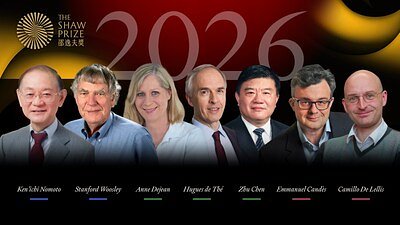
HONG KONG – May 27, 2026 – The Shaw Prize Foundation today announced the laureates for its 2026 awards, honoring seven scientists whose groundbreaking work spans from the molecular basis of cancer to the explosive origins of the elements in our universe. Often dubbed the “Nobel of the East,” the prestigious prize bestows US$1.2 million in each of its three categories: Life Science and Medicine, Astronomy, and Mathematical Sciences.
In its twenty-third year, the Shaw Prize continues to recognize research that has profoundly reshaped human knowledge and well-being. The announcement also looked to the future, confirming the launch of a new Prize in Computer Science, with the inaugural award to be presented in 2027.
A Medical Miracle: Transforming a Death Sentence into Hope
Perhaps the most immediately life-altering work recognized this year comes from the field of Life Science and Medicine. The prize is awarded in equal shares to Anne Dejean of the Institut Pasteur, France; Hugues de Thé of the Collège de France; and Zhu Chen of Shanghai Jiao Tong University, PRC. Their collective research transformed acute promyelocytic leukemia (APL), once one of the most fatal forms of cancer, into a highly curable disease.
Their work stands as a landmark achievement in targeted cancer therapy. The journey began with the identification of the genetic culprit behind APL. Dr. Dejean was instrumental in discovering the PML-RARα oncoprotein, the aberrant protein fusion that drives the disease. This discovery laid the molecular groundwork for a targeted attack. Building on this, the research of Dr. de Thé was crucial in demonstrating how specific drugs could induce the degradation of this very oncoprotein, effectively eliminating the cancer's engine.
It was Dr. Chen who pioneered the clinical application, developing a revolutionary synergistic therapy. By combining all-trans retinoic acid (ATRA), a vitamin A derivative, with arsenic trioxide—a substance known for centuries but repurposed with scientific precision—he created a treatment that pushes remission and cure rates above 95%. This breakthrough has not only saved countless lives but has also established APL as the first successful model for oncogene-targeted therapy, offering a powerful blueprint for tackling other forms of cancer.
Unraveling Our Cosmic Origins
The 2026 Shaw Prize in Astronomy turns our gaze from our own biology to the vastness of space, honoring Ken’ichi Nomoto of the University of Tokyo, Japan, and Stanford Woosley of the University of California, Santa Cruz, USA. They are recognized for their foundational studies of stellar explosions and the origin of the elements.
Their research addresses one of the most fundamental questions in science: where do we come from? The work of Nomoto and Woosley provides a crucial part of the answer. Through decades of theoretical work and complex modeling, they have illuminated the life and death of stars, particularly the cataclysmic supernova explosions that mark the end for massive stars.
These cosmic detonations are not merely endings; they are the universe's primary factories for creating heavy elements. Woosley’s models of nucleosynthesis have detailed how elements heavier than hydrogen and helium—including the carbon in our bodies, the oxygen we breathe, and the iron in our blood—are forged in the unimaginable heat and pressure of a star's core and its subsequent explosion. Nomoto’s work, meanwhile, has provided deep insights into the various pathways of stellar evolution that lead to these supernovae. Together, their contributions have built the theoretical framework that connects the lifecycle of distant stars directly to the chemical composition of our planet and life itself.
The Hidden Architects of the Modern World
Bridging the gap between the theoretical and the practical, the Shaw Prize in Mathematical Sciences was awarded to Emmanuel Candès of Stanford University, USA, and Camillo De Lellis of the Institute for Advanced Study, Princeton, USA. Their work showcases the profound power of abstract mathematical analysis to solve tangible problems in technology and to deepen our understanding of the physical world.
Emmanuel Candès is a principal architect of “compressive sensing,” a revolutionary signal-processing theory that has upended decades-old principles. His work demonstrated that, under certain conditions, a high-fidelity signal can be reconstructed from far fewer samples than previously thought possible. The real-world implications are immense and already in use. This mathematical breakthrough is the magic behind faster MRI scans that reduce patient discomfort, more efficient digital cameras, and advanced remote sensing technologies. It is a prime example of pure mathematics providing elegant solutions to complex engineering challenges.
Camillo De Lellis’s contributions lie in the notoriously difficult fields of geometric measure theory and fluid dynamics. He has developed powerful techniques to analyze the behavior of fluids and the formation of singularities—points where mathematical models can break down. His work on the Euler and Navier-Stokes equations, which govern the motion of fluids, is fundamental to everything from designing more efficient aircraft to creating more accurate weather forecasts. While deeply theoretical, his insights provide the rigorous foundation upon which entire fields of physics and engineering are built.
A Beacon for Science and a Look to the Future
The Shaw Prize continues to cement its reputation as a leading global honor for scientific achievement. Established in 2002 by philanthropist Run Run Shaw, its rigorous, invitation-only selection process and its track record of honoring eventual Nobel and Fields Medal winners underscore its prestige. The 2026 laureates exemplify the prize's mission to celebrate research that produces “outstanding contributions to the advancement of mankind.”
By expanding to include a Prize in Computer Science starting in 2027, the Shaw Prize Foundation demonstrates its commitment to evolving alongside the frontiers of scientific inquiry. This addition acknowledges the transformative role of computation and data science in nearly every aspect of modern life and research. As the world celebrates this year's laureates, it also anticipates how the prize will continue to illuminate the most significant scientific breakthroughs for generations to come.