
- 8,400+ first stores opened in Shanghai since 2018 under the 'First in Shanghai 4.0' policy
- 200+ products featured in MONOCLE's first-ever China pop-up store
- 16 years of research by Zhang Xiaodong to revive the ancient 'Dragon-scale Binding' technique
Experts would likely conclude that Shanghai's integration of global commerce and cultural heritage through initiatives like 'Axis for Sparks' is a strategic model for urban development, positioning the city as a leading international cultural and retail hub.
Shanghai's New Spark: How Commerce and Culture Are Redefining a City
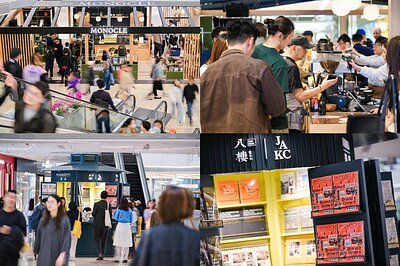
SHANGHAI, China – May 08, 2026 – In the heart of one of the world's most dynamic cities, a new initiative is blurring the lines between a shopping mall and a cultural institution. JingAn Kerry Centre (JAKC) has launched its ambitious 2026 cultural season, “Axis for Sparks,” a meticulously curated program that juxtaposes the global cool of lifestyle brand MONOCLE with the quiet dignity of a nearly lost ancient Chinese bookbinding art. The season, running through June 30, is more than a series of events; it's a powerful case study in Shanghai's city-wide strategy to cement its status as a global capital of culture and commerce.
This initiative serves as a flagship example of the city's “First in Shanghai 4.0” policy, a strategic push to attract leading international brands and foster retail innovation. With Shanghai having welcomed over 8,400 “first stores” since 2018, the pressure is on for developments to offer more than just retail. JAKC's approach—integrating high-concept cultural experiences directly into its commercial and historic spaces—represents a sophisticated evolution of this trend, aiming to create a vibrant urban axis where creativity and commerce don't just coexist, but actively enrich one another.
A Global Brand's Calculated China Debut
At the forefront of the “Axis for Sparks” season is a landmark collaboration with the globally renowned lifestyle publication MONOCLE. The partnership has yielded China's first-ever MONOCLE pop-up store & café, a sleek, minimalist space in the mall's atrium designed to evoke the brand's signature aesthetic. Featuring over 200 products, including Shanghai-exclusive items, the pop-up is a calculated move by a brand that has already established retail footprints in cities like Hong Kong and Tokyo. This mainland China debut signifies a strategic entry into one of the world's most competitive consumer markets.
The collaboration extends beyond retail. On April 29, the world’s first MONOCLE “The Entrepreneurs Live” forum was held at the JingAn Shangri-La Hotel. The event, an extension of MONOCLE's business-focused publication, brought together international industry leaders and local entrepreneurs for discussions on global market trends and brand development. This dual approach of combining a tangible retail experience with high-level intellectual exchange demonstrates a nuanced strategy for brand building, positioning MONOCLE not just as a retailer but as a facilitator of cultural and business dialogue.
For JingAn Kerry Centre, securing these “firsts” is a significant win. It reinforces its reputation as a premier gateway for international brands entering China, a status it has cultivated by hosting debuts for brands like Malbon, Vuori, and Sweaty Betty. This strategy aligns perfectly with the goals of the “First in Shanghai 4.0” initiative, which provides streamlined administrative processes and financial support to attract precisely these kinds of exclusive, high-impact launches.
Revitalizing Heritage: Ancient Scrolls in Modern Spaces
While the MONOCLE partnership looks outward, another key component of the season delves deep into China's own cultural heritage. In a pair of restored, century-old Shikumen buildings on the adjacent An Yi Road, JAKC is hosting “Read and Reconstruct,” an exhibition of works by Zhang Xiaodong, the sole national intangible cultural heritage bearer of the “Dragon-scale Binding” technique.
This ancient bookbinding method, which originated in the Tang Dynasty, creates books that can be opened like a modern codex but rolled like a traditional scroll, with pages that fan out in a pattern resembling the scales of a dragon. The technique was lost for nearly a millennium until Zhang Xiaodong, through sixteen years of dedicated research, successfully recreated it in 2010. His work, which combines ancient methods with contemporary artistic expression, has been patented and exhibited internationally.
Placing this exhibition within a historic Shikumen building—a signature Shanghai architectural style that blends Chinese and Western elements—creates a powerful dialogue between past and present. It's a prime example of adaptive reuse, transforming a historical artifact into a vibrant stage for contemporary art. This approach mirrors a broader trend across Shanghai, where historic districts like Tianzifang and Zhangyuan have been revitalized into dynamic cultural and commercial hubs. It also addresses the critical challenge of preserving intangible cultural heritage, moving it from the museum archives into the public sphere and demonstrating its relevance to a modern audience.
Forging Shanghai's New Commercial-Cultural Axis
By weaving together global lifestyle brands, entrepreneurial forums, and the revival of ancient crafts, JingAn Kerry Centre is actively shaping its identity beyond that of a traditional shopping destination. This strategy is part of a larger shift in Shanghai's retail landscape, which is moving away from transactional shopping towards “retailtainment” and identity-driven lifestyle centers that offer immersive experiences.
JAKC's track record, which includes the mainland China debut of the “100% DORAEMON & FRIENDS” tour and high-profile pop-ups for KAWS and Jellycat, shows a consistent commitment to leveraging rare and exclusive content to differentiate itself in a crowded market. The “Axis for Sparks” season is the most ambitious articulation of this vision yet, creating a narrative that extends from the mall’s polished interior to the historic texture of the city streets.
This deep integration of culture, tourism, and commerce is not merely a marketing strategy; it is becoming the new paradigm for urban development in Shanghai. As the city continues to pursue its goal of becoming an international cultural metropolis, developments like JingAn Kerry Centre serve as crucial platforms. They are the spaces where global ideas meet local traditions, where consumers become participants in a cultural dialogue, and where the simple act of visiting a mall can become a journey of discovery. Each brand debut and cultural exhibition is a thread in the rich, evolving tapestry of modern Shanghai, gathering creative inspiration for the city.