
- $200 billion: Projected market size for agentic AI by 2034, up from $5.25 billion in 2024.
- 74%: Companies planning to deploy agentic AI within the next two years (Deloitte survey).
- 40%: Businesses lacking trust in their AI model inputs and outputs (industry research).
Experts agree that the rapid adoption of agentic AI is outpacing data governance capabilities, making trusted data resolution a critical priority for enterprises.
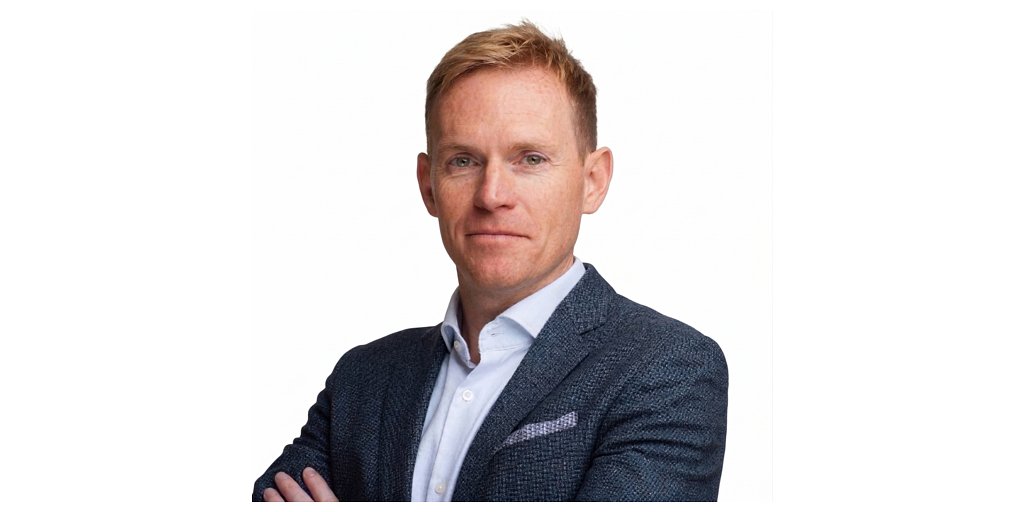
Senzing Taps Veteran Leader to Steer Growth in Agentic AI Era
LAS VEGAS, NV – April 01, 2026 – Senzing, a developer of entity resolution technology, has appointed enterprise software veteran Stephen Gilderdale as its new President and Chief Commercial Officer. The strategic hire signals the company’s aggressive push to capitalize on the burgeoning market for autonomous AI systems, where trusted data is not just an asset but a fundamental necessity.
Gilderdale will take the helm of Senzing’s global commercial operations, including sales, partnerships, and marketing. The move is seen by industry analysts as a significant step to scale the company’s specialized “Agentic Entity Resolution” technology at a time when businesses are racing to deploy more intelligent, autonomous AI agents.
A Strategic Hire for a New AI Frontier
Gilderdale brings a formidable track record of scaling customer-facing organizations at major technology firms. Most recently, he served as Executive Vice President of Global Customer Solutions and Services at Collibra, a key player in the data governance space. There, he led a global team focused on helping enterprises build confidence in their data to drive business outcomes. His deep experience in the data confidence and governance sector is seen as directly applicable to the challenges Senzing aims to solve.
Before his tenure at Collibra, Gilderdale held senior go-to-market leadership positions at Dell Technologies, following formative experience in financial markets. This combination of enterprise-scale commercial leadership and a background in data-intensive industries positions him to lead Senzing’s next phase of growth.
“Stephen is a proven growth leader who knows how to align teams, sharpen execution, and keep the customer at the center of the business,” said Jeff Jonas, Founder and CEO of Senzing, in the company’s announcement. “He brings the commercial discipline, global operating experience, and leadership maturity that will help Senzing scale its next phase of growth as enterprises rise to meet both the opportunities and risks of agentic AI.”
The Rise of Agentic AI and the 'Trust' Problem
Gilderdale’s appointment comes as the technology landscape shifts from purely generative AI to more sophisticated “Agentic AI.” These are autonomous systems designed to perceive their environment, reason about goals, and execute multi-step tasks with minimal human intervention. The market is poised for explosive growth, with some projections estimating it could reach nearly $200 billion by 2034, up from approximately $5.25 billion in 2024. A recent Deloitte survey found that 74% of companies plan to deploy agentic AI within the next two years.
However, this rush toward autonomy amplifies a foundational risk: data integrity. As AI agents are granted the power to act on their own—triggering financial transactions, managing supply chains, or screening for compliance risks—the consequences of operating on flawed or incomplete data grow exponentially. The classic “garbage in, garbage out” problem becomes a critical liability.
Recent industry studies underscore this challenge. A 2026 Informatica report highlighted a “trust paradox” where rapid AI adoption is outpacing the establishment of necessary data governance and literacy. Other research indicates that over 40% of businesses lack trust in their AI model inputs and outputs, with poor data quality often cited as the primary roadblock to deploying high-value AI use cases. For agentic AI, where real-time decisions are paramount, this data trust gap is a chasm that must be bridged.
Senzing's Bet on 'Agentic Entity Resolution'
Senzing is positioning its core technology as the solution to this problem. The company has pioneered what it calls “Agentic Entity Resolution,” a form of identity intelligence purpose-built for the speed and autonomy of AI agents. The technology is designed to autonomously identify and understand real-world entities—like customers, organizations, or devices—from disparate and messy data sources in real time.
Unlike many legacy entity resolution (ER) systems that require extensive manual tuning and operate in batches, Senzing claims its solution can be operational in sub-second time and adapts autonomously as new data arrives. This is critical for agentic workflows that cannot tolerate delays. The technology operates securely within a customer’s own infrastructure, a key selling point for organizations in highly regulated industries concerned with data privacy.
While the entity resolution market includes established giants like IBM, Informatica, and Oracle, as well as specialized players like Tamr and Amperity, Senzing is carving out a niche by focusing squarely on the real-time needs of autonomous AI. By providing clean, resolved entities with rich contextual relationships, the company aims to improve the accuracy and reliability of downstream AI decisions.
“Organizations everywhere are under pressure to turn complex data into trusted insight they can act on,” Gilderdale stated upon his appointment. “Senzing brings a unique ability to help customers do exactly that. I look forward to working with the team, customers, and partners to build on that momentum.”
Market Demand and Industry Implications
The demand for the certainty Senzing promises is particularly acute in sectors like banking and insurance, which are primary targets for the company. These industries face immense pressure to leverage AI for fraud detection, Know Your Customer (KYC) compliance, and risk assessment, all of which depend on having a single, accurate view of an entity. As AI agents are deployed to monitor transactions or vet customers autonomously, the ability to resolve identities instantly and accurately becomes a matter of regulatory compliance and financial stability.
The broader market reflects this urgency. A vast majority of European firms, for instance, plan to increase investments in data management and governance specifically to support their AI initiatives. The consensus is that the success of enterprise AI hinges not on the sophistication of the models alone, but on the quality of the data foundation they are built upon. Gilderdale’s move from Collibra to Senzing highlights the intense competition for executive talent that can bridge the gap between advanced AI capabilities and the underlying principles of data governance, a crucial battleground for the future of enterprise technology.