
- 90% of Senegal's electricity generation currently relies on imported heavy fuel oil and diesel.
- The new LNG terminal will supply natural gas to the 300-megawatt Cap des Biches power plant, Senegal's largest.
- First gas is expected to begin flowing by the first half of 2027.
Experts view the Dakar LNG Terminal as a critical step in Senegal's energy transition, providing immediate relief to the power grid while supporting long-term economic growth and energy security.
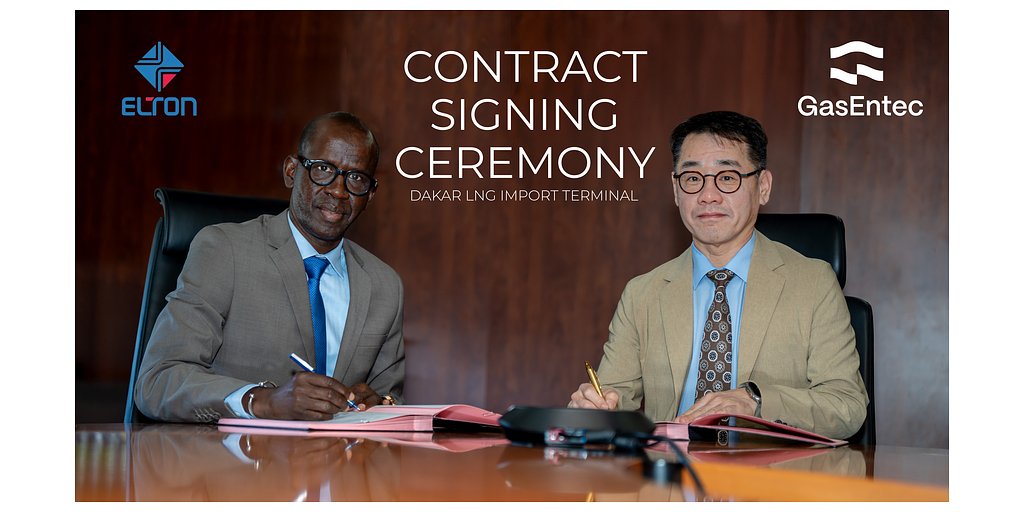
Senegal's Energy Future Ignites with New Dakar LNG Terminal
DAKAR, Senegal – April 21, 2026 – Senegal is poised for a significant leap in its energy transition with the announcement of a major new liquefied natural gas (LNG) terminal in Dakar. In a landmark deal, South Korean-led GasEntec will partner with local energy infrastructure firm ELTON Logistics & Services to deliver what is being billed as West Africa’s flagship LNG import facility.
The project involves the delivery of a jetty-based LNG regasification unit (JRU) and associated onshore equipment. This critical infrastructure will supply natural gas to the 300-megawatt combined-cycle power plant in Cap des Biches—Senegal's largest—as well as other power plants and industrial customers. The move is a cornerstone of the nation's strategy to diversify its energy sources, reduce its reliance on expensive and polluting heavy fuel oil, and power its accelerating economic growth.
Powering a Nation's Ambition
This project is more than just a new piece of infrastructure; it's a pivotal component of the Plan Sénégal Émergent (PSE), the nation's ambitious blueprint to become an emerging economy by 2035. A core pillar of the PSE is achieving energy security and universal electricity access. Currently, Senegal depends on imported heavy fuel oil and diesel for nearly 90% of its electricity generation, exposing it to volatile global prices and significant carbon emissions.
The new Dakar LNG Terminal directly confronts this challenge. By introducing natural gas as a primary fuel source for power generation, Senegal aims to drastically lower electricity costs, enhance grid stability, and provide a reliable energy backbone for its burgeoning industries. Natural gas is positioned as a critical transition fuel, bridging the gap between the current reliance on liquid fuels and a future that more heavily incorporates renewable sources, for which Senegal also has ambitious targets.
“This terminal represents a momentous step in strengthening Senegal’s energy security and supporting the nation’s accelerating industrial growth,” said Babacar Tall, CEO of ELTON Logistics & Services, in a statement. “We are thrilled to work with GasEntec, which brings its global credentials in LNG regasification technology and development.”
The project was awarded under a mandate to address urgent national power needs, signaling the high priority the government has placed on this energy transformation. With first gas expected on an expedited basis, the terminal is on a fast track to begin alleviating the country's energy constraints.
A Partnership of Global Tech and Local Expertise
The collaboration between GasEntec and ELTON Logistics & Services exemplifies a powerful synergy between international technology and deep-seated regional knowledge. ELTON, a subsidiary of the ELTON Oil Company, is a major player in West Africa's energy sector. With over two decades of experience as a leading fuel distributor in Senegal and neighboring countries, the company brings invaluable local market expertise, logistical prowess, and an established presence to the partnership.
GasEntec, founded in South Korea in 2006, provides the cutting-edge technological solution. The company has carved out a niche as a global provider of fast, modular LNG infrastructure, with a portfolio of projects spanning Asia, Europe, and the Americas. Its dual-engine model combines proprietary technology with a scalable asset platform that can sell or lease integrated LNG solutions.
“We are honored to support Senegal’s energy transition,” commented Arieh Mimran, Chairman of GasEntec. “The Dakar LNG Terminal symbolizes an unprecedented effort toward the country's rapid development. It is a privilege to oversee GasEntec as it provides critical assets for this great nation's sovereignty.”
The Modular Solution for an Urgent Need
At the heart of the project's rapid timeline is GasEntec’s proprietary technology and modular approach. The centerpiece is the Jetty-based Regasification Unit (JRU), a system designed for rapid deployment. Unlike traditional, large-scale onshore regasification plants that can take many years to construct, modular systems like the JRU are built in standardized sections off-site and then assembled at the location. This method significantly shortens construction timelines and reduces on-site disruption.
This speed and flexibility are crucial for Senegal's immediate needs. The ability to bring gas online quickly will provide immediate relief to the national power grid and accelerate the economic benefits associated with cheaper, more reliable energy.
“ELTON Logistics & Services’ use of GasEntec’s proprietary technology and modular approach to downstream LNG at the Dakar LNG Terminal highlights our flexible and fast deployment along with our ability to meet the most exacting parameters,” added Joongin Ko, Chief Project Officer at GasEntec. This approach positions the Dakar project as a potential case study for other nations facing similar urgent energy demands.
West Africa's Evolving Energy Landscape
The Dakar LNG Terminal arrives at a transformative moment for West Africa's energy market. The region is experiencing rising energy demand fueled by population growth and industrialization. Simultaneously, major offshore natural gas discoveries, such as the Greater Tortue Ahmeyim (GTA) field shared by Senegal and Mauritania, are set to turn the region into a significant gas producer and exporter.
While it may seem counterintuitive to build an LNG import terminal in a country on the verge of becoming a gas exporter, the project provides a crucial strategic bridge. The terminal ensures a secure gas supply for domestic power generation in the near term, decoupling Senegal's immediate energy needs from the timelines and complexities of developing large-scale offshore production and pipeline infrastructure. It offers flexibility, allowing the country to meet its internal demands while its export-oriented projects, like the GTA, ramp up.
With full terminal operations targeted for the first half of 2027, all eyes will be on the project's execution. As with any infrastructure of this scale, thorough environmental and social impact assessments will be paramount to ensure the development proceeds sustainably and in concert with local communities. The successful completion of the Dakar LNG Terminal could not only redefine Senegal’s economic trajectory but also serve as a model for energy development across the African continent.