
- 4 new Boeing 777-200 Freighters on order, with the first entering commercial service in May 2026
- 102-tonne payload capacity and 9,000+ km range for enhanced global cargo operations
- 11.2% year-over-year increase in global air cargo demand (February 2026, per IATA)
Experts view National Airlines' investment in Boeing 777-200 Freighters as a strategic move to enhance efficiency, expand global cargo capabilities, and strengthen competitiveness in the rapidly growing e-commerce-driven air freight market.
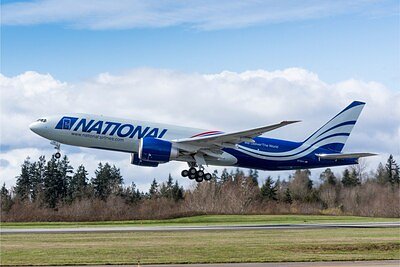
National Airlines Boosts Cargo Fleet with New Boeing 777 Freighters
ORLANDO, FL – March 30, 2026 – National Airlines has taken a significant leap forward in its fleet modernization strategy, as the first of its four new Boeing 777-200 Freighters successfully commenced test flights last week. The aircraft, registered as N791CA, is on track to enter commercial service in May 2026, pending the completion of mandatory performance evaluations and regulatory approvals.
The arrival of this advanced freighter marks a pivotal moment for the Orlando-based carrier. It signals the beginning of a new chapter aimed at enhancing its global cargo capabilities and solidifying its position in a fiercely competitive and rapidly evolving logistics market. The remaining three B777-200Fs on order are scheduled to begin their own test programs in the coming months.
A Strategic Investment in Capacity and Efficiency
The introduction of the B777-200F is more than a simple fleet expansion; it represents a transformative upgrade for National Airlines' long-haul operations. The aircraft is widely recognized as one of the most efficient and capable twin-engine freighters in the world, boasting a payload capacity of over 102 tonnes and a non-stop range exceeding 9,000 kilometers. This performance allows the airline to operate more direct intercontinental routes, increasing speed and reducing operational complexity.
This modernization effort complements National's existing fleet, which includes nine venerable Boeing 747-400 freighters and a passenger division operating Airbus A330 aircraft. While the four-engine 747 "Queen of the Skies" has been a workhorse for decades, the twin-engine B777F offers significant advantages in fuel efficiency and operational costs.
National Airlines Chairman Mr. Christopher Alf commented on the milestone, stating, "we are excitedly waiting to see the Boeing 777-200 Freighter enter commercial operations, offering our customers an enhanced fleet option to support their evolving charter requirements. The induction of the B777-200 freighters marks a significant step in strengthening our global cargo network, enabling greater efficiency, reach, and operational flexibility."
This strategic investment equips the airline to better serve its diverse client base, which includes government and defense contracts, automotive logistics, and time-sensitive humanitarian aid missions. By adding a more flexible and efficient airframe, National reinforces its reputation for providing customized, on-demand charter services across its network of over 450 airports worldwide.
Fueling the Global E-commerce Engine
The timing of National Airlines' fleet upgrade aligns directly with explosive growth in the global air cargo market, driven overwhelmingly by the e-commerce boom. With global online sales projected to surpass $8.1 trillion by 2026, the demand for fast, reliable air freight has never been higher. E-commerce shipments, which constituted about 15% of air cargo volumes before 2020, have grown exponentially and are expected to account for nearly 30% in the coming years.
According to the International Air Transport Association (IATA), global air cargo demand showed an 11.2% year-over-year increase in February 2026, building on several years of robust growth. The B777-200F is purpose-built for this new reality. Its massive payload capacity and long-range capabilities are ideal for transporting high volumes of small parcels and consumer goods across continents, connecting manufacturing hubs in Asia with consumer markets in North America and Europe.
The aircraft’s reliability and advanced avionics ensure the operational precision required for the time-sensitive logistics that underpin the modern digital economy. As consumers increasingly expect next-day or two-day delivery on international orders, airlines with modern, efficient fleets like the B777F are best positioned to capture this lucrative and expanding market segment.
Navigating a Volatile Global Supply Chain
Beyond e-commerce, the investment in new freighters provides National Airlines with greater resilience in the face of persistent global supply chain volatility. Recent years have been marked by significant disruptions, from port congestion and labor shortages to geopolitical tensions that have closed critical airspaces and driven up fuel costs.
In this environment, the operational flexibility offered by the B777-200F becomes a key competitive advantage. Its superior range allows for the bypassing of congested transit hubs, while its fuel efficiency helps mitigate the impact of volatile energy prices. For a carrier like National, which specializes in complex and urgent shipments—including defense equipment, oil-field machinery, and emergency relief supplies—the ability to deploy a reliable and efficient aircraft to any corner of the globe is paramount. The new freighters strengthen the airline's ability to provide "white glove" door-to-door logistics solutions even in the most challenging circumstances.
A Commitment to Greener Skies
The shift to the B777-200F also reflects a broader industry push toward more sustainable aviation. While the press release highlights "fuel-efficient twin-engine performance," the environmental benefits are substantial. Compared to the older, four-engine freighters it complements and may one day replace, the B777F burns significantly less fuel per tonne of cargo transported.
This efficiency is a product of advanced aerodynamics, lighter-weight materials, and powerful, modern engines. The broader Boeing 777 freighter family, including the forthcoming 777-8F, demonstrates this progress, with newer variants offering up to 30% lower fuel consumption and CO2 emissions compared to the 747-400F. By investing in this new technology, National Airlines not only reduces its operational costs but also lowers its environmental footprint.
This commitment to sustainability is increasingly important for corporate clients and government partners who are themselves under pressure to decarbonize their supply chains. As the aviation industry continues its journey toward a net-zero future, operating a modern, fuel-efficient fleet is no longer just a financial advantage but a strategic necessity. The successful test flights of N791CA are therefore more than a technical achievement; they represent a clear flight path toward a more efficient, capable, and sustainable future for National Airlines.