
- $2.41 trillion: Annual cost of poor software quality in the U.S. economy (2022 CISQ report)
- 40-60%: Time software teams spend maintaining brittle, scripted tests
- $92 billion: Projected global AI in EdTech market by 2033 (up from $3.65 billion in 2023)
Experts would likely conclude that SeedlingLabs' autonomous AI agents represent a significant advancement in automating complex workflows, with strong potential to reduce inefficiencies in software quality assurance and education, though real-world impact will depend on adoption and scalability.
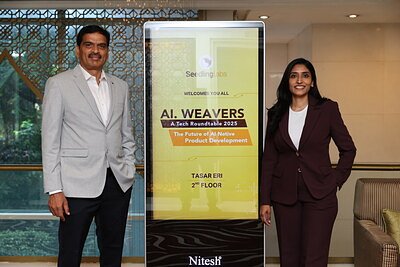
SeedlingLabs Launches AI Agents to Automate Software and Education
BENGALURU, India – April 15, 2026 – By Jack Patterson
In a move that signals a deliberate shift from AI assistants to autonomous AI agents, Bengaluru-based SeedlingLabs today announced the launch of two new platforms, Orchard and Sprout. The company, which defines itself as an AI-native Product Development-as-a-Service (PDaaS) provider, is targeting the high-friction industries of software quality assurance and education with systems designed to operate and evolve independently.
The launch marks the public debut of what SeedlingLabs calls "agentic infrastructure," a framework intended to replace fragmented, manual processes with continuously operating AI. Orchard is aimed at the persistent bottlenecks in software testing, while Sprout is designed to streamline educational planning and delivery. This dual launch represents a significant bet on a future where AI doesn't just assist humans but executes complex workflows on its own.
"We've spent the last decade building tools that help us create software faster," said Shanti Kuropati, Founder & CEO of SeedlingLabs, in the company's announcement. "The next decade is about systems that execute reliably on their own. That's the shift we're building for."
Fixing Software's Quiet, Multi-Trillion-Dollar Bottleneck
Orchard enters a software development landscape grappling with a quiet but costly crisis. According to a 2022 report from the Consortium for Information & Software Quality (CISQ), poor software quality cost the U.S. economy an estimated $2.41 trillion. A major contributor to this figure is the immense cost of fixing defects late in the development cycle, which can be up to 100 times more expensive to resolve in a production environment than if caught during the initial design phase.
SeedlingLabs' analysis highlights that teams often spend 40-60% of their time maintaining brittle, scripted tests that still suffer from high failure rates. Orchard aims to dismantle this paradigm. Instead of requiring engineers to write and maintain complex code, it uses "intent-driven automation." Teams describe what needs to be tested in plain English, and the agentic system generates, executes, and maintains the entire test suite across web, mobile, and API platforms.
The platform's promise lies in its self-healing architecture, which is designed to adapt to user interface changes, distinguish between genuine bugs and testing noise, and run thousands of tests in parallel. The goal is to shrink regression cycles that currently take hours or days down to mere minutes, transforming quality assurance from a perennial bottleneck into a continuously operating, autonomous layer of the development process.
Reimagining Education as a Living System
In parallel, SeedlingLabs is tackling the deeply entrenched inefficiencies in education with Sprout. The global AI in EdTech market is projected to surge from $3.65 billion in 2023 to over $92 billion by 2033, driven by a desperate need to alleviate teacher burnout and modernize educational delivery. Educators consistently report that inadequate infrastructure, fragmented digital tools, and the heavy administrative burden of lesson planning and grading are significant barriers to effective teaching.
Sprout addresses these issues by treating education not as a series of static tasks but as a dynamic, continuous system. The platform automates lesson planning, generates curriculum-aligned content, and provides institutional leaders with a real-time dashboard showing both curriculum progress and student comprehension levels. This allows for timely interventions, rather than waiting for periodic assessments that often come too late.
Sri Vidyaniketan Group of Institutions, an early adopter of the platform, has already seen tangible benefits. "Since deploying Sprout, our teachers have reclaimed meaningful time from planning and administrative work, and our leadership team now has real-time visibility into curriculum progress we simply didn't have before," stated Suribabu Nekkanti, Chairman of the institution and Co-founder of SeedlingLabs. "It's not just saving time, it's fundamentally changing how we operate as an institution."
The Shift from AI Copilots to Autonomous Agents
Underpinning both Orchard and Sprout is a core technological and philosophical bet on agentic AI. While the last few years have been dominated by AI "copilots"—tools like GitHub Copilot or ChatGPT that assist humans by responding to prompts—agentic systems are designed for a higher level of autonomy. They can independently plan, execute multi-step tasks, use tools, check their own work, and learn from the outcomes to improve their performance over time.
This is the essence of SeedlingLabs' vision: to build systems that don't need constant babysitting. Both Orchard and Sprout are built on the company's proprietary AI infrastructure, which combines these agent-driven workflows with human-in-the-loop feedback systems. This design allows the products to not only launch but to become more accurate and efficient with continued operation, gradually reducing their dependence on manual intervention.
Bengaluru's Bid for Global AI Leadership
SeedlingLabs' ambitious launch is emblematic of a broader trend within India's technology landscape. Bengaluru, in particular, has solidified its reputation as a global hub for AI innovation. The Indian AI market is experiencing explosive growth, with total funding projected to exceed $2 billion by 2025 and the number of new AI startups hitting a decade-high in 2024.
While specific funding details for SeedlingLabs have not been made public, the company's focus on deep-tech solutions for complex, global problems positions it as a key player in India's bid to move from being a back-office service provider to a leader in foundational AI product development. By creating systems that promise to scale outcomes rather than headcount, the company is tackling a universal business challenge.
As organizations worldwide seek to move beyond AI experimentation to sustained, real-world impact, the demand for reliable and autonomous systems is set to grow. With the launch of Orchard and Sprout, SeedlingLabs is making a clear statement that the future of AI's practical application may not be in better assistants, but in truly independent systems that work tirelessly in the background.