
- $820 billion: Annual cost of drug abuse in the U.S., per Scientology Network
- 585,000: Annual global overdose deaths cited by the campaign
- 92,000+: Partnerships established by the Foundation for a Drug-Free World
Public health experts criticize the campaign's use of outdated scare tactics and lack of evidence-based methodology, while Scientology maintains it provides factual, secular education.
Scientology's Anti-Drug Marathon Sparks Public Health Debate
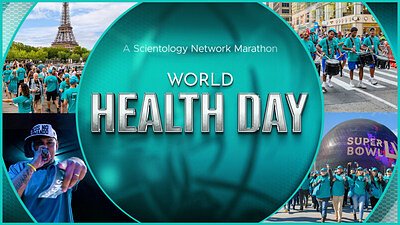
LOS ANGELES, CA – April 07, 2026 – Today, in observance of World Health Day, the Scientology Network is dedicating its programming to a global cause: the fight against drug abuse. The network is broadcasting a special marathon featuring the work of the Foundation for a Drug-Free World (FDFW), a non-profit organization aiming to eradicate drug use through education. The event, streamed to over 240 countries and territories, represents a massive media push to deliver the foundation's message to millions.
The marathon showcases a suite of content, including the ongoing series Voices for Humanity, which highlights activists on the ground, a series of public service announcements, and the centerpiece documentary, The Truth About Drugs. The stated goal is to arm individuals, particularly youth, with factual information to convince them to live drug-free. The initiative is presented as a crucial response to a devastating global crisis.
A Mission Built on Contested Figures
The urgency of the campaign is underscored by alarming statistics cited in the network's announcement, which claims drug abuse costs the United States nearly $820 billion annually and contributes to approximately 585,000 overdose deaths each year. However, these figures diverge significantly from data provided by leading public health authorities.
According to the U.S. Centers for Disease Control and Prevention (CDC), the number of drug overdose deaths in the United States for 2024 was 79,384, part of a downward trend from a peak of over 107,000 in 2022. The 585,000 figure cited by the campaign more closely aligns with global annual estimates from organizations like the World Health Organization (WHO), which has previously estimated that psychoactive drug use contributes to nearly 600,000 deaths worldwide each year. This discrepancy raises questions about the data being used to frame the crisis for an American audience.
Despite questions about the statistics, the Foundation for a Drug-Free World reports an impressive operational scale. It claims to have established over 92,000 partnerships with schools, community groups, and government institutions, distributing its materials to millions of people across nearly 200 nations. The campaign highlights personal stories of success, such as that of Kalesi Volatabu, founder of Drug-Free World Fiji, who states in promotional material, "this is one of the greatest things that's come out of the fight against drugs in Fiji."
The Message and Its Medium
The vehicle for this global campaign is the Scientology Network, launched in 2018 by David Miscavige, the ecclesiastical leader of the Scientology religion. The network serves as a powerful media arm, designed to satisfy public curiosity about Scientology while spotlighting its social betterment programs. With a broadcast available on major platforms like DIRECTV and streaming services, the network has significant reach and has won numerous industry awards for its content.
The core of the marathon's message is delivered through "The Truth About Drugs" materials. These booklets, videos, and educational modules aim to provide a comprehensive look into the dangers of substances ranging from marijuana and opioids to prescription pharmaceuticals. The campaign is presented as a secular, fact-based educational initiative.
However, the scientific validity and educational methodology of the program have faced intense criticism from the public health and medical communities. Numerous health professionals have characterized the curriculum as being rooted in outdated scare tactics rather than evidence-based science. Experts in drug policy have described some of the program's claims as lacking a pharmacological basis and being designed "simply to scare children." Some have even labeled the content as "discredited pseudoscience," with assertions that can be traced back to the controversial theories of Scientology's founder, L. Ron Hubbard.
A History of Controversy
The Foundation for a Drug-Free World's approach is often compared by critics to the original Drug Abuse Resistance Education (D.A.R.E.) program, which, despite its widespread adoption in the 1980s and 90s, was later found by numerous studies to be ineffective at reducing long-term drug use. Modern drug education, endorsed by bodies like the National Institute on Drug Abuse (NIDA), has since moved toward evidence-based models that focus on developing social competencies, critical thinking, and resistance skills through interactive methods.
This scientific critique is compounded by controversy surrounding the foundation's organizational affiliation. The Foundation for a Drug-Free World is operated and funded by the Church of Scientology and its members. This connection is often not disclosed in the educational materials themselves or in initial outreach to schools and community organizations. This lack of transparency has led to numerous instances where public entities, including police departments and school districts, have partnered with the foundation only to abruptly end the relationship after the link to the Church of Scientology was discovered by parents or the media. For example, both the Santa Ana Police Department and Santa Monica High School ceased using the program's materials after learning of the affiliation.
In response to such criticisms, representatives for the Church of Scientology have maintained that the program is a secular humanitarian effort that the Church is proud to sponsor. They assert that the materials are purely factual and that any opposition to their involvement is a form of religious discrimination. From their perspective, they are providing a valuable and free resource to help communities combat a problem that affects everyone, regardless of faith. This positions the World Health Day marathon not just as a public health campaign, but as a complex intersection of faith, media, and a deeply contested approach to one of society's most persistent challenges.