
- 37 states and the District of Columbia have enacted laws restricting student cellphone use in schools.
- 52% of K-12 teachers view student cellphone use as a major classroom distraction.
- 89% of teachers believe structured phone storage improves classroom focus.
Experts agree that strict cellphone bans in schools significantly reduce classroom distractions and improve focus, though some argue these measures may overlook the need to teach students responsible technology use.
Schools Go Silent: The Booming Business of Banning Cellphones
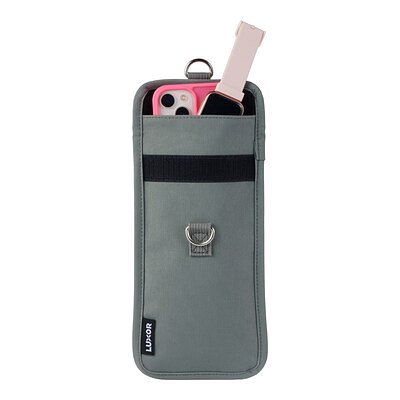
CHICAGO, IL – April 22, 2026 – The silent buzz of a smartphone has become the modern classroom's most persistent disruption. Now, as a tidal wave of state-level policies forces a digital disconnection during the school day, a new market is booming: technology designed to put phones away. Tapping directly into this trend, Chicago-based Luxor Workspaces today announced the launch of its CellGuard® Phone Pouch, a signal-blocking sleeve aimed at helping schools enforce their increasingly strict phone-free mandates.
The launch comes as educators and policymakers grapple with a problem that has spiraled from a minor nuisance into what many describe as a full-blown crisis of focus. The new pouch, a student-managed solution, allows pupils to keep their devices with them but renders them inert, unable to receive the calls, texts, and notifications that derail instruction. It's the latest entry in a rapidly growing arsenal of tools designed to reclaim academic integrity from the grip of the small screen.
The Policy Avalanche: States Mandate Digital Disconnection
The move by Luxor Workspaces is not happening in a vacuum. It is a direct response to one of the most rapid and widespread policy shifts in modern education. As of this month, an overwhelming majority of the country—at least 37 states and the District of Columbia—have enacted laws or issued guidance requiring K-12 schools to restrict student cellphone use.
This legislative momentum has accelerated dramatically over the past two years. According to education policy trackers, most of these states now mandate stringent "bell-to-bell" bans, which require phones to be turned off and stored away from the first bell until dismissal, including during lunch and breaks. This hardline approach reflects a growing consensus fueled by alarming data. A recent survey highlighted in Luxor's announcement found that 52% of K-12 teachers view student cellphone use as a major classroom distraction, while a staggering 89% believe structured phone storage improves classroom focus.
The drivers behind this policy avalanche are multifaceted. Beyond the obvious goal of reducing distractions, lawmakers and school boards are responding to mounting concerns over the impact of constant connectivity on adolescent mental health, a rise in cyberbullying incidents facilitated by in-school phone access, and a desire to foster more face-to-face social interaction among students. Studies suggesting a link between phone-free school environments and improved test scores have only added urgency to the movement.
An Arsenal of Solutions: From Pouches to Lockers
With policies firmly in place, the central challenge for schools has shifted from "if" to "how." Enforcing a campus-wide ban consistently has proven to be a logistical nightmare, giving rise to a burgeoning industry of device management solutions. This market is now populated with a variety of tools, each with its own philosophy of control.
The most recognized name is Yondr, whose magnetically sealed pouches have been adopted by districts nationwide. Luxor's new CellGuard Phone Pouch enters this space as a direct competitor, offering a similar signal-blocking function but with a distinct hook-and-loop closure designed to create a loud, audible rip when opened, alerting teachers to unauthorized access. At a starting price of $16.99, it aims to be an affordable, scalable option for districts of all sizes.
"Schools are implementing cellphone restrictions quickly, but consistent enforcement has proven difficult," said Adam Smith, President of Luxor Workspaces, in a statement accompanying the launch. "The CellGuard Phone Pouch offers a simple, effective solution that's easy to implement."
This pouch expands Luxor's existing CellGuard line, which already includes an award-winning secure phone cabinet for centralized storage. The cabinet and pouch represent two different approaches to the same problem. While cabinets require students to surrender their devices to a central location, the student-managed pouch model addresses the preference of some schools and parents for students to retain physical possession of their property.
The investment in these solutions is substantial. The Los Angeles Unified School District, for example, recently allocated approximately $7 million for equipment to enforce its new policy, while Cincinnati Public Schools spent over half a million dollars on Yondr pouches for its middle and high school students. The market extends beyond pouches and cabinets to include multi-unit charging lockers and even software-based solutions that use geofencing to lock phone functionality on school grounds.
Voices from the Hallways: A Mixed Reception
The implementation of these technologies has been met with a spectrum of reactions from those most affected. For educators, the relief is palpable. An overwhelming 90% of National Education Association members support policies restricting phones during class time. Many teachers report a dramatic shift in the classroom environment, with fewer behavioral issues and a noticeable increase in student engagement. "It's like we've turned back the clock ten years," one high school history teacher from a district using pouches shared anonymously. "Students are actually talking to each other at lunch again."
Parents, while initially hesitant, are increasingly supportive. Recent polling shows nearly three-quarters favor in-class bans. However, a significant caveat remains: emergency communication. In an age of heightened school security concerns, the idea of not being able to reach their child instantly is a source of major anxiety for many parents, a sentiment that represents the primary headwind against all-day, bell-to-bell bans.
Students themselves are the most divided. While some admit that the removal of phone-based distractions helps them focus, many resent the loss of autonomy. The primary concern mirrors that of their parents—the inability to contact family or receive emergency alerts. "What if something happens at home, or here at school?" a 10th-grade student questioned. "It feels like we're being cut off." This sentiment fuels a subculture of circumvention, with students employing decoy phones or finding ways to damage the pouches to regain access to their devices.
Beyond the Buzz: Efficacy and Unintended Consequences
For schools that have gone all-in on device management, the reported results are often striking. Administrators point to improved academic focus, a calmer school climate, and a significant reduction in the time teachers spend policing technology. But critics question whether these solutions are a panacea or simply a high-tech band-aid on a much deeper issue.
The most common problem is circumvention. Determined students often find ways to beat the system, whether by bringing a second "decoy" phone to place in the pouch, exploiting weaknesses in the locking mechanisms, or simply using other connected devices like smartwatches. The cost of replacing lost or intentionally broken pouches can also become a significant and recurring expense for districts or families.
More fundamentally, some educational psychologists and digital citizenship advocates argue that these enforcement tools sidestep a crucial teaching opportunity. Instead of helping students build skills for self-regulation and responsible technology use, they argue, these systems impose control from the outside. The debate continues over whether the immediate benefits of a distraction-free environment outweigh the long-term goal of preparing students to manage their digital lives responsibly in a world where connectivity is ubiquitous. As districts continue to invest millions in this new category of educational technology, they are betting that controlling the symptom is the most effective first step in treating the condition.