
- 130 kidney paired donation transplants performed in 2025, the highest ever by a single medical center in a year.
- 691 cumulative paired kidney transplants since the program began in 2016.
- 12th best academic medical center in the world in 2026, up from 15th the previous year.
Experts would likely conclude that King Faisal Specialist Hospital & Research Centre has set a new global benchmark in transplant medicine through its highly coordinated approach, advanced technology, and operational excellence, demonstrating the potential for single-center models to revolutionize organ donation and transplantation.
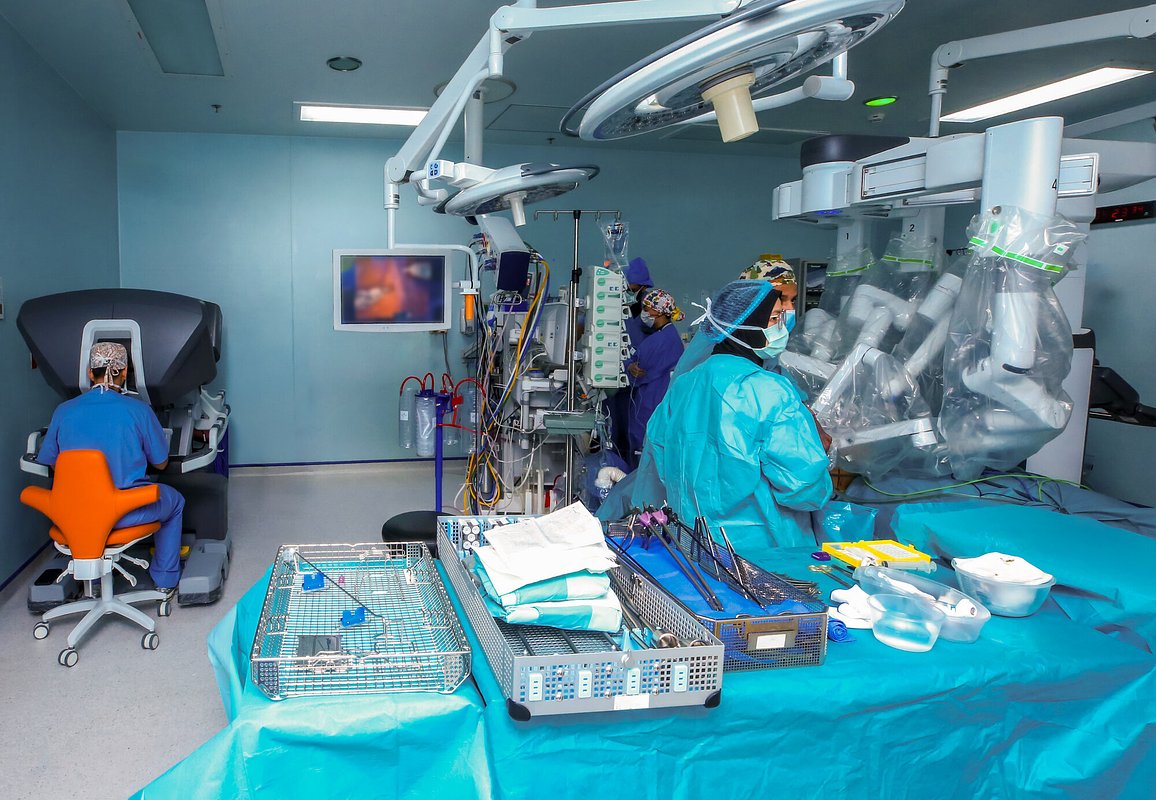
Saudi Hospital Sets Global Record in Life-Saving Kidney Transplants
RIYADH, Saudi Arabia – March 13, 2026 – A Saudi Arabian hospital has set a new global standard in transplant medicine, offering renewed hope to patients worldwide facing one of the most significant hurdles in organ donation: incompatibility. In 2025, King Faisal Specialist Hospital and Research Centre (KFSH) performed 130 kidney paired donation transplants, the highest number ever recorded by a single medical center in a single year.
This landmark achievement places the Riyadh-based institution at the forefront of a highly complex and life-saving field. The figure of 130 successful transplants surpasses the efforts of entire national programs and other leading institutions. For comparison, it exceeds the 94 paired transplants performed by the highest-volume single center in the United States and is nearly double the 73 transplants completed across all 23 participating centers in Canada during the same period. The program, which began in 2016, has now facilitated a cumulative 691 paired kidney transplants, solidifying its position as a global leader.
A New Global Benchmark in Transplant Medicine
The record-breaking year for KFSH is more than a statistic; it represents a significant shift in the global landscape of specialized healthcare, underscoring the ascent of the Middle East as a hub for medical innovation. The hospital’s success is a testament to a focused investment in advanced medical technology and a highly coordinated approach to patient care, aligning with Saudi Arabia's broader Vision 2030 goals to diversify its economy and enhance its global standing in critical sectors like healthcare.
This accomplishment is bolstered by the hospital's consistent international recognition. In 2026, KFSH was ranked as the 12th best academic medical center in the world and first in the Middle East and North Africa by Brand Finance, an improvement from its 15th global position the previous year. It has also earned accolades from Newsweek as one of the World’s Best Hospitals and World’s Best Smart Hospitals.
While national registries like the National Kidney Registry (NKR) in the United States facilitate thousands of transplants annually across many centers, KFSH's achievement is unique for its concentration of expertise and resources within a single institution. This single-center model has allowed it to master the intricate logistics required for such a high volume of paired donations, setting a benchmark for what is possible when operational excellence is combined with clinical prowess.
The 'Chain of Hope': How Paired Donation Works
At the heart of this medical milestone is an innovative solution known as Kidney Paired Donation (KPD). This process, often described as creating a "chain of hope," is designed to overcome biological barriers that would otherwise prevent a transplant from a willing, living donor. Many patients have a friend or family member who is willing to donate a kidney but cannot because their blood types are incompatible or, more complexly, because the recipient’s immune system has developed antibodies (a condition known as HLA sensitization) that would attack the donor's organ.
KPD provides an elegant solution. Instead of being turned away, the incompatible donor-recipient pair is entered into a database with other similar pairs. Using sophisticated matching algorithms, the program identifies opportunities for a swap. For example, the donor from Pair A gives a kidney to the recipient from Pair B, while the donor from Pair B gives a kidney to the recipient from Pair A.
These exchanges can involve simple two-way swaps or grow into complex, non-simultaneous chains involving dozens of individuals, sometimes cascading across the country. By expanding the pool of potential donors, KPD dramatically increases a patient's chance of receiving a transplant. This not only offers a lifeline to those on long waitlists for deceased donor organs—which can take five to eight years—but can also lead to better outcomes. Living donor kidneys, on average, function for about 21 years, nearly double the 11-year average for deceased donor kidneys.
The Engine of Success: An Integrated Operational Model
Achieving the world's highest volume of paired kidney donations at a single center is not possible without an exceptionally robust and integrated operational framework. KFSH’s success is rooted in a model that harmonizes advanced technology, meticulous logistics, and seamless multidisciplinary collaboration under one roof.
A cornerstone of the program is its state-of-the-art immunology laboratory. Here, specialists perform precise and extensive histocompatibility testing to analyze the complex tissue profiles of donors and recipients. This data is crucial for the matching algorithms to identify viable and low-risk pairings, minimizing the chance of organ rejection. The lab's capacity to process a high volume of tests with speed and accuracy is fundamental to the program's scale.
Once potential matches are found, a team of dedicated transplant coordinators manages the immense logistical challenge of organizing the exchange chains. This involves scheduling multiple simultaneous surgeries, coordinating patient and donor travel, and ensuring that every step of the process is perfectly synchronized. The ability to manage these complex, interlocking procedures with high efficiency while prioritizing patient safety at every stage is a hallmark of the hospital's operational strength.
This intricate process is executed by a cohesive, multidisciplinary clinical team. Transplant surgeons, nephrologists (kidney specialists), anesthesiologists, specialized nursing staff, and laboratory experts work in concert, bringing their collective expertise to bear on each case. This collaborative culture ensures that every patient receives comprehensive care from initial evaluation through the surgery and into long-term post-transplant follow-up.
Transforming Lives and Redefining Possibilities
Beyond the impressive numbers and technical achievements lies the profound human impact of the program. For hundreds of patients, the Kidney Paired Donation program at KFSH has meant the difference between a life tethered to dialysis and a future of renewed health and freedom. Dialysis, while life-sustaining, is a grueling process that often dominates a patient's life, making work, travel, and normal family activities difficult. A successful transplant offers a return to normalcy and a significantly improved quality of life.
The program also highlights the extraordinary altruism of living donors. These individuals undergo major surgery not for their own health, but for the benefit of another. In a paired exchange, this altruism is amplified, as a donor gives their organ to a stranger to ensure their own loved one can receive a compatible kidney in return. This network of giving creates a powerful ripple effect, where one person's generosity can unlock a chain of life-saving transplants for multiple families.
By proving that a single center can manage such a high volume of these complex procedures, King Faisal Specialist Hospital & Research Centre is not just setting records. It is creating a replicable model of excellence that could inspire and guide other transplant centers around the world, ultimately expanding access to this life-altering treatment for thousands more patients in need. The institution’s success demonstrates how targeted investment in specialized medical fields can yield globally significant results and redefine what is possible in modern medicine.
Topics & Related
Medical Devices
ESG
Digital Transformation
Related Company Pulse