
- $0.50/kg: Estimated production cost of natural hydrogen from MAX Power's Lawson Discovery, far cheaper than green hydrogen ($3-$5/kg).
- 1.3 million acres: MAX Power's dominant land position in Saskatchewan's 'Genesis Trend' for natural hydrogen exploration.
- $3.75 million: Recent investment by Big Energy, signaling strong confidence in the project.
Experts view natural hydrogen as a high-potential but unproven energy source, requiring further scientific validation and commercial-scale demonstration to fulfill its transformative promise.
Saskatchewan's Hydrogen Prize: The High-Stakes Race for a New Energy
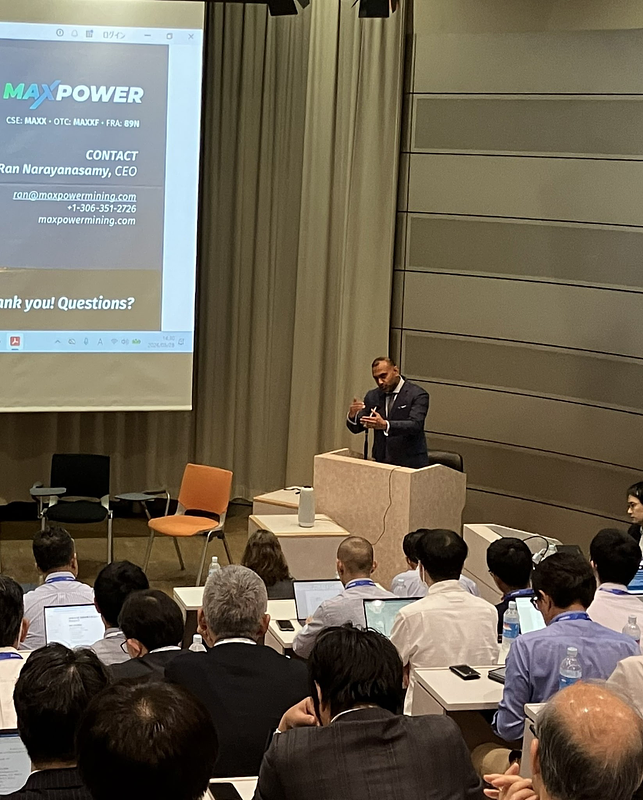
REGINA, Saskatchewan – June 02, 2026 – This week, as energy leaders gather in Washington, D.C. for a high-stakes summit, the quiet plains of Saskatchewan are at the center of a conversation about North America's energy future. Ran Narayanasamy, CEO of MAX Power Mining Corp., is in the U.S. capital to champion a resource that sounds like science fiction: naturally occurring, clean-burning hydrogen, trapped deep beneath the Canadian prairie. Fresh off a tour of Japan and bolstered by a multi-million-dollar vote of confidence from a key investor, MAX Power is making the case that its Lawson Discovery isn't just a geological curiosity, but a cornerstone for a new energy paradigm.
The company’s mission represents a fascinating convergence of geological luck, technological ambition, and strategic capital. As the world grapples with the dual demands of decarbonization and soaring energy needs, particularly from power-hungry AI data centers, the allure of a clean, cheap, and domestically sourced fuel is powerful. But as the nascent natural hydrogen sector moves from academic theory to commercial pursuit, it faces the immense challenge of proving it can deliver on its transformative promise.
The 'White Gold' Rush on the Prairie
For decades, hydrogen has been hailed as a potential clean fuel, but its production has been the primary obstacle. Most of the world's supply is 'grey' hydrogen, produced from natural gas in a process that releases significant carbon dioxide. 'Green' hydrogen, made by splitting water with renewable electricity, is clean but expensive and water-intensive. Natural hydrogen, sometimes called 'white' or 'gold' hydrogen, bypasses this production dilemma entirely. It is molecular hydrogen that already exists underground, generated through geological processes like water reacting with iron-rich rock.
MAX Power's Lawson Discovery, located within a 475-km formation the company calls the 'Genesis Trend,' is Canada’s first confirmed subsurface natural hydrogen system. The company believes the region’s unique geology, featuring a 'Salt Barrier' that acts as a natural cap rock, has allowed vast quantities of hydrogen to accumulate over millennia. If proven, the implications are staggering. Proponents estimate natural hydrogen could be produced for as little as $0.50 per kilogram, a fraction of the cost of green hydrogen, which currently hovers around $3-$5/kg.
This potential has ignited what some are calling a 'white gold rush.' The number of companies exploring for natural hydrogen globally has quadrupled since 2020. Yet the industry remains in its infancy. To date, the only site producing natural hydrogen commercially is a small project in Bourakébougou, Mali, which has been powering a local village for years. MAX Power, with its dominant land position of 1.3 million acres in Saskatchewan, is betting it can be the first to bring this resource to market at industrial scale in North America.
Building Global Momentum and Credibility
Discovering a resource is one thing; building a market for it is another. MAX Power's recent activities reveal a sophisticated strategy to build the political and financial coalition necessary to commercialize a new energy source. Narayanasamy’s presence at the Washington Energy Summit, an invitation-only forum of policymakers and executives, is a deliberate move to insert natural hydrogen into discussions about American energy security and infrastructure.
This follows a recent trip to Japan, where the company engaged with government bodies like the Japan Organization for Metals and Energy Security (JOGMEC) and major utilities like JERA and JAPEX. For a resource-hungry nation like Japan, the prospect of a stable, clean energy source from a partner nation is highly attractive. These diplomatic and commercial overtures are not just for show; they are crucial steps in establishing future offtake agreements and securing the long-term demand needed to justify massive development costs.
Crucially, this strategic narrative is being backed by hard currency. The announcement that Big Energy, an affiliate of Vietnam-based Bitexco and the company's second-largest shareholder, has exercised warrants to inject approximately $3.75 million into MAX Power is a powerful signal. This move, which increases Big Energy’s stake to nearly 15%, is described by the company as a "strong endorsement" of its vision. In a high-risk, pre-commercial sector, such an investment provides not only vital capital for exploration and evaluation but also a critical boost in market credibility. It tells the world that sophisticated investors are willing to place significant bets on the future of natural hydrogen.
Beyond the Hype: The Hard Realities of a New Frontier
Despite the flurry of activity and optimistic projections, the path from discovery to commercial production is fraught with uncertainty. The central question that hangs over the entire natural hydrogen sector is one of scale and sustainability. Is the hydrogen in these underground reservoirs a finite resource that will be depleted, or is it being actively generated at a rate that can support long-term production? The science is still emerging.
Even the world's most prominent energy bodies urge caution. The International Energy Agency (IEA), which included natural hydrogen in its Global Hydrogen Review for the first time in 2023, acknowledged its potential but also highlighted the significant unknowns. One analyst put it bluntly: the industry needs "solid science, good data, and a realistic view of what's possible to make sure the hype doesn't run away with itself."
MAX Power is leveraging technology, like its proprietary AI-assisted exploration platform MAXX LEMI, to de-risk this process and better understand the subsurface resource. But technical and geological challenges remain. Extracting a light, fugitive gas like hydrogen from deep underground without significant leakage—which could have its own negative atmospheric consequences—requires new technologies and techniques. Furthermore, a clear regulatory framework for exploration, production, and transportation does not yet exist, creating another layer of risk for first-movers.
MAX Power is a frontrunner in a high-potential, high-risk race. The journey from a geological anomaly in Saskatchewan to a cornerstone of North America's energy grid is long and uncertain. The company is simultaneously an energy explorer, a technology developer, and a market evangelist, attempting to prove a resource, build the tools to extract it, and convince the world to buy it. The prize for success is immense, but the quiet plains are littered with the remnants of past resource booms that failed to materialize.