
- 5-year license: Sanofi has secured a five-year license for Owkin’s ‘K Pro’ AI Scientist platform to automate drug discovery.
- €90 million investment: Sanofi previously committed €90 million to its partnership with Owkin, underscoring its long-term commitment.
- 800+ hospitals: Owkin’s AI leverages data from over 800 hospitals, enhancing clinical relevance.
Experts would likely conclude that Sanofi’s deepened collaboration with Owkin represents a strategic leap in pharmaceutical R&D, leveraging agentic AI to accelerate drug discovery while maintaining human oversight for scientific rigor and ethical compliance.
Sanofi’s Strategic Bet: AI Agents to Automate Drug Discovery Pipeline
NEW YORK & PARIS – June 05, 2026 – In a move that signals a significant strategic shift in pharmaceutical research, Sanofi has deepened its alliance with agentic AI firm Owkin, embarking on a multi-year collaboration to co-develop a new class of biopharma AI agents. The agreement, which includes a five-year license for Owkin’s ‘K Pro’ AI Scientist platform, aims to embed autonomous intelligent systems directly into Sanofi’s drug discovery and development workflows, accelerating a transition from data analysis to automated scientific action.
This collaboration is not a new venture but a significant evolution of a partnership that began in 2021 with an initial focus on oncology and immunology. The new phase moves beyond targeted projects towards a foundational integration of AI, empowering Sanofi’s teams with what Owkin describes as intelligent assistants capable of autonomously performing complex R&D tasks. It represents a calculated bet by the French pharmaceutical giant on a future where AI doesn't just process data but actively orchestrates the discovery process itself.
From Generative to Agentic: A New Paradigm in Pharma AI
The industry has been abuzz with the potential of generative AI, but this collaboration pushes into a more advanced frontier: agentic AI. Unlike models that primarily generate text or images, agentic systems are designed for action. They function as orchestrators, using large language models as a cognitive ‘brain’ to plan and execute complex, multi-step tasks by deploying a suite of specialized tools. In drug discovery, this could mean an AI agent autonomously designing a virtual screen, analyzing the results, reprioritizing compounds, and even drafting initial findings for human review.
This is the core of Owkin’s mission and the foundation of its K Pro platform. The company’s long-term vision is to achieve what it calls ‘Biological Artificial Superintelligence’ (BASI)—an AI capable of reasoning about the full complexity of biological systems at a scale beyond human cognition. While the term sounds like science fiction, Owkin frames it as a practical tool for amplifying human expertise, not replacing it. The goal is to automate the more arduous parts of scientific research to unlock causal biology and accelerate the creation of novel therapeutics.
“Building on our collaboration with Sanofi, this marks a shift toward truly embedded AI,” said Thomas Clozel, CEO and co-founder of Owkin, in the official announcement. He emphasized that the objective is to help Sanofi “unlock the full value of their data to accelerate better decisions across drug development.”
Sanofi's Calculated Move in the AI Arms Race
For Sanofi, this expanded partnership represents a deliberate strategy to secure a competitive edge in an industry-wide AI arms race. The company is not just exploring AI; it is embedding it into the core of its R&D engine. This move builds on its initial €90 million strategic partnership with Owkin, signaling strong confidence in the AI firm’s technology and a commitment to a long-term digital transformation.
“Across Sanofi, we are continually investing in frontier AI solutions with the potential to accelerate and improve decision-making throughout the drug development lifecycle,” noted Emmanuel Frenehard, Chief Digital Officer at Sanofi. “By implementing purpose-built agentic systems into our workflows, we aim to empower our teams to operate with greater speed, depth, and confidence.”
This investment is happening within a fiercely competitive landscape. AstraZeneca recently announced a similar three-year licensing deal for Owkin's K Pro platform, indicating a shared industry recognition of the power of agentic AI. Other major players like Pfizer, Novartis, and Roche are also making substantial investments, either through in-house development or partnerships with a growing ecosystem of AI-native biotechs like BenevolentAI and Recursion Pharmaceuticals. Sanofi’s advantage may lie in the depth of its integration with Owkin, focusing on co-developing bespoke agents tailored precisely to its pipeline and internal data ecosystems.
Inside K Pro: The 'AI Scientist' at Work
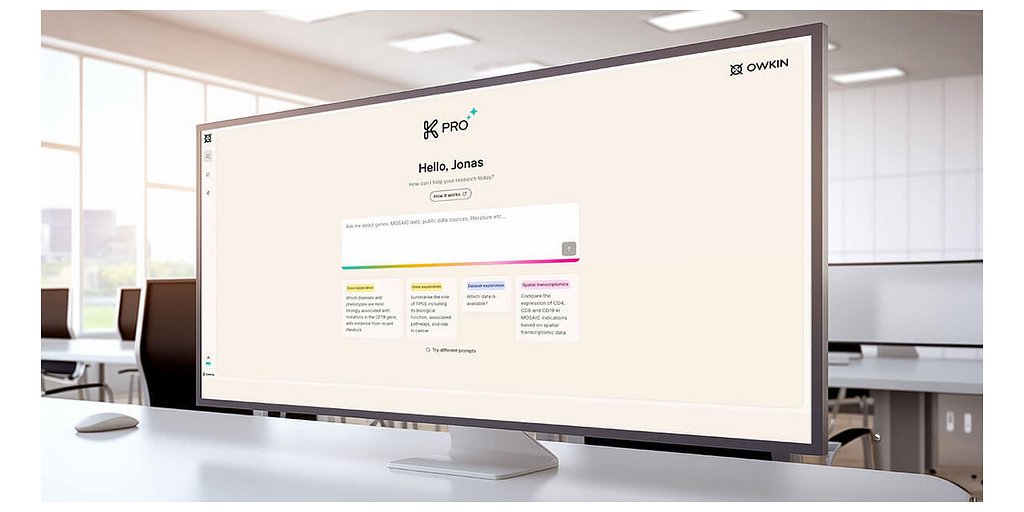
The centerpiece of the collaboration is Owkin’s K Pro platform, marketed as an ‘AI Scientist’ for biopharma. Its power stems not from a single algorithm but from its architecture as an enterprise-level agentic AI framework. K Pro orchestrates a battery of AI skills and specialized tools to decode complex biology and accelerate research workflows.
A key differentiator for the platform is its foundation in high-quality, multimodal patient data, which Owkin has curated from over 800 hospitals for nearly a decade. This real-world data—spanning genomics, histopathology, and clinical outcomes—allows the AI agents to generate insights that are more clinically relevant than those derived purely from lab or literature data. This vast data repository is integrated with public biomedical databases and competitive trial intelligence, creating a comprehensive knowledge base.
At its core, K Pro utilizes Owkin Zero, a proprietary large language model fine-tuned specifically for biological reasoning, which demonstrates higher performance on biological questions than general-purpose LLMs. Researchers can interact with the platform through a natural language interface, asking complex scientific questions and receiving synthesized, actionable answers. The system is designed to autonomously decompose these questions into multi-step research plans, execute them across various data sources, and synthesize the findings, effectively acting as a tireless research assistant.
The Practical Implications for a Multi-Billion Dollar Pipeline
For a company like Sanofi, which manages a multi-billion dollar R&D pipeline, the practical implications of this technology are profound. The immediate goal is to enhance productivity and de-risk decisions. By automating complex data analysis and hypothesis testing, AI agents can dramatically shorten research cycles, allowing scientists to focus on higher-level strategy and experimental validation. This could mean identifying unpromising drug candidates earlier or discovering novel uses for existing compounds faster, saving billions of dollars and years of development time.
This shift also redefines the role of the human researcher. Rather than being replaced, scientists are positioned as expert supervisors, guiding and validating the work of their AI counterparts. This human-in-the-loop model is critical for ensuring scientific rigor and navigating the complex ethical and regulatory landscape of drug development.
The success of this initiative hinges on robust data infrastructure. The adage ‘garbage in, garbage out’ is amplified with autonomous systems, making clean, structured, and interoperable data a critical prerequisite. Sanofi’s investment in Owkin is therefore also an investment in the data-centric future of pharmaceutical R&D. If successful, this collaboration will not only enhance Sanofi’s competitive position but also create a new blueprint for how innovation is pursued across the entire industry.