
- 150 children served daily, from infancy to age five, in a multilingual (Spanish, Vietnamese, English) early learning environment.
- 85% of Kidango's 4,000 daily students come from low-income families, benefiting from free or deeply discounted services.
- $127 million in annual revenues (2024) supports Kidango's network of over 50 centers across the Bay Area.
Experts would likely conclude that San Jose's Kidango Toyon Early Learning Center represents a groundbreaking model for equitable early education, combining multilingual immersion, play-based learning, and community integration to address systemic inequities in child development and prepare the next generation for a globalized economy.
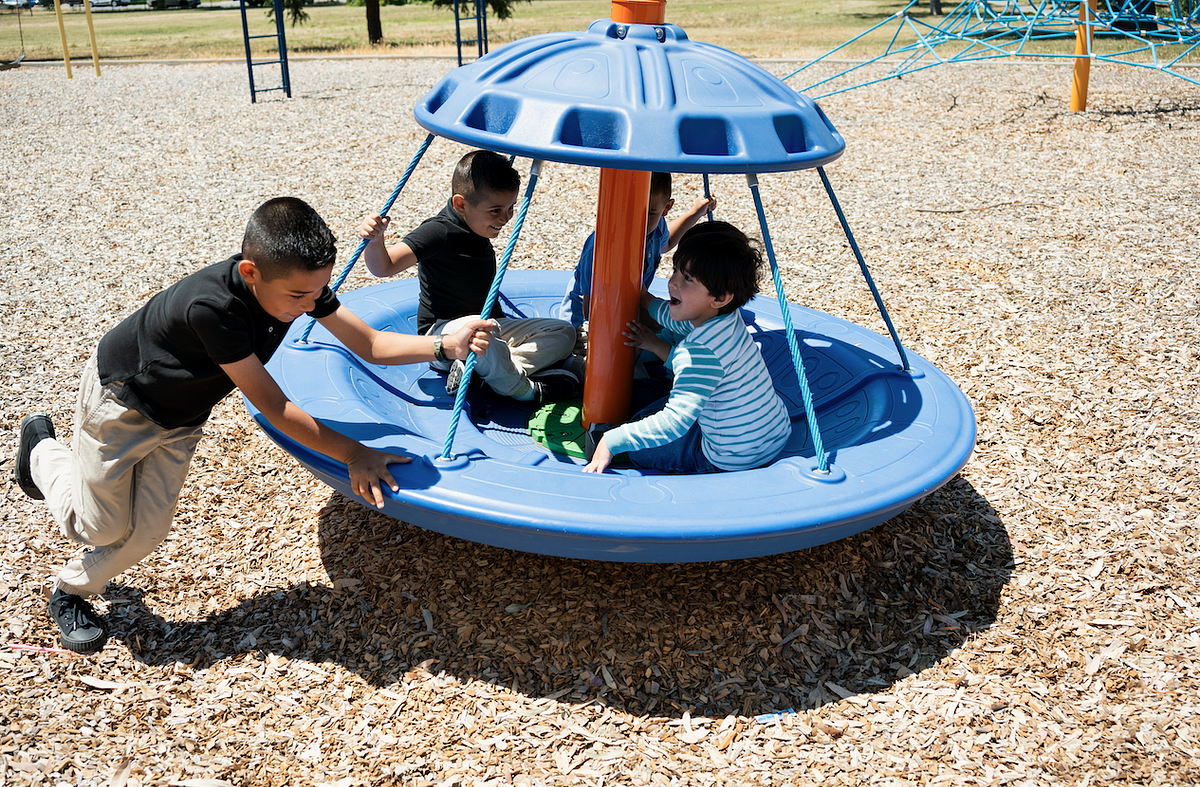
San Jose's Newest Engine: Building a Multilingual Workforce from Age Zero
SAN JOSE, CA – June 03, 2026 – While the buzz of Silicon Valley typically surrounds the launch of a new app or microchip, a different kind of launch took place this past weekend in San Jose's Berryessa neighborhood. The ribbon-cutting at the Kidango Toyon Early Learning Center wasn't just for a new building; it marked the activation of a sophisticated new engine for human capital development. In a region grappling with the long-term consequences of educational inequity, this facility represents a structural shift in how we think about the foundations of our future economy. It’s a strategic bet that the path to global competitiveness begins not in a boardroom, but in a multilingual, play-based classroom for infants and toddlers.
A New Blueprint for Early Education
The Kidango Toyon Center, a collaboration between the nonprofit Kidango, the Berryessa Union School District, and the San Jose Public Library, is the city’s first multilingual early learning campus. Serving 150 children from infancy to age five, the center is designed to immerse young minds in Spanish and Vietnamese alongside English. This approach moves beyond simple childcare to become a deliberate, research-backed educational strategy.
"Toyon represents everything Kidango believes about how children learn best — through language, exploration, and a sense of belonging,” said Kidango CEO Scott Moore. “When a child hears their home language in their classroom, it builds confidence and increases the chances of retaining the language.”
This philosophy is grounded in a growing body of academic research. Studies, including a review by scholars at Concordia and Northwestern Universities, indicate that early exposure to multiple languages enhances cognitive flexibility, problem-solving skills, and social awareness. By making multilingualism a core component of its curriculum—which also emphasizes play-based and nature-based learning—the center is engineering an environment that cultivates the very skills prized in a complex, globalized world: adaptability, advanced communication, and cultural acuity.
The partnership with the local school district provides the physical infrastructure—the center revitalizes the site of the former Toyon Elementary School—and a direct link to the K-8 system. As Berryessa Union School District Superintendent Dr. Roxane Fuentes noted, “Early learning plays a critical role in a child’s academic and social development, and programs like Toyon help build strong foundations in language, literacy, confidence, and connection that support lifelong success.”
Addressing the Equity Engine's Failure
The Toyon Center’s innovative model is not an academic exercise; it is a direct response to a systemic failure in Silicon Valley's economic engine. The high cost of living has created a stark divide in access to quality early education. In Santa Clara County, a family earning minimum wage might have to spend over 60% of their income on childcare. This economic barrier means that less than half of California’s children have access to formal childcare, a figure that drops to just one in four for families below the federal poverty line. The consequences are clear: a May 2026 report from FIRST 5 Santa Clara County revealed a concerning decline in kindergarten readiness across the county.
This is the gap Kidango is built to bridge. As the Bay Area's largest childcare provider, the nonprofit operates as a major piece of social infrastructure. With annual revenues exceeding $127 million in 2024 and a network of over 50 centers, it serves more than 4,000 children daily, 85% of whom come from low-income families. Its model relies on a blend of state and federal funding, including the California State Preschool Program and Head Start, supplemented by philanthropic support from organizations like Tipping Point Community.
This financial structure allows Kidango to provide its services for free or at a deep discount, effectively decoupling access to high-quality education from a family's income. The organization’s approach is holistic, providing not just instruction but also mental health counselors and two healthy meals a day, which for many children constitutes the majority of their daily nutrition. The Toyon Center, with its pristine licensing record and comprehensive services, is the latest and most advanced iteration of this equity-focused operational model.
More Than a School: A Community Hub
A key part of this new structural approach is deep community integration. The Toyon Center is designed not as an isolated facility but as a neighborhood anchor. The partnership with the San Jose Public Library has created a curated children’s library on-site, a resource open to all families in San Jose, not just those enrolled at the center. This initiative transforms the campus into a public good, fostering literacy and learning throughout the community.
Furthermore, plans are already underway to open a children's museum exhibit on-site within the next year, adding another layer of enrichment and public access. By co-locating education, literacy, and cultural resources, the partnership between Kidango, the school district, and the library creates a powerful hub that strengthens the entire community's social fabric. This model of weaving essential services into a single, accessible location is a strategic move to build resilient communities and provide wrap-around support for families who need it most.
From Classroom to Capitol: Scaling the Model
Perhaps the most significant aspect of Kidango's strategy is its dual focus on direct service and systemic change. The Toyon Center serves as a real-world laboratory for a model the organization actively seeks to scale through public policy. Kidango is not just a provider; it is a powerful advocate, leveraging its on-the-ground expertise to shape state-level legislation.
This is the same organization that successfully sponsored AB 2806, a landmark bill that banned expulsions in state-subsidized early childhood programs and unlocked funding for crucial mental health supports. It is currently sponsoring AB 2429 to further expand early childhood mental health consultation services across California. This legislative work aims to embed the principles of inclusive, supportive, and high-quality early education into the state’s legal and financial framework.
By proving the efficacy of its multilingual, holistic model at centers like Toyon, Kidango builds the case for broader public investment and policy reform. This integrated approach—combining on-the-ground service with high-level policy advocacy—represents a long-term strategy to rewire the foundational systems that shape a region's most valuable asset: its people.