
- $32 billion: Projected market size of the prebiotics industry by 2033, up from $11 billion in 2025.
- $50 billion: Expected value of the global sugar-reduction ingredients market by 2032.
- 99%: Purity level of fructooligosaccharides in Kestose, offering high prebiotic benefits.
Experts view Kestose as a breakthrough ingredient that addresses both sugar reduction and fiber fortification, positioning it as a key player in the rapidly growing health-focused food market.
Samyang's Kestose: A Crystalline Fiber to Remake Healthy Foods
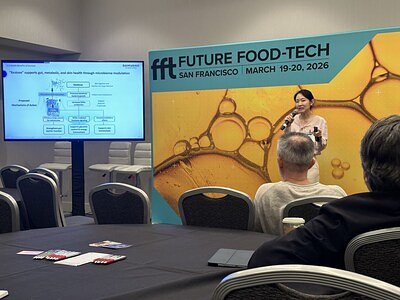
SAN FRANCISCO, CA – March 20, 2026 – South Korean food and chemical giant Samyang Corporation has made a significant move into the global functional ingredients market, unveiling a novel high-purity crystalline soluble fiber named Kestose. The ingredient, which promises to simultaneously tackle sugar reduction and fiber fortification, made its global debut this week at the Future Food-Tech San Francisco 2026 conference, a premier gathering of innovators in the food industry.
Kestose, a unique form of fructooligosaccharide (FOS), is being positioned as a powerful tool for food manufacturers striving to meet escalating consumer demand for healthier products. By providing a clean taste, prebiotic benefits, and superior handling properties, Samyang aims to capture a significant share of a market increasingly driven by health-conscious consumption and clean-label trends.
A New Solution for Health-Conscious Formulation
At the heart of Kestose's appeal is its dual-functionality. The ingredient boasts a composition of over 99% fructooligosaccharides, a well-researched prebiotic known to nourish beneficial gut bacteria and support digestive health. This positions it squarely within the booming prebiotics market, which is projected to surge from approximately $11 billion in 2025 to over $32 billion by 2033, fueled by a growing public awareness of the gut-brain axis and its impact on overall wellness.
Simultaneously, Kestose addresses the industry's most persistent challenge: reducing sugar without sacrificing taste or functionality. With a sweetness level approximately 30% that of sucrose but containing only around 1% sugar, it allows formulators to significantly lower the sugar content on nutritional labels. This is a critical advantage in a global market where sugar-reduction ingredients are expected to grow into a $50 billion industry by 2032, propelled by public health initiatives, sugar taxes, and a consumer-led revolt against excessive sweetness.
During a technical presentation at the conference, Dr. Hyerim Kim, Principal Researcher at Samyang, highlighted its application in high-value, nutrition-focused products. The company sees immediate potential in categories like protein beverages, snack bars, yogurts, and dietary supplements, where consumers are actively seeking enhanced nutritional profiles. To demonstrate its practical utility, Samyang offered attendees tasting samples of a sports drink mix formulated with Crystalline Kestose, showcasing its ability to deliver a clean taste and improved mouthfeel.
The Scientific Edge of a Crystalline Fiber
While fructooligosaccharides are not new to the market, Samyang's innovation lies in Kestose's physical form. Developed using the company's proprietary technology, Kestose is produced as a crystal, a key differentiator from the conventional liquid syrups or amorphous powders offered by competitors.
This crystalline structure confers significant technical advantages that resonate with food scientists and production managers. Chief among them is its low hygroscopicity—its reduced tendency to attract and absorb moisture from the air. This property is crucial for preventing clumping and caking in powdered products like drink mixes, protein powders, and supplement blends, thereby improving shelf life and maintaining product quality.
Furthermore, Kestose exhibits fast dissolution in liquids, a desirable trait for beverage applications where consumers expect powders to mix in quickly and completely without leaving a gritty residue. These attributes solve common manufacturing headaches associated with other fiber ingredients, which can be sticky, difficult to handle, and prone to clumping during storage and processing. This ease of use allows for seamless integration into a wider array of food matrices, from confectionery to baked goods, without requiring extensive reformulation or specialized equipment.
Samyang's Strategic Push into a Competitive Market
The launch of Kestose is not an isolated event but a calculated step in Samyang Corporation's broader strategy to become a major player in the global specialty ingredients sector. The company is strategically building a portfolio of functional ingredients designed to provide comprehensive solutions for modern food manufacturers. Kestose joins its existing brands, including the alternative sweetener allulose (Nexweet) and the functional dietary fiber resistant dextrin (Fiberest).
This portfolio allows Samyang to offer an integrated approach, such as its AI-driven "3S Sugar Reduction Solution," which helps clients find the optimal blend of ingredients to achieve their nutritional and sensory targets. This positions Samyang not just as a supplier, but as a technical partner in product development.
The move puts Samyang in direct competition with established ingredient giants like Beneo, Ingredion, and Tate & Lyle, who have long dominated the FOS and soluble fiber space. However, by focusing on the unique physical properties and high purity of its crystalline Kestose, Samyang is carving out a niche based on technical superiority and manufacturing efficiency. The company is betting that these tangible benefits will persuade manufacturers to adopt its new ingredient.
"FFT 2026 marked the first global introduction of our high-purity crystalline soluble fiber, Kestose," said Jung-Sook Han, Head of Samyang Corporation's Food R&D Center, in a statement. "We will continue to strengthen our R&D capabilities in functional food ingredients, expand partnerships with global food companies, and enhance our competitiveness in the global market."
With FOS already holding Generally Recognized As Safe (GRAS) status in the United States and approval in the European Union, Kestose faces a clear regulatory pathway for market entry. By debuting the ingredient in San Francisco, Samyang has signaled its strong intent to penetrate the lucrative North American market, which remains the largest consumer of sugar-reduction ingredients. As the global demand for food that is both healthy and functional continues its unabated climb, innovations like Kestose represent the next frontier in how the world eats.