
- 37 million Americans are expected to travel by RV this summer.
- 58% of leisure travelers view RVing as more affordable than traditional vacations.
- 82% of Millennials and 81% of Gen Z report high intent to travel by RV this summer.
Experts agree that the RV boom reflects a broader cultural shift toward affordable, flexible, and nature-focused travel, driven by younger generations and economic pressures.
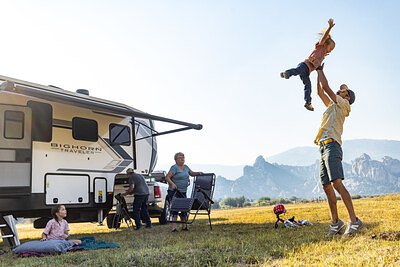
RV Boom: Why 37 Million Americans Are Hitting the Road This Summer
WASHINGTON, DC – May 11, 2026 – A significant shift is underway in American vacation planning. As travelers contend with economic pressures, crowded airports, and unpredictable travel costs, the classic road trip is being reimagined on a massive scale. According to a new Summer Travel Survey from the RV Industry Association, an estimated 37 million Americans are set to travel by recreational vehicle this summer, choosing the freedom of the open road over the frustrations of conventional travel.
The findings highlight a growing preference for vacations that offer greater control, affordability, and a direct line to the great outdoors. With travelers prioritizing road trips and closer-to-home destinations, the RV is emerging as a powerful solution for modern travel woes.
The Allure of Affordability and Flexibility
At the heart of the RV surge is a compelling financial argument. The survey reveals that 58% of leisure travelers are drawn to RVing specifically because they view it as a more affordable way to travel. This perception is backed by research comparing the costs of RV trips to traditional fly-and-stay vacations.
A study conducted by CBRE Hotels Advisory Group found that RV vacations can generate cost savings of up to 60% for a family of four, even after accounting for fuel and ownership costs. For instance, a family taking a week-long trip to a destination like Rocky Mountain National Park could save an estimated $1,500 by opting for an RV over flying and renting a car. Even when compared to a standard car-and-hotel road trip, RVing consistently proves more economical, with some analyses showing savings of over 30%.
Beyond the budget, travelers are seeking control. The ability to set your own schedule, change destinations on a whim, and avoid the rigid itineraries of other travel forms is a major draw. This flexibility extends to traveling with family, including pets. With over half of all travelers (55%) planning to bring their pets on vacation this summer, RVs provide a seamless and cost-effective solution, eliminating pet-sitter fees and the search for pet-friendly hotels.
"Travelers are looking for vacations that give them greater control over both their budgets and experiences, and RVing delivers that flexibility," said Monika Geraci, spokesperson for the RV Industry Association. "Whether families are exploring national parks... or looking ahead to major events... RV travel gives people the freedom to travel comfortably, bring along pets and family members, and experience destinations on their own terms."
A New Generation Takes the Wheel
While the image of the RV traveler has traditionally skewed older, the new data reveals a dramatic demographic shift. Younger generations are now at the forefront of the RV movement, reshaping the industry in their image. The survey found that Millennials (82%) and Gen Z (81%) reported the highest intent to travel by RV this summer.
This trend is fueled by a desire for experiential travel, a connection with nature, and the flexibility afforded by remote work. For these digital-native generations, the RV is not just a vehicle for vacation but a potential mobile office and a tool for a nomadic lifestyle. This shift is powerfully reflected in the booming RV rental market.
Approximately 3 million Americans are expected to rent an RV this summer, many of them first-timers looking to test the waters. The global RV rental market, valued at $8.3 billion in 2025, is projected to more than double to $16.7 billion by 2034. This explosive growth is driven by peer-to-peer platforms like Outdoorsy and RVshare, which have made renting an RV as easy as booking a hotel room. These platforms offer a vast selection of vehicles, from vintage campervans to luxurious Class A motorhomes, making the lifestyle accessible to a wider audience without the commitment of ownership.
Paving the Way for America's Major Milestones
The rising popularity of RV travel is perfectly timed to coincide with a series of major national events that are expected to spur domestic tourism. The RV industry is uniquely positioned to support travelers looking to experience these milestones in a flexible and immersive way.
Upcoming celebrations like the Route 66 Centennial will draw countless road-trippers eager to trace the path of the iconic Mother Road. Similarly, the nationwide America250 celebration and the 2026 FIFA World Cup, hosted across North American cities, present logistical challenges for traditional travel. Hotels in host cities are expected to be expensive and fully booked, making RVs an attractive alternative. An RV can serve as a mobile home base, allowing fans to travel between matches while avoiding price-gouged accommodations and the hassle of packing and unpacking.
This ability to create a self-contained, mobile travel experience is a key advantage as the nation gears up for these large-scale, geographically dispersed events.
Navigating the Boom in a Changing Travel Landscape
The surge in RVing is not happening in a vacuum. It is part of a larger, robust recovery in the travel sector, where airlines are projected to break $1 trillion in revenue and the hotel industry is seeing steady growth. Yet, within this thriving market, RV travel represents a distinct choice—one that aligns with a broader cultural shift towards outdoor recreation.
The outdoor recreation economy is a powerhouse, generating $1.3 trillion in economic output and accounting for 2.4% of the U.S. GDP. RVing is the second-largest contributor to this sector, underscoring its economic significance.
This boom does, however, place new pressures on infrastructure. The increased demand for spots in national parks and private campgrounds has led to anecdotal reports of sold-out sites and the need to book reservations months in advance. As more Americans embrace the RV lifestyle, the need for investment in and expansion of campground facilities will become increasingly critical to ensuring the quality of the experience.
For now, the open road is calling, and millions of Americans are answering. They are rediscovering the country, one mile at a time, from the comfort of a home on wheels that offers an antidote to the stresses of modern travel and a gateway to adventure.