
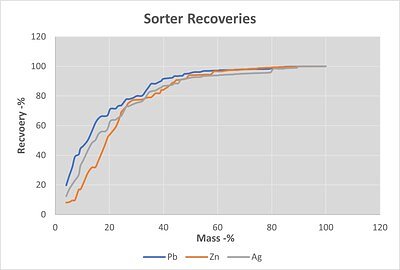
- Recovery Rates: XRT sorting recovered 95.0% of silver, 97.8% of zinc, and 97.9% of lead into a concentrate stream containing only 70% of the original mass. - Waste Reduction: Nearly 30% of mined rock, containing no valuable minerals, can be discarded early in the process. - Energy Savings: Sensor-based sorting can cut energy consumption in downstream grinding circuits by up to 50%.
Experts would likely conclude that Cantex’s adoption of XRT sorting technology significantly enhances the economic viability and environmental sustainability of the North Rackla project, making it a more attractive and de-risked investment in the challenging Yukon mining landscape.
X-Ray Tech Unlocks Value at Cantex’s Remote Yukon Mineral Project
KELOWNA, BC – April 22, 2026 – Cantex Mine Development Corp. has revealed a significant technological success at its North Rackla project in the Yukon, announcing that advanced ore sorting can dramatically improve the deposit's economic and environmental profile. The company's latest metallurgical tests confirm that X-Ray Transmission (XRT) sorting can effectively separate high-value silver, lead, and zinc minerals from barren waste rock, a development poised to reduce costs and bolster the potential of the remote Canadian project.
The test results, conducted on drill core samples representing various mineralization styles, are highly encouraging. According to the company's press release, the XRT process successfully recovered 95.0% of the silver, 97.8% of the zinc, and 97.9% of the lead into a concentrate stream that contained only 70% of the original mass. This means nearly a third of the mined rock, which contains no valuable minerals, can be discarded at an early stage, a critical advantage for any mining operation, but especially for one located in the challenging northern wilderness.
A High-Tech Sieve for the Modern Miner
XRT sorting represents a leap forward in mineral processing, moving beyond traditional methods that often require vast amounts of water and energy. The technology functions much like a high-speed, industrial-scale airport baggage scanner. As crushed rock passes through the sorter on a conveyor belt, it is scanned by X-rays. Denser materials, which in this case contain the valuable lead, zinc, and silver mineralization, absorb more X-rays and appear differently in the resulting image. A computer system analyzes these images in real-time and uses precisely aimed jets of compressed air to blast the valuable mineral-bearing rocks into a separate chute, leaving the lighter, barren waste rock behind.
This method of pre-concentration is gaining widespread adoption across the global mining industry for its profound benefits. By removing non-valuable material upfront, mining companies can significantly reduce the volume of ore that needs to be transported, crushed, and ground—processes that are notoriously energy-intensive. Industry data suggests that implementing sensor-based sorting can cut energy consumption in downstream grinding circuits by as much as 50%.
Furthermore, XRT is a dry process. This drastically reduces a mine's water requirements, a key advantage in water-scarce regions or in environmentally sensitive areas like the Yukon, where water use is strictly regulated. With water conservation becoming a global priority, technologies that minimize its use are increasingly seen as essential for sustainable mining. The reduction in processed material also means a corresponding decrease in the volume of tailings—the finely ground waste rock left over after mineral extraction—which simplifies waste management and reduces a project's long-term environmental footprint.
De-Risking the North: Economics in a Remote Landscape
The economic implications of Cantex's successful tests are particularly significant given the North Rackla project's location. Operating in the Yukon presents formidable logistical and financial challenges. The territory's remote landscape and harsh climate translate into high costs for transportation, energy, and infrastructure development. Every ton of material moved or processed comes at a premium.
Cantex's ability to reject 30% of its mined rock as waste before it enters the main processing stream directly tackles these economic hurdles. If the project were to ship its mineralized material to an off-site smelter, this reduction in mass would translate directly into fewer truckloads, lower fuel consumption, and substantially reduced shipping costs. If, instead, a full processing plant is built on-site, it could be designed to be smaller and less capital-intensive, as it would only need to handle the pre-concentrated, higher-grade feed. This efficiency not only lowers initial capital expenditure but also reduces ongoing operational costs for the life of the mine.
By effectively upgrading the ore quality at the very beginning of the process, the company de-risks the project against market volatility and high operating expenses. This technological success could make the difference in transforming a promising mineral discovery into a robust, economically viable mine.
The Germanium Advantage: A Strategic Ace in the Hole
Beyond the primary commodities of silver, lead, and zinc, the North Rackla deposit contains germanium, a rare and strategically critical metal. While not a household name, germanium is indispensable to the modern high-tech economy. It is a key component in the manufacturing of fiber optic cables that form the backbone of the internet, as well as in infrared optics used for night vision and thermal imaging in both defense and civilian applications. It is also used to create high-efficiency solar cells for satellites and space exploration.
The global supply of germanium is highly concentrated, with China historically dominating both production and refining. In 2023, Beijing implemented export controls on germanium, citing national security concerns. This move highlighted the vulnerability of global supply chains and sent a clear signal to Western nations about the need to secure alternative sources for critical minerals. In this geopolitical context, a new, reliable supply of germanium from a stable jurisdiction like Canada is of immense strategic importance.
The presence of recoverable germanium at North Rackla elevates the project's significance beyond a simple base metals play. It aligns the project directly with Canada's national Critical Minerals Strategy, which aims to bolster domestic supply chains and position the country as a preferred global supplier. The added revenue stream from this high-value by-product could significantly enhance the project's overall profitability and make it a highly attractive asset for strategic partners and investors focused on securing the raw materials of the future.
Charting a Path in a Demanding Jurisdiction
Achieving technical and economic success is only part of the equation in the Yukon. The territory is known for its rigorous and comprehensive regulatory framework, including the Yukon Environmental and Socio-economic Assessment Act (YESAA), which ensures that all potential project impacts are thoroughly reviewed. Meaningful consultation and partnership with local First Nations are also fundamental to any successful resource development.
In this demanding environment, Cantex's positive XRT results offer more than just an economic advantage; they provide a powerful environmental one. By demonstrating a path to development that uses less water, consumes less energy, and produces less waste, the company can present a project with a smaller and more manageable environmental footprint. This commitment to using best-available technology for sustainable extraction can be a crucial factor in navigating the permitting process and earning the social license required to operate.
The successful metallurgical work represents a key milestone, de-risking the project on both technical and economic fronts. It provides a clear, technologically advanced path forward for processing the North Rackla mineralization in a manner that is both efficient and mindful of the unique environmental context of the Yukon.