
- Ship Capacity: Legend of the Seas accommodates up to 7,600 guests and 2,350 crew. - Economic Impact: The Meyer Turku shipyard's construction of the Icon series contributes €2.14 billion in turnover (2025) and supports over 10,000 jobs in Finland. - Port Influence: Port Everglades in Fort Lauderdale generates $48.3 billion annually in economic activity for Florida.
Experts would likely conclude that Royal Caribbean's Legend of the Seas represents a strategic milestone in the cruise industry, combining unprecedented scale with operational innovation, though it also raises sustainability and overtourism concerns.
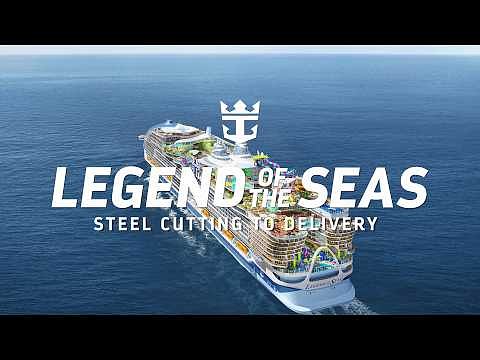
Royal Caribbean's New Leviathan: A Floating City and a Blueprint for Dominance
TURKU, FINLAND – June 10, 2026 – As the ceremonial flags were exchanged at the Meyer Turku shipyard, Royal Caribbean officially took possession of Legend of the Seas, the third colossal vessel in its Icon Class. While the press release celebrates another “game-changing family vacation,” a deeper analysis reveals this is far more than just a new ship. The delivery of this 250,000-gross-ton floating city is a tactical move in a multi-billion-dollar strategy, showcasing a masterclass in operational innovation, supply chain control, and long-term market capture.
"Today's delivery of Legend of the Seas marks another important milestone in our ambition to continuously redefine the vacation experience," said Jason Liberty, chairman and CEO of Royal Caribbean Group. His statement hints at the broader ambition: this isn't about one ship, but about building a defensible "vacation ecosystem." The Legend, with its dizzying array of 28 dining venues, Broadway-style shows, and a waterpark larger than some land-based resorts, is the latest physical manifestation of that ecosystem. It’s a product engineered to maximize onboard revenue and dominate the family market segment. But the real story lies in the quiet operational shifts and strategic partnerships that made this behemoth possible and what it signals for the industry's future.
A New Titan in a Sea of Giants
The cruise industry is in the throes of a capital-intensive arms race, and with the Icon Class, Royal Caribbean has asserted its dominance in scale. Accommodating up to 7,600 guests and 2,350 crew, Legend of the Seas enters a competitive arena where size and novelty are key differentiators. Its debut strategically brackets the European and Caribbean markets, launching with Mediterranean sailings before repositioning to Fort Lauderdale.
This move puts it in direct competition with rivals' latest offerings. MSC Cruises, another major player in the large-ship segment, is launching its LNG-powered MSC World Asia in late 2026, targeting a similar capacity. Norwegian Cruise Line's upcoming Norwegian Luna, while smaller at around 3,550 guests, is also vying for the thrill-seeking family market with its own array of slides and coasters. Even Carnival, while not launching a new class in 2026, has its massive Excel-class ships and two more on order, signaling a firm belief in the economies of scale.
Royal Caribbean’s competitive advantage, however, is not just size but the sheer density of experiences packed within its eight distinct “neighborhoods.” From the new immersive “Royal Railway” dining journey to the adults-only Hideaway pool, the design philosophy is one of total saturation—creating a destination so complete that the ports of call become secondary. This strategy, while lauded by many, has also drawn quiet concern from some cruise traditionalists who voice a preference for smaller vessels and worry about potential overcrowding. Yet, for the mass market and multi-generational families Royal Caribbean targets, the ship is the destination, a calculated bet that continues to pay dividends.
The Billion-Dollar Ripple Effect
The delivery of a ship like Legend of the Seas unleashes a powerful economic wave that extends far beyond the cruise line's balance sheet. The operational hub of this wave is the Meyer Turku shipyard in Finland, a critical strategic partner for Royal Caribbean. The construction of the Icon series has been a lifeline for the yard, which now accounts for 15% of the global cruise shipbuilding market. With a turnover of €2.14 billion in 2025 and an employment impact exceeding 10,000 jobs in Finland, the partnership is a cornerstone of the regional economy.
This economic impact then follows the ship to its homeports. In Europe, Barcelona and Rome (Civitavecchia) are set to benefit significantly. The cruise industry already injects over €1 billion annually into Barcelona's economy, with the average passenger spending €230 per day. However, this influx is a double-edged sword. Facing pressure from overtourism, Barcelona is actively reducing its cruise terminal capacity, a move that could redistribute traffic to other Mediterranean ports. Meanwhile, Civitavecchia, Rome's gateway port, is leaning into growth, projecting nearly 3.8 million passengers in 2026 and an economic impact of over €400 million.
Upon its arrival in the U.S., Legend will be based at Port Everglades in Fort Lauderdale, a port that generates a staggering $48.3 billion in annual economic activity for Florida. The port's record 4.7 million cruise passengers in fiscal year 2025 drove a significant rise in local employment and business activity. For these port cities, securing a homeport designation for an Icon-class ship is a major economic victory, guaranteeing a steady stream of high-spending tourists for years to come.
The Green Gambit: Balancing Innovation and Impact
Beneath the spectacle of waterparks and supper clubs, Legend of the Seas represents a significant, if complex, step in the industry's push for sustainability. As the company's fourth vessel powered by liquefied natural gas (LNG), it boasts a dramatic reduction in sulfur and particulate emissions. Combined with advanced waste heat recovery systems and the ability to connect to shore power—eliminating engine emissions while docked—the ship is a showcase of current-generation environmental technology.
"We're incredibly proud to introduce Legend of the Seas... and continue the legacy of the revolutionary Icon Class," said Michael Bayley, president and CEO of Royal Caribbean International. This legacy now firmly includes a public commitment to environmental progress. However, the operational reality is nuanced. While LNG is a vast improvement over heavy fuel oil, environmental groups remain critical of the industry's reliance on it as a long-term solution, pointing to the issue of "methane slip"—unburned methane, a potent greenhouse gas, escaping into the atmosphere. Royal Caribbean's stated goal of a net-zero cruise ship by 2035 is ambitious, and vessels like Legend are crucial testbeds for the technologies that will be required to meet that target. It's a high-stakes gambit, balancing technological advancement against persistent environmental scrutiny.
Blueprint for a Decade: Securing the Future Fleet
The most significant operational innovation may not be on the ship itself, but in the long-term strategy it represents. The delivery is part of a landmark framework agreement with Meyer Turku that secures Royal Caribbean's shipbuilding pipeline through 2036. This includes confirmed orders for two more Icon-class ships and options for an additional two, creating a continuous production model that delivers one mega-ship per year through the end of the decade. In an industry where specialized shipyard capacity is a major bottleneck, locking down this production line is a profound strategic advantage, effectively boxing out competitors from building ships of this scale at this pace.
Furthermore, the company is already planning its next move. It has ordered two smaller 'Discovery Class' ships from the Chantiers de l'Atlantique shipyard in France, with deliveries slated for 2029 and 2032. These vessels, with a capacity around 4,300 passengers, are designed to replace older ships and access smaller, more exotic ports that are off-limits to the Icon-class leviathans. This dual-pronged strategy of building bigger while also building smarter ensures Royal Caribbean is not just launching ships, but charting a course for sustained market leadership across the entire globe.