
- 274,000 commercial buildings in the Northeast are suitable for solar installations, representing 95,000 megawatts of untapped potential. - The U.S. commercial solar market expanded by 6% in 2025, adding 2,345 megawatts of capacity. - Rooftop solar leases can generate 20-25 years of steady, contractually defined income for property owners.
Experts agree that rooftop solar leases offer a financially attractive, low-risk way for commercial property owners to generate long-term revenue and enhance asset value without capital investment or operational complexity.
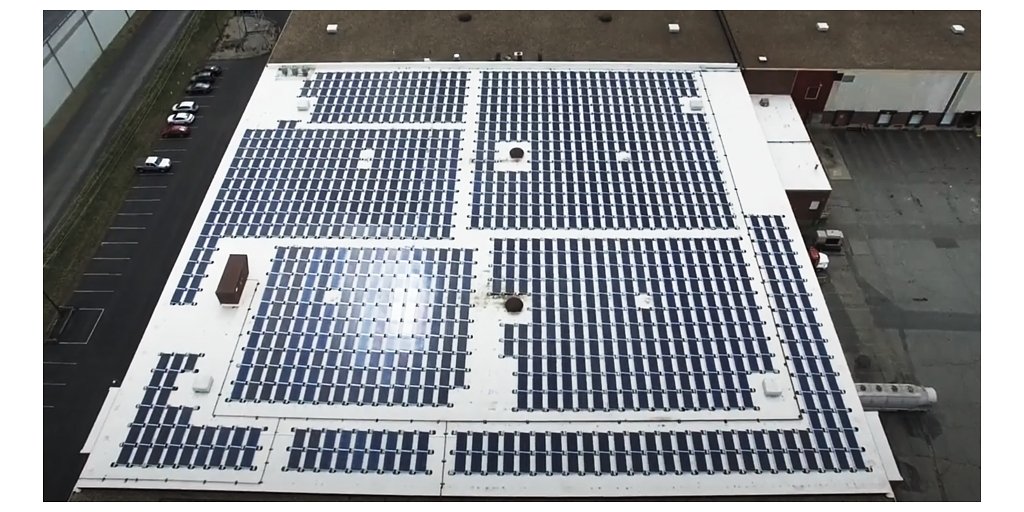
Rooftops to Revenue: Solar Leases Unlock Hidden Commercial Assets
HARTFORD, Conn. – March 10, 2026 – Across the commercial real estate landscape, a vast and underutilized asset is being transformed from a passive expense into a long-term revenue generator. Property owners of warehouses, distribution centers, and large retail buildings are discovering that their rooftops hold significant financial potential through solar site leases, a model being championed by renewable energy developers like Solect Energy.
This strategy allows commercial and industrial property owners to generate a steady, contractually defined income stream for 20 to 25 years by leasing their unused roof space to a solar developer. The developer, in turn, finances, installs, owns, and maintains a complete solar energy system at no capital cost to the property owner, creating a new source of non-operational income that can directly bolster a building's net operating income and overall asset value.
The Financials of a Rooftop Revenue Stream
The core appeal of a rooftop solar site lease lies in its financial simplicity and lack of upfront investment for the property owner. Unlike a direct purchase, where the building owner would bear the full cost of a solar installation, the lease model shifts all financial and operational responsibility to a third-party expert. This structure transforms the roof from a maintenance liability into a performing asset.
Under this arrangement, the property owner simply collects regular lease payments for the use of their space. “For many property owners, it represents a practical way to generate stable income without capital investment or additional operational complexity,” said Matt Shortsleeve, SVP of Policy & Marketing at Solect Energy, in a recent announcement. The income is predictable, often including annual escalators, providing a reliable hedge against market volatility over a two-decade-plus term.
This new revenue directly enhances a property’s financial performance. By adding to the net operating income (NOI) without requiring capital expenditure, the lease can increase the building’s valuation. For real estate investors and portfolio managers, it represents a straightforward method to optimize asset performance and diversify income streams within their existing holdings. Because the system occupies only rooftop space, it has no impact on tenant operations, interior square footage, or valuable parking areas.
A Market Powered by Policy and Demand
The growing interest in rooftop solar leasing is fueled by a confluence of powerful market forces and supportive government policies. The U.S. commercial solar market has shown resilient growth, expanding by 6% in 2025 with the addition of 2,345 megawatts of capacity. The Northeast, in particular, is a hotbed of opportunity, with one study estimating that over 274,000 commercial buildings in the region are suitable for solar installations, representing a massive untapped potential of 95,000 megawatts.
A primary catalyst for this expansion is the federal Investment Tax Credit (ITC), which was extended and enhanced by the Inflation Reduction Act. This incentive allows the owner of a solar project to claim a credit worth 30% or more of the project’s cost. In a lease model, the solar developer claims this credit, a critical financial component that makes the entire project economically viable and enables them to offer attractive lease terms to the property owner.
Developers are also strategically using "Safe Harbor" provisions, which allow them to lock in the current favorable tax credit rates for projects in their pipeline, providing financial certainty in a dynamic policy environment. This combination of federal support, rising electricity costs, and increasing corporate demand for both clean energy and predictable power pricing has created a fertile ground for the commercial solar leasing market to flourish.
Operational Simplicity and Due Diligence
For property owners wary of the complexities associated with energy projects, the third-party lease model offers a hands-off solution. The solar developer manages the entire project lifecycle, from initial structural and electrical assessments to engineering, permitting, installation, and long-term asset management. This includes all ongoing operations, maintenance, and performance monitoring, freeing the property owner from any technical or operational burdens.
However, the long-term nature of these agreements—typically spanning 20 to 25 years—necessitates careful due diligence. The lease contract is the foundational document that protects the owner's interests and must clearly delineate responsibilities. Key provisions should address roof integrity, specifying liability for any repairs or damage related to the solar installation. The agreement must also outline clear protocols for site access to ensure tenant operations are not disrupted.
Furthermore, property owners should consider the end-of-lease term. A robust contract will detail the decommissioning process, including who is responsible for the cost of removing the system and restoring the roof to its original condition. The transferability of the lease is another critical point, as the agreement will typically pass to a new owner if the building is sold, a factor that must be made transparent during any potential real estate transaction. Ensuring adequate insurance coverage is in place for all parties is also a vital step in mitigating risk.
The New Face of Commercial Real Estate
This trend is particularly pronounced in the industrial and logistics sectors. The proliferation of e-commerce has led to the construction of vast warehouse and distribution facilities with large, flat, and unobstructed rooftops—the ideal canvas for large-scale solar arrays. A state like New Jersey, for instance, has an estimated 17.5 gigawatts of untapped solar potential on its commercial and industrial rooftops alone.
Beyond the direct financial return, rooftop solar leases offer a significant sustainability benefit, often referred to as a "green dividend." For companies with ambitious Environmental, Social, and Governance (ESG) goals, leasing their roof space provides a tangible way to contribute to renewable energy generation and reduce the carbon footprint associated with their properties, all without any capital outlay. It aligns corporate responsibility with financial prudence, creating a powerful narrative for investors, tenants, and customers.
As the energy landscape continues to evolve, the definition of a valuable commercial property is expanding. No longer just a structure providing shelter and space, a building's roof is now being recognized as a proactive component of its financial and environmental performance. This shift is turning previously overlooked square footage into a key element of strategic asset management, proving that some of the most valuable real estate may be right overhead.
Topics & Related
Digital Transformation
Related Company Pulse