
- $32B Mobilized: Rockefeller Foundation's $350M in grants unlocked $32B in capital in 2025.
- 731M Reached: Initiatives impacted an estimated 731 million people globally.
- 93% Accuracy: AI platform Dengue.AI predicted outbreaks with 93% accuracy in Colombia.
Experts would likely conclude that the Rockefeller Foundation's strategic use of catalytic capital, frontier technology, and local partnerships presents a scalable model for global development amid declining traditional aid.
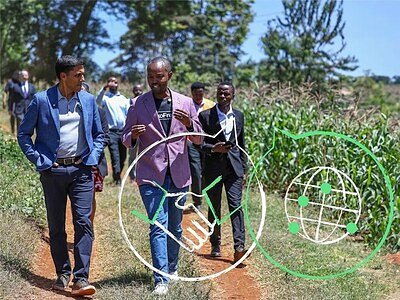
Rockefeller's $32B Gambit: Can Philanthropy Rewire a World in Retreat?
NEW YORK, NY – May 17, 2026 – In an era defined by geopolitical volatility and fiscal retrenchment, the machinery of global development is sputtering. Against what it terms a “historic decline in global aid,” The Rockefeller Foundation has just presented a starkly different vision of the future. Its 2025 impact report, titled “Big Bets, Real Results,” is not merely a summary of charitable giving; it’s a detailed blueprint for how private capital, when strategically deployed, can act as a powerful counter-cyclical force. The headline figures are staggering: over $350 million in grants that unlocked a total of $32 billion in capital, reaching an estimated 731 million people.
But the real story lies beneath the numbers. It’s a narrative about leverage—financial, technological, and communal. While governments and international bodies may be pulling back, the 113-year-old institution is leaning in, betting that a combination of catalytic funding, frontier technology, and hyper-local partnerships can rewrite the rules of progress. As Foundation President Dr. Rajiv J. Shah stated, “Disruption changes how we work, but not who we work for… this report… proves it is still possible to deliver results at scale for vulnerable people.”
The Anatomy of a Counter-Cyclical Bet
The core of the Rockefeller strategy is a sophisticated model of capital mobilization. The Foundation’s direct investment of over $350 million in 2025 served as a catalyst, directly mobilizing $3 billion and helping scale concepts that indirectly unlocked an additional $29 billion. This is the engine of the Foundation's influence, transforming hundreds of millions into tens of billions.
This financial leverage is achieved primarily through large-scale partnerships. The Global Energy Alliance for People and Planet (GEAPP), a key Rockefeller partner, exemplifies this approach. By pooling philanthropic funds with development finance and private sector investment, GEAPP is tackling energy poverty at a systemic level. Projects cited in the report—from India’s first utility-scale battery storage system in New Delhi to modular solar mesh grids in Haiti—are not isolated acts of charity. They are market-building interventions designed to create stable, investable ecosystems for clean energy. The expected lifetime impact of GEAPP’s current projects alone includes connecting 91 million people to power and preventing 296 million tonnes of carbon emissions.
This “lean in” philosophy, as Executive Vice President Elizabeth Yee describes it, is a direct response to the contracting commitment from traditional aid sources. “When the world pulls back, philanthropy has to lean in,” Yee affirmed. The strategy is to use philanthropic capital not just to fund projects, but to de-risk them, proving their viability and attracting the much larger pools of capital necessary for global scale. This is a fundamental shift from filling gaps to building new markets.
Frontier Tech as the New Fulcrum
If catalytic capital is the fuel, frontier technology is the accelerator. The Foundation’s report details a deliberate pivot toward embedding artificial intelligence and data science into the core of its development work. This isn't innovation for its own sake; it’s the deployment of powerful tools to solve intractable problems with unprecedented efficiency and scale.
In agriculture, the AI-powered app FarmerChat, created by partner Digital Green, is a prime example. With over 1.6 million downloads, it has delivered real-time, localized farming advice to millions, handling over 10 million queries. The impact is measurable: 83% of women users reported increased confidence in making farm investments, a critical step toward economic empowerment and food security. In global health, the Dengue.AI platform has enabled health officials in Cali, Colombia, to predict outbreaks with 93% accuracy, protecting 2.2 million people. In Brazil, a similar system has helped prevent 86 potential outbreaks from escalating.
These initiatives reveal a strategy to bridge the gap between cutting-edge innovation and on-the-ground need. By investing in platforms that deliver “decisive data,” the Foundation is enabling local leaders to make faster, more informed decisions that save lives and livelihoods. Tellingly, the Foundation even used a custom AI agent to analyze the 7,000 pages of grantee reports and evaluations that formed the basis of its own impact report, signaling a deep, systemic integration of technology into its own operations.
From Global Blueprints to Local Resilience
While the scale is global and the technology is advanced, the report emphasizes that execution is fundamentally local. The Foundation’s strategy is built on strengthening community-driven models, ensuring that progress is owned and sustained by the people it is meant to serve. This approach is tailored across its regional offices, which collectively invested over $285 million in Africa, Asia, and Latin America.
In Makueni County, Kenya, a regenerative school meals program isn't just about nutrition; it's about restructuring local economies. By introducing omena fish into school menus through a local aquaculture partner, the project supports small-scale producers and strengthens regional food supply chains. In northeastern Brazil, the Foundation is backing women-led coalitions of Indigenous forest guardians to reforest 2 million hectares, linking biodiversity protection with sustainable economic opportunity. “The focus is increasingly on strengthening African capacity across health, education, and energy, and on African-led solutions,” noted William Asiko, head of the Foundation’s Africa Regional Office, reflecting on its 60th anniversary.
This focus on local empowerment extends to civic life. In Cape Town, South Africa, an AI-powered platform built with Turn.io is allowing 100,000 residents to participate in local government in their own languages, demonstrating how technology can foster inclusion rather than alienation. Lyana Latorre, head of the Latin America and Caribbean office, summarized the approach: “Our US$59 million investment in the region is focused on building local resilience that can withstand global volatility.”
Ultimately, The Rockefeller Foundation's 2025 report documents more than a year of activity; it presents a thesis for the future of development. The model combines the catalytic power of strategic philanthropy, the scaling force of modern technology, and the enduring strength of community leadership. While the Foundation acknowledges that its impact metrics are based on partner-reported data, the sheer scope of the capital and reach mobilized suggests a paradigm is at work. As the world navigates a period of profound uncertainty, this high-leverage, tech-infused, and locally-grounded approach may prove to be one of the most critical engines for progress.