
- 5,160 tons: Largest-ever delivery of carbon removal credits from enhanced rock weathering (ERW).
- 7x larger: This issuance is approximately seven times larger than any previous delivery of its kind.
- $1.2B market: The global ERW market was valued at over $1.2 billion in 2024, projected to reach $6 billion by 2033.
Experts view enhanced rock weathering as a promising, scalable carbon removal technology with significant potential, but caution that its long-term success depends on rigorous scientific verification, economic viability, and environmental safety.
Rock Dust Revolution: Farming Meets Carbon Removal at Scale
SAN FRANCISCO, CA – December 03, 2025 – In what is being hailed as a pivotal moment for a nascent climate technology, Lithos Carbon has announced the largest-ever delivery of carbon removal credits from enhanced rock weathering (ERW). The issuance of 5,160 registry-certified tons of captured CO2, generated by spreading basalt dust on American farmland, is approximately seven times larger than any previous delivery of its kind, offering a tangible proof-point for a solution that aims to turn agricultural fields into massive carbon sinks.
This milestone moves enhanced rock weathering from the realm of academic theory and small-scale trials into a commercially viable operation, demonstrating a potential pathway to remove atmospheric carbon dioxide at a meaningful scale. By partnering with farmers across states like North Carolina, Wisconsin, and Pennsylvania, Lithos is not just sequestering carbon but also tackling soil health and farm economics, creating a compelling, multi-layered value proposition. But as the technology scales, it faces critical tests of scientific rigor, economic viability, and environmental integrity that will determine its ultimate impact.
From Quarries to Croplands: A Dual-Benefit Solution
At its core, enhanced rock weathering is a human acceleration of a natural geological process that has regulated Earth’s climate for billions of years. When rain combines with atmospheric CO2, it forms a weak carbonic acid. As this rainwater falls on silicate rocks like basalt, it triggers a chemical reaction that breaks down the rock and converts the captured CO2 into stable bicarbonate ions. These ions then wash through soil and river systems into the ocean, where they are permanently stored.
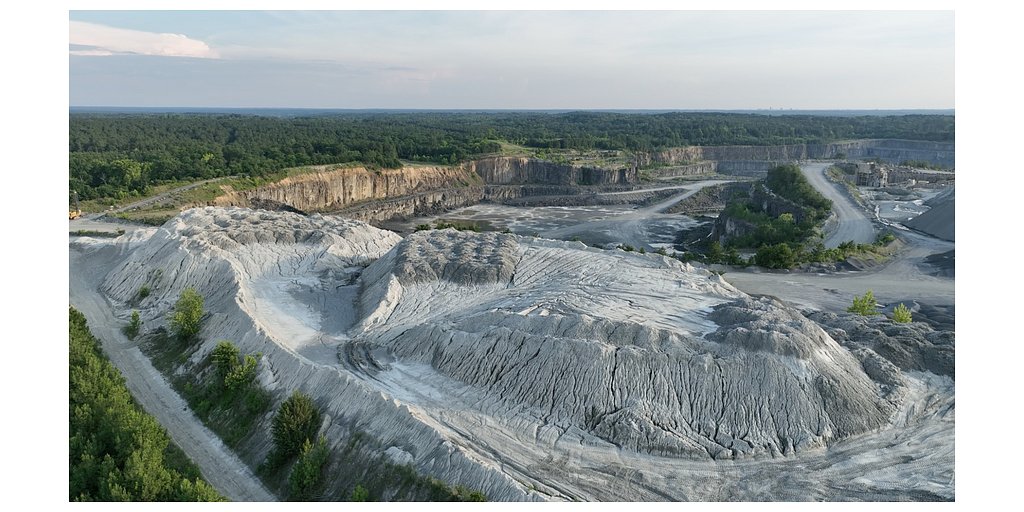
Lithos Carbon’s innovation is to dramatically speed up this process by mining basalt—an abundant volcanic rock—grinding it into a fine dust to maximize surface area, and applying it to agricultural lands. Farmers spread the dust on their fields, and with each rainfall, the carbon removal process begins. The company's model relies on sourcing byproduct basalt from existing quarry operations, turning a low-value material into a high-value climate tool.
“This issuance proves that enhanced rock weathering can scale rapidly while delivering real benefits to farmers,” said Mary Yap, CEO of Lithos Carbon, in a recent statement. “By working with American farmers and using locally sourced, byproduct rocks, we’re not only removing carbon from the atmosphere but also strengthening farm economics and soil health across rural communities.”
These are not just ancillary benefits; for many farmers, they are the primary draw. The alkaline nature of basalt dust helps neutralize soil acidity, acting as a substitute for traditional agricultural lime—a product whose production accounts for a surprising 2% of U.S. agricultural emissions. Furthermore, as the rock dust decomposes, it slowly releases essential macronutrients like potassium, calcium, and magnesium, along with micronutrients that improve crop health. Research from institutions like NC State Extension has validated the use of ground basalt as a soil amendment, with some studies showing it can boost crop yields by up to 20% while improving plant resilience to pests and drought.
The Credibility Question: Verifying Invisible Work
For the voluntary carbon market, which has been beleaguered by questions of quality and credibility, the most significant aspect of Lithos’s achievement is not the tonnage itself, but its verification. Proving that a specific ton of CO2 has been durably removed from the atmosphere is notoriously difficult, and the success of ERW hinges on solving this measurement, reporting, and verification (MRV) challenge.
Lithos employs a combination of proprietary soil modeling, machine learning, and an isotope dilution technology developed through long-term research at Yale and Georgia Tech to track the carbon from field to ocean. This empirical approach is essential for building trust with corporate buyers who are increasingly wary of paying for low-quality offsets.
The broader industry is racing to standardize these verification methods. Carbon registries like Puro.earth and Isometric have released rigorous protocols for ERW. For instance, Isometric’s standard requires direct measurement across treatment and control plots with 95% statistical confidence, alongside mandatory monitoring of crop productivity and soil health to safeguard against unintended consequences. Puro.earth, which has already revised its ERW methodology based on early project feedback, focuses on ensuring a permanence of over 1,000 years and requires independent, third-party validation.
Despite this progress, some experts caution that commercial activity is outpacing scientific consensus on certain MRV nuances. This tension between moving fast to address the climate crisis and the meticulous, slower pace of science defines the current frontier of ERW. Lithos’s certified delivery provides a powerful data point, suggesting that robust, scalable verification is achievable, but the industry as a whole must maintain this high bar to secure long-term investment and public trust.
A Burgeoning Market and Competitive Field
Lithos's milestone arrives amidst a surge in demand for high-quality, permanent carbon removal. The global ERW market, valued at over $1.2 billion in 2024, is projected to approach $6 billion by 2033, fueled by corporate net-zero pledges. Major tech companies are leading the charge; Microsoft is a repeat customer for Lithos, while Google recently announced a landmark deal to purchase 200,000 tonnes of ERW credits from competitor Terradot. The Frontier Coalition, a group including Stripe, Shopify, and McKinsey, is also investing heavily in the technology.
This influx of capital has ignited a competitive and increasingly global landscape. While Lithos and Eion focus on American farmland, companies like UNDO Carbon are active in the UK, InPlanet is targeting the highly weathered tropical soils of Brazil, and Mati Carbon is developing projects for smallholder farmers in the global south. Each company is iterating on the core model, adapting to different soil types, logistical chains, and agricultural practices, creating a dynamic ecosystem of innovation.
The Road to Scale: Promise and Pitfalls
While ERW is globally scalable in theory—basalt is one of the most common rocks on Earth, and agricultural land is plentiful—the practical realities are complex. The process is logistics-heavy, with significant hurdles to overcome on the path to gigaton-scale removal.
First, there is the energy cost. It takes roughly three tons of basalt to remove one ton of CO2. The emissions from mining, grinding the rock to a fine powder, and transporting it via truck can offset the carbon captured by 10-30%. To remain carbon-negative and cost-effective, ERW operations must rely on local sourcing, with trucking distances ideally kept under 100 kilometers. Lithos's strategy of using waste rock from existing quarries is a crucial efficiency, but massive scaling could necessitate new mining operations with their own environmental footprints.
Second, there are environmental safeguards. While high-quality basalt is safe, other fast-weathering rocks can contain trace amounts of heavy metals like nickel and chromium. Widespread application without rigorous testing could risk long-term soil and water contamination. This makes the strict contaminant thresholds and soil testing requirements in verification protocols not just a matter of credit quality, but of fundamental environmental safety.
Finally, there is the cost. ERW credits currently trade for between $300 and $600 per ton, far higher than many nature-based solutions. While costs are expected to fall with scale, some analyses suggest ERW could face eventual diseconomies of scale. As the most accessible quarries are depleted, transportation distances and costs will inevitably rise, potentially hampering its long-term competitiveness against other carbon removal methods. Lithos’s success in this 5,160-ton issuance is a powerful demonstration of what’s possible, but the true test will be replicating and expanding it while navigating these economic and logistical headwinds.
This record-setting delivery is more than just a number; it is a signal that one of the most promising and permanent carbon removal technologies is ready to contribute in a real way. It validates a powerful model that intertwines climate action with agricultural prosperity. However, the journey from thousands to millions of tons is fraught with challenges. The industry's ability to maintain unwavering scientific integrity, transparently account for its own lifecycle emissions, and innovate around the complex economics of its supply chain will ultimately determine whether spreading rock dust becomes a cornerstone of our global climate response.