
- Age Expansion: FDA clearance now includes children as young as 4, down from the previous age limit of 12.
- Hearing Preservation: 85% of adult patients in the robotic-assisted group maintained functional acoustic hearing at one year, compared to 71% in the manual insertion group.
- Market Growth: The global cochlear implant market is projected to more than double from $1.9 billion in 2024 to $3.9 billion by 2034.
Experts agree that the robotic-assisted iotaSOFT system represents a significant advancement in cochlear implant surgery, particularly for pediatric patients, by improving precision, consistency, and hearing preservation outcomes.
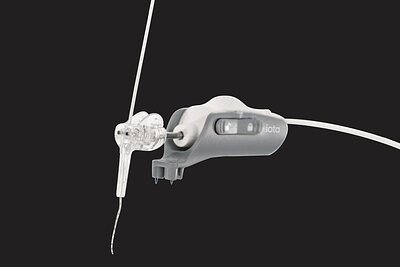
Robotic System for Cochlear Implants Cleared for Young Children by FDA
ST. PAUL, Minn. – January 14, 2026 – The U.S. Food and Drug Administration (FDA) has granted expanded clearance for a first-of-its-kind robotic system used in cochlear implant surgery, making the technology accessible to children as young as four. The decision marks a significant step forward in treating profound hearing loss in younger patients, offering a new level of surgical precision for one of medicine's most delicate procedures.
iotaMotion, Inc., the Minnesota-based creator of the iotaSOFT® Insertion System, announced the 510(k) clearance today. The system, which was previously authorized for patients aged 12 and older, is now available for a much broader pediatric population. This expansion addresses a critical period in a child's development where early access to sound is paramount for acquiring speech and language skills.
A New Standard for a Delicate Procedure
Cochlear implants have transformed the lives of individuals with severe to profound hearing loss by electronically stimulating the auditory nerve. However, the success of the procedure, particularly the preservation of any residual hearing, hinges on the atraumatic insertion of a fragile electrode array into the cochlea—a tiny, snail-shaped structure in the inner ear. This step is exceptionally delicate, with outcomes often varying based on surgical technique.
The iotaSOFT system is designed to mitigate this variability. It is not a fully autonomous robot but a sophisticated, surgeon-guided tool that advances the electrode array with a slow, consistent, and controlled motion that is beyond the limits of the human hand. By standardizing this critical phase of the surgery, the technology aims to minimize trauma to the delicate internal structures of the cochlea.
"Receiving FDA clearance for expanded pediatric use marks a significant milestone for iotaMotion and for families navigating cochlear implant decisions," said Mike Lobinsky, CEO of iotaMotion, in a statement. "By standardizing one of the most delicate steps in cochlear implant surgery, iotaSOFT helps reduce variability which could provide parents greater confidence as they consider cochlear implantation for their children."
This expanded indication from its initial 2021 clearance for patients 12 and older opens the door for school-aged children to benefit from a procedure designed for maximal gentleness, a key consideration given the smaller and more fragile anatomy of pediatric patients.
The Clinical Case for Robotic Precision
Central to the discussion around cochlear implantation is the concept of hearing preservation. Many candidates, including children, have some remaining natural hearing, especially at low frequencies. Preserving this residual hearing can lead to better overall sound quality and music appreciation when combined with the electrical stimulation of the implant.
Growing clinical evidence suggests that robotic assistance can improve these outcomes. A 2025 cohort study published in the prominent otolaryngology journal The Laryngoscope compared outcomes between manual and robotic-assisted insertions using the iotaSOFT system. According to the study's authors, 85% of adult patients in the robotic-assisted group maintained functional acoustic hearing at one year, compared to 71% in the manual insertion group. While the study's sample size did not yield a statistically significant result (p=0.31), the 14-percentage-point difference highlights a compelling trend toward improved hearing preservation.
Beyond immediate benefits, atraumatic insertion has profound long-term implications. Preserving the integrity of the cochlea is seen as crucial for ensuring patients can benefit from future therapeutic advances, which may include gene-based or regenerative hearing technologies.
"Robotic assistance in cochlear implantation is about precision and consistency," explained Dr. Marlan Hansen, co-founder and chief medical officer of iotaMotion. "With the expanded pediatric indication for iotaSOFT, supported by growing clinical evidence, families can have greater confidence that controlled, standardized insertion is designed to protect the cochlea and preserve its structure and function. This is especially important for children who may benefit from emerging therapeutic advances...which will likely depend on atraumatic, cochlear implant array placement early in life."
Unlocking Potential: The Impact on Young Lives
The World Health Organization estimates that over 430 million people worldwide experience disabling hearing loss, yet fewer than 5% of eligible candidates globally receive a cochlear implant. While the utilization rate is higher for children in the United States—around 50%—barriers remain, including parental concerns about surgical risks and variability.
For children, the stakes are particularly high. The period from birth to school age is a critical window for neurological development, where auditory input is essential for building the neural pathways for speech, language, and social-emotional skills. Technologies that can improve the safety and predictability of cochlear implantation may encourage earlier intervention, transforming a child’s developmental trajectory.
The adoption of the iotaSOFT system by leading medical institutions underscores its perceived value. Cincinnati Children's Hospital, a nationally ranked pediatric medical center, has become the first dedicated children's hospital to adopt the technology. This move signals a growing confidence within the clinical community that robotic assistance represents a meaningful evolution in patient care.
"At Cincinnati Children's, our focus is delivering the highest standard of care while thoughtfully integrating innovations that benefit our patients," stated Dr. Daniel Choo, chief clinical growth officer and professor of otolaryngology–head and neck surgery at the hospital. "Robotic-assisted cochlear implantation represents a meaningful advancement in our cochlear implant program."
A Strategic Milestone in a Growing Market
The expanded FDA clearance is not only a clinical victory but also a significant business milestone for iotaMotion. The company holds a unique position as the provider of the first and only FDA-cleared robotic-assisted insertion system for cochlear implants, giving it a distinct advantage in a competitive and growing market. The global cochlear implant market was valued at approximately $1.9 billion in 2024 and is projected to more than double to $3.9 billion by 2034.
The pediatric segment is one of the fastest-growing drivers of this market, largely due to the success of universal newborn hearing screening programs that enable early detection. By securing clearance for the 4-and-older age group, iotaMotion has unlocked a key demographic and strengthened its strategic position.
The system has already been adopted by over 35 leading cochlear implant centers across the United States, including nearly half of the country's neurotology fellowship training programs. This widespread integration into top-tier training and clinical environments suggests that robotic-assisted insertion is becoming an integral part of the standard of care, ensuring the next generation of surgeons is familiar with the technology.
As iotaMotion continues its commercial rollout in the United States and pursues clinical investigations in other global markets, this expanded pediatric indication serves as a powerful validation. It solidifies the technology's role in addressing the unmet needs of children with hearing loss, promising not only to improve the outcomes of today's surgeries but also to preserve the potential for the hearing therapies of tomorrow.