
- $140M Funding: Robotera secured approximately USD 140 million in Series A+ funding.
- RMB 500M Orders: The company has reportedly secured over RMB 500 million (USD 70 million) in commercial contracts for 2025.
- Industrial Backing: Investors include Geely Capital, BAIC Capital, Alibaba Group, and Haier Capital.
Experts would likely conclude that Robotera's substantial funding and strategic industrial partnerships signal a significant acceleration in the adoption of humanoid robots for real-world automation, particularly in manufacturing and logistics sectors.
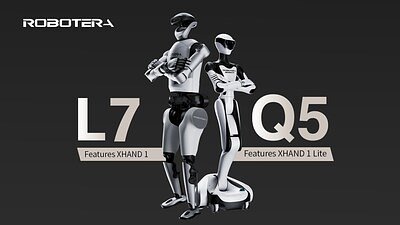
Robotera's $140M Haul: China's Industrial Giants Bet on Humanoid Labor
BEIJING, China – November 27, 2025 – In a move signaling a major acceleration in the global robotics race, embodied intelligence pioneer Robotera has secured nearly RMB 1 billion (approximately USD 140 million) in a Series A+ funding round. The investment is not just a validation of the two-year-old startup's technology but a powerful statement of intent from its backers—a consortium of China's most formidable industrial and technology titans. The round was led by Geely Capital, the investment arm of the automotive giant, with strategic participation from BAIC Capital, alongside existing investors Alibaba Group and Haier Capital.
Founded in August 2023, Robotera is on a mission to build general-purpose robots that learn and adapt through physical interaction, a concept known as embodied intelligence. The new capital is set to fast-track the mass production of its bipedal humanoid robots, wheeled service robots, and highly dexterous robotic hands. This infusion of cash from strategic industrial players suggests a pivotal shift is underway, moving advanced, human-like robots from research labs and viral videos directly onto the factory floors and into the supply chains of global manufacturing leaders.
A Strategic Alliance of Industrial Titans
The list of investors in Robotera's latest round reads less like a venture capital portfolio and more like a blueprint for an industrial ecosystem. The funding is more than just capital; it represents a strategic alignment of behemoths seeking to integrate next-generation automation into their core operations.
Lead investor Geely Capital's involvement is a direct extension of its parent company's ambitious “Smart Geely 2025” strategy. The automotive group is already a heavy user of automation in its plants and is aggressively pursuing advancements in smart manufacturing and autonomous systems. For Geely, investing in Robotera is a forward-looking bet on creating more flexible, intelligent factories where bipedal robots could work alongside humans in complex assembly tasks that have traditionally resisted automation. This follows a pattern for Geely, which has also backed other robotics firms like Unitree, signaling a broad strategy to dominate the future of automated manufacturing.
Similarly, BAIC Capital's participation reflects the automotive sector's wider trend of embracing robotics. With a multi-billion dollar R&D commitment focused on intelligent driving and smart manufacturing, BAIC sees a clear path for integrating Robotera's technology. The synergy lies in deploying these robots for industrial tasks and integrating them into a sophisticated supply chain, a sentiment echoed in the official announcement.
Meanwhile, the continued backing from tech and appliance giants Alibaba and Haier reveals the broader applicability of embodied intelligence. Alibaba, which recently established a dedicated “Robotics and Embodied AI Group” within its AI unit, is looking beyond software to hardware and real-world applications. Its massive logistics and e-commerce operations present a fertile ground for deploying robots capable of sorting, picking, and handling a vast variety of goods. Haier, a global leader in home appliances, is pursuing a dual strategy: using advanced robots to automate its own manufacturing while also developing service robots for the smart home, an area where Robotera's technology could eventually find its way into consumer-facing roles.
From World Records to the Factory Floor
While some humanoid robots remain confined to controlled demonstrations, Robotera is aggressively proving its creations can perform in the real world and generate revenue. The company has skillfully balanced headline-grabbing feats with tangible commercial progress. Its full-size bipedal robot has demonstrated remarkable environmental adaptability, autonomously navigating a snowy landscape, and has showcased elite athletic performance, setting world records at the World Humanoid Robot Games with a 1.47-meter long jump and a 95.64-centimeter high jump.
But athletic prowess is only part of the story. The company is already translating these capabilities into significant commercial contracts, reportedly securing over RMB 500 million (USD 70 million) in orders for 2025. Its client and partner list includes major industrial players like Renault, SF Express, TCL, and Lenovo, in addition to its strategic investors. This traction is built on a diverse product line addressing specific industry needs.
In the logistics sector, Robotera’s robots are already being deployed for parcel sorting and scanning. In manufacturing, they handle component picking, high-precision assembly, and quality inspection—tasks that demand both mobility and dexterity. The company's dexterous XHAND 1, a fully direct-drive robotic hand capable of manipulating over 100 different tools, has become a standard platform for embodied intelligence research in labs worldwide, powered by an advanced Vision-Language-Action AI model. This dual focus on pushing the scientific frontier while securing industrial contracts is a key differentiator, bridging the often-vast gap between advanced R&D and practical deployment.
Redefining Automation in a Competitive Arena
Robotera does not operate in a vacuum. The field of humanoid robotics is increasingly crowded with high-profile competitors, including Boston Dynamics with its agile Atlas, Agility Robotics' logistics-focused Digit, and ambitious projects from tech giants like Tesla's Optimus. In this competitive landscape, Robotera's strategy appears to be one of rapid commercialization backed by a powerful industrial coalition.
By securing not just funding but deep-seated partnerships with end-users like Geely and Haier, Robotera is creating a built-in market and an invaluable feedback loop for development. For an automaker, the integration of dexterous, bipedal robots could revolutionize final assembly lines, handling tasks that require a human-like touch and the ability to navigate spaces designed for people. For a logistics provider like SF Express, these robots promise a solution to the persistent challenge of handling irregularly shaped packages that stump conventional automation.
This funding round is therefore a catalyst for a much larger vision: the shift from specialized, single-task robots to general-purpose platforms powered by embodied AI. These systems promise to be more adaptable, versatile, and capable of learning on the job. As the lines between digital intelligence and physical capability continue to blur, Robotera's deep-pocketed industrial backing may be the key to deploying the next generation of automated workforces at an unprecedented scale.