
- 200-mile stretch: Autonomous trucks will operate on a 200-mile route along I-45 between Houston and Dallas.
- Overnight runs: The service will focus on overnight deliveries, leveraging lower traffic volumes for efficiency.
- 24/7 operation: AI-driven trucks can operate continuously without fatigue or hours-of-service restrictions.
Experts view this partnership as a significant step toward commercial-scale autonomous trucking, highlighting its potential to enhance reliability and efficiency in freight logistics while acknowledging the broader economic and workforce implications of automation.
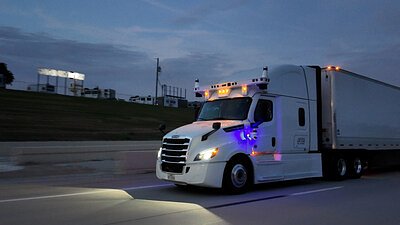
Robot Rigs Hit I-45: Bot Auto and Ryan Transportation Go Driverless
HOUSTON, TX – February 25, 2026 – The future of freight is set to roll down one of Texas's busiest highways this spring, but there will be no one in the driver's seat. In a landmark move for the logistics industry, autonomous transportation provider Bot Auto has announced a strategic partnership with Ryan Transportation, a top-20 national freight brokerage, to launch fully driverless, or "humanless," commercial truck runs between Houston and Dallas.
The collaboration marks one of the most significant steps toward the commercial-scale deployment of Level 4 autonomous technology in the United States. Bot Auto's AI-driven trucks will begin hauling freight for Ryan Transportation's customers along a critical 200-mile stretch of the I-45 corridor, integrating robotic logistics directly into a traditional brokerage network. This initiative moves autonomous trucking from the realm of testing and pilot programs to a live, operational service promising unprecedented reliability on a notoriously difficult route.
The Overnight Challenge on a High-Stakes Corridor
The initial deployment is strategically focused on an overnight lane connecting Houston to the southern Dallas-Fort Worth metroplex. This corridor is a vital artery for the Texas economy, but it presents persistent challenges for logistics operators. Overnight runs demand precision and consistency to meet tight delivery windows, a task complicated by human factors like driver fatigue, federally mandated hours-of-service (HOS) limits, and a chronic shortage of available drivers willing to take on nocturnal schedules.
Bot Auto's autonomous trucks are engineered to overcome these exact hurdles. An AI-driven vehicle does not get tired, is not subject to HOS regulations, and can operate around the clock, stopping only for refueling and maintenance. This capability allows for a level of service and asset utilization that is difficult to achieve with human-operated fleets.
"This is an opportunity to provide a high level of service on a lane for a customer who demands essential attention to detail, and our autonomous technology does exactly that," said Robert Brown, VP of Business Development at Bot Auto. "The overnight run is a perfect use case; the robot doesn't get tired, doesn't need a reset, and delivers with the same precision every single time."
The I-45 corridor between Houston and Dallas is one of the most heavily trafficked freight routes in North America, plagued by congestion that can derail schedules. By operating primarily overnight, Bot Auto's fleet can capitalize on lower traffic volumes, ensuring more predictable transit times and consistent on-time performance for Ryan Transportation's shipper clients.
A Strategic Alliance Marrying Tech with Tradition
This partnership is more than a technological showcase; it represents a pivotal business strategy for both companies. For Ryan Transportation, a well-established third-party logistics (3PL) provider with over 35 years in the industry, integrating Bot Auto's Transportation as a Service (TaaS) model is a forward-looking move to secure a competitive advantage. By adding a reliable, high-frequency capacity layer to its network, the brokerage can offer its customers a novel solution for time-sensitive freight.
"At Ryan Transportation, we're constantly evaluating new solutions that enhance service, safety and reliability for our shipper partners," stated Jeff Henderson, Senior Vice President at Ryan Transportation. "Forming this partnership is a strategic decision based on Bot Auto's proven technology and the role autonomous trucking will play long-term in logistics. It will strengthen our ability to provide dependable, high-frequency capacity on time-sensitive freight while maintaining the operational standards our customers expect."
This integration signals a maturing market where autonomous solutions are no longer just a theoretical concept but a practical tool for established logistics players. Rather than building a freight network from scratch, Bot Auto is providing its driverless fleet as a service, allowing traditional brokers like Ryan Transportation to leverage the technology without the massive capital investment required to develop it. This model could accelerate the adoption of autonomous freight across the industry.
The Texas Proving Ground: Regulation and Competition
The choice of Texas for this commercial launch is no accident. The state has cultivated one of the most permissive regulatory environments for autonomous vehicles in the country. A 2017 law, Senate Bill 2205, established a legal framework that allows for the operation of vehicles equipped with automated driving systems on public roads without a human driver physically present, provided the vehicles comply with traffic laws and are properly insured. This supportive legislation has turned Texas into a global hub for autonomous trucking development.
Bot Auto enters a competitive but fertile landscape. Other major players in the autonomous trucking space, including Aurora and Kodiak Robotics, have also established significant testing and freight-hauling operations in Texas, particularly along the Dallas-Houston-San Antonio triangle. The presence of multiple companies actively deploying their technology underscores the state's strategic importance and the industry's collective momentum toward commercialization. The launch of humanless operations by Bot Auto and Ryan Transportation, however, pushes the envelope, moving from driver-supervised or remote-monitored testing to fully autonomous commercial service on a dedicated lane.
Beyond the Wheel: The Economic and Human Equation
The arrival of driverless trucks on I-45 heralds a new era of efficiency but also raises profound questions about the future of work. Proponents of the technology point to immense economic benefits. Autonomous fleets can operate 24/7, dramatically increasing asset utilization and supply chain velocity. AI-optimized driving can improve fuel efficiency and, most importantly, proponents argue it can significantly reduce accidents, the vast majority of which are caused by human error.
For shippers, this could eventually translate into lower costs, greater predictability, and a powerful solution to the persistent driver shortage that has constrained capacity for years. However, this technological shift carries significant implications for the human workforce. Truck driving is one of the most common occupations in Texas and across the United States, and the prospect of automation raises legitimate concerns about job displacement.
While long-haul highway driving is the first segment being automated, the transition is expected to be gradual and transform, rather than simply eliminate, jobs. Industry experts anticipate a growing demand for human drivers in complex last-mile delivery routes within cities, a role that remains beyond the capability of current autonomous systems. Furthermore, this new ecosystem will create entirely new job categories, including remote fleet operators who monitor the vehicles from command centers, specialized technicians who service the complex sensor and computer systems, and logistics personnel who manage the interplay between autonomous and human-driven fleets. As the first driverless trucks prepare to roll out this spring, their journey on I-45 represents more than just a technological milestone; it marks the beginning of a profound transformation for the entire logistics industry, one that will be closely watched in Texas and beyond.