
- Starting Price: $45,000 for the base model (sub-$50K target for late-2027 Standard trim)
- Performance Specs: 656 horsepower, 0-60 mph in 3.6 seconds, 330-mile range (Performance model)
- Reservations: Over 68,000 in 24 hours
Experts view the Rivian R2 as a strategic pivot into the mainstream EV market, with its competitive pricing, performance, and charging advantages positioning it as a strong contender against Tesla and other rivals, though its success hinges on Rivian's ability to scale production efficiently.
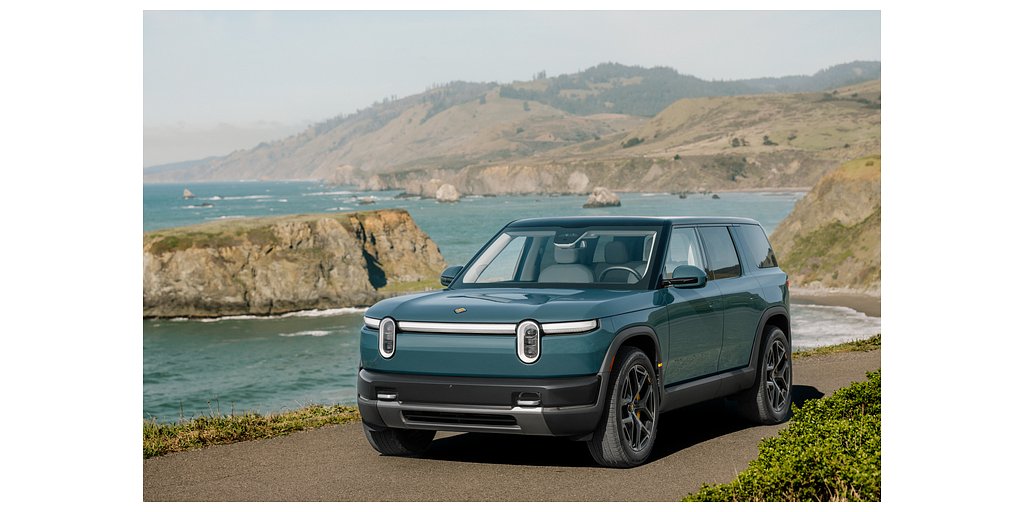
Rivian's Mainstream Gambit: R2 Targets Tesla with Sub-$50K SUV
IRVINE, CA – March 12, 2026 – American automaker Rivian has officially pulled the curtain back on its long-awaited R2, a mid-size electric SUV poised to steer the brand from its high-end adventure niche directly into the heart of the mainstream market. With a projected starting price around $45,000 for its base model and deliveries commencing in spring 2026, the R2 represents a critical test of Rivian's ability to scale production, compete with industry titans, and achieve long-term profitability.
The announcement details a vehicle that retains the company's signature rugged-yet-refined aesthetic while making significant concessions for accessibility. “R2 embodies so many of our learnings that we have accumulated—the passion and attention to detail from our team is visible everywhere,” said RJ Scaringe, Founder and CEO of Rivian, in the company's official release. The R2 is not just a new model; it's a strategic pivot designed to capture a wider audience without diluting the brand's adventurous spirit.
A Competitive Strike in the Heart of the EV Market
The R2 enters a fiercely contested arena dominated by the likes of the Tesla Model Y, Ford Mustang Mach-E, and Hyundai Ioniq 5. Rivian’s pricing strategy is aggressive, with the late-2027 Standard trim aiming for a sub-$50,000 price point that directly challenges its rivals. The initial wave of vehicles, the R2 Performance Launch Package, will start at $57,990 in spring 2026, followed by the $53,990 Premium trim in late 2026.
On paper, the R2 makes a compelling case. The top-tier Performance model boasts a staggering 656 horsepower, a 0-60 mph time of just 3.6 seconds, and an estimated range of 330 miles. Even the entry-level Rear-Wheel Drive model is projected to deliver an impressive 345 miles of range. These figures place it squarely in competition with the Tesla Model Y Performance, which offers a similar 0-60 time but a slightly lower estimated range of around 285 miles.
Where the R2 aims to differentiate itself is in utility and off-road-readiness. With 9.6 inches of ground clearance and superior approach and departure angles, it maintains the brand's go-anywhere DNA. Its boxier, more traditional SUV profile, measuring slightly shorter but wider and taller than a Model Y, prioritizes interior volume. The R2 offers a total of 90.1 cubic feet of enclosed storage, a class-leading 5.2 cubic-foot front trunk, and a completely flat-folding second row, features designed to appeal to families and adventurers who found the R1S too large or expensive.
The Billion-Dollar Question of Production
The enthusiastic market response—with Rivian securing over 68,000 refundable reservations for the R2 and its sibling, the R3, within 24 hours of the reveal—is a powerful vote of confidence. However, it also places immense pressure on the company’s manufacturing capabilities. Rivian's previous struggles with ramping up production for its R1T and R1S models are well-documented, and investors are watching closely to see if the company can avoid a repeat.
In a significant strategic shift, Rivian announced it will initially produce the R2 at its existing factory in Normal, Illinois, pausing plans for its new multi-billion-dollar Georgia plant. This decision is expected to save the company over $2.25 billion in capital expenditures, a crucial move as it pushes towards its goal of achieving profitability by the end of 2026. By leveraging a familiar facility and a more streamlined vehicle architecture, Rivian hopes to smooth its path to high-volume manufacturing.
Still, the timeline is aggressive. The first R2 models are two years away, and the most affordable variant won't arrive until late 2027. In the fast-moving EV market, this gives competitors ample time to refresh their own offerings. The execution of this production plan will be the ultimate determinant of the R2's success and, potentially, Rivian's long-term financial health.
Democratizing Adventure and Technology
Beyond the specs, the R2 is packed with the thoughtful design and technology that defined its predecessors. A standout feature is the fully retractable rear drop glass, which, along with the quarter windows, allows for an open-air experience and the easy transport of long items like surfboards. The interior also features dual glove boxes for enhanced storage and organization.
Technologically, the R2 is built on an AI-ready architecture with a new, simplified electrical system. It features a perception stack of 11 high-definition cameras and five radar units, which provides the foundation for its driver-assistance systems. Every R2 will come with the hardware for Autonomy+, Rivian's L2+ hands-free driving system. While the feature will be optional—available as a one-time purchase or monthly subscription—a 60-day trial will be standard, and it will be included for the lifetime of the vehicle with the limited Launch Package.
Inside the cabin, drivers will interact with two digital displays and a redesigned steering wheel featuring innovative haptic 'halo' dials. These context-aware controls provide tactile feedback, allowing drivers to perform various functions without taking their eyes off the road, blending the best of physical controls with software flexibility.
Plugging Into a Broader Network
Addressing one of the biggest hurdles for potential EV buyers, Rivian has equipped the R2 with a native North American Charging Standard (NACS) port. This move grants R2 owners seamless, adapter-free access to Tesla’s sprawling Supercharger network, significantly expanding charging options and alleviating range anxiety. This strategic decision is a major competitive advantage, putting Rivian on equal footing with Tesla in terms of charging infrastructure access.
When using a DC fast charger, the R2 is designed to charge from 10% to 80% in under 30 minutes, a rate competitive with the Ioniq 5 and Model Y. This combination of fast charging and broad network access makes the R2 a far more practical option for long-distance travel than previous Rivian models were at their launch. While Rivian will continue to build out its own Rivian Adventure Network, the integration of NACS is a pragmatic acknowledgment that a collaborative approach is essential for mainstream EV adoption.
Topics & Related
Software & SaaS
AI & Machine Learning
Venture Capital
Artificial Intelligence
Automation
Trade Wars & Tariffs
Private Placement
Revenue
Net Income
Cryptocurrency & Digital Assets
Related Company Pulse