
- 40-mile journey: Team Lighthouse Guild completed its fourth consecutive 40-mile ride through all five NYC boroughs.
- 50% less likely: Adults with vision impairment are 50% less likely to be physically active compared to the general population.
- Largest-ever contingent: The team featured its largest-ever group of blind and low-vision riders.
Experts in adaptive sports and inclusion advocate for the transformative power of team-based activities in challenging societal perceptions of disability, emphasizing that vision loss does not limit athletic potential or community engagement.
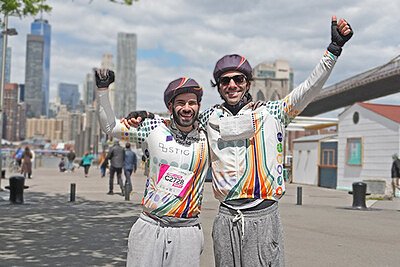
Riding for Recognition: How a Team of Visually Impaired Cyclists Conquered NYC
NEW YORK, NY – May 04, 2026 – For most of the 30,000-plus cyclists in the TD Five Boro Bike Tour, the sight of the Brooklyn Bridge is a breathtaking landmark. But for the riders of Team Lighthouse Guild, it was the sound that mattered most. As the team, a mix of sighted and visually impaired cyclists, rounded the corner on Sunday, the roar of dozens of supporters erupted, a wave of cheers and shouts that transcended the visual spectacle. For them, it was the sound of a city bearing witness.
On May 3, Team Lighthouse Guild completed its fourth consecutive 40-mile journey through all five boroughs, a testament to endurance, partnership, and an unwavering refusal to be defined by limitations. The team, which featured its largest-ever contingent of blind and low-vision riders, is more than just a charity group; it has become a powerful, rolling statement on the streets of New York, demonstrating that vision loss is no barrier to sport, community, or the thrill of conquering the city's iconic terrain.
The Power of the Tandem
At the heart of the team’s effort is the tandem bicycle, a machine that embodies trust and collaboration. Sighted “captains” pilot from the front seat, while visually impaired “stokers” provide power from the rear. This year, a notable partnership drew significant attention: Nev Schulman, host and executive producer of MTV’s ‘Catfish,’ served as a captain for low-vision rider Jeremy Morak.
The pair trained together in the weeks leading up to the tour, building the synchronicity and trust essential for navigating 40 miles of dynamic city streets. For Schulman, the experience was transformative. "Nothing prepared me for what it actually feels like to be trusted with someone's safety across 40 miles of New York City," he said. "Jeremy gave me that trust completely, and I wanted to do him justice. What this team did during the Tour really brings to life for me the refusal of letting limitations define you."
This partnership highlights the core of adaptive sports: it is not about disability, but about creative ability and collaboration. The tandem bike becomes a great equalizer, allowing athletes of all sight levels to share the same experience, the same burn in their legs, and the same triumphant feeling of crossing the finish line.
More Than a Ride: A Movement for Inclusion
While the 40-mile ride is a significant physical accomplishment, the mission of Team Lighthouse Guild extends far beyond the finish line. The event is a high-profile platform for fundraising and, more critically, for challenging deep-seated societal misconceptions about the capabilities of visually impaired individuals.
Research from organizations like RNIB/British Blind Sport reveals a stark reality: adults with a vision impairment are 50% less likely to be physically active compared to the general population. Barriers range from practical concerns about safety and a lack of accessible facilities to the profound psychological impacts of social isolation and a narrowed sense of what is possible. The consequences are not just physical; they ripple out, affecting independence, mental health, and social connection.
Team Lighthouse Guild exists to dismantle these barriers, one mile at a time. The funds raised from the tour directly support Lighthouse Guild's adaptive sports programs, providing the coaching, equipment, and opportunities needed to get more people active. Kiana V. Glanton, the team's coordinator and a blind rider herself, felt the impact of their mission in the cheers from the crowd.
"When we came through Brooklyn and heard our supporters cheering us on from the sidelines, something shifted in me. Not just pride, but recognition. This city sees us," Glanton shared. "For blind and visually impaired people, that visibility matters more than most people realise. Sport gives us back something that vision loss can take away: the feeling of being part of the action."
Redefining Possible: The Landscape of Adaptive Sports
Team Lighthouse Guild’s achievement is part of a larger, global movement in adaptive sports that has produced some of the world's most inspiring athletes. The narrative that vision loss equates to a sedentary life has been consistently shattered by individuals who have pushed the boundaries of human potential. Figures like Erik Weihenmayer, the first blind person to summit Mount Everest, and Lex Gillette, a multi-time Paralympic medalist in long jump whose motto is "No need for sight when you have a vision," have become icons of resilience.
From the ski slopes, where the visually impaired Aigner siblings won a trove of medals at the 2022 Winter Paralympics, to the swimming pool, where Trischa Zorn became the most successful athlete in Paralympic history, the message is clear: determination and adaptation trump limitation. These athletes, and the grassroots teams like Lighthouse Guild, are creating a new reality where participation in sports is not an exception but an expectation.
Organizations like the International Blind Sports Federation (IBSA) and the United States Association of Blind Athletes (USABA) have been instrumental in creating competitive frameworks for sports ranging from goalball and judo to track and field, fostering talent and providing a pathway to elite competition.
A Coalition of Support
The success of initiatives like Team Lighthouse Guild relies on a robust ecosystem of support that includes non-profit leadership, community engagement, and strategic partnerships. This year, the team’s participation was supported by STIG, a New York-based cybersecurity and managed IT solutions company sponsoring Lighthouse Guild's Adaptive Athletics program.
The collaboration illustrates a growing trend in corporate social responsibility, where businesses invest in community programs that align with their values. For STIG, the connection was clear. "At STIG, protecting and empowering the communities we serve goes beyond cybersecurity," said Nick Auletta, a Partner at the firm. "Sponsoring Team Lighthouse Guild's Adaptive Athletics program and watching this team conquer 40 miles across New York City is the kind of commitment we want to stand behind."
This coalition—combining the organizational strength of Lighthouse Guild, the public platform of advocates like Nev Schulman, the financial backing of corporate partners like STIG, and the vocal support of New Yorkers on the sidelines—creates a powerful force for change. As the riders of Team Lighthouse Guild crossed the finish line on Sunday, they carried with them not just the satisfaction of a personal achievement, but the collective energy of a community that refuses to remain unseen.