
- 2.5x better close-range performance than competitors, critical for tasks like bin picking and intricate assembly.
- 60 FPS at full resolution (1280x960), double the frame rate of many competing 30 FPS cameras.
- IP65 protection standard, addressing industrial deployment challenges.
Experts would likely conclude that RealSense's D585 Pro represents a significant leap in robotic perception, combining advanced hardware with a software-defined platform that could redefine how autonomous systems interact with the physical world.
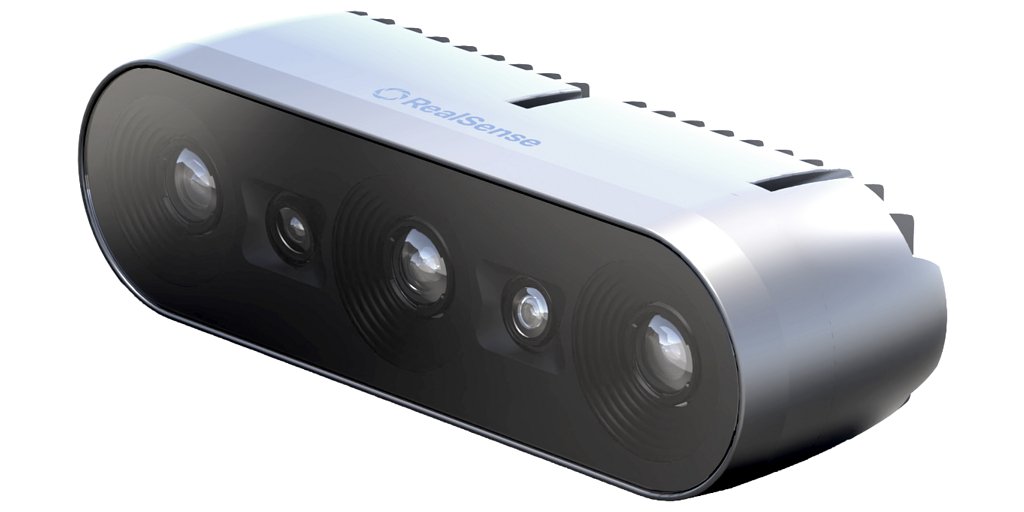
RealSense's New Camera Isn't Just Hardware—It's a Bet on AI's Physical Future
CHICAGO, IL – June 18, 2026 – At the Automate 2026 conference, a significant move was made not just in robotics hardware, but in the philosophy of how intelligent machines perceive the world. RealSense, a company spun out from Intel's formidable computer vision division, unveiled the RealSense™ D585 Pro. The company is billing it as an "AI-native" depth camera, but the announcement hints at a much larger ambition. CEO Nadav Orbach calls it "the actualization of the Visual Cortex of Physical AI™," a bold claim suggesting a fundamental shift in robotic vision. This isn't just another sensor; it's a strategic play to become the definitive sensory organ for the burgeoning world of autonomous systems.
A New Benchmark in Robotic Perception
The D585 Pro arrives with a spec sheet designed to turn heads. Powered by a proprietary Gen 5 system-on-chip (SoC), it claims over double the depth quality of its predecessors and 2.5 times better close-range performance than competitors. This is not just an incremental improvement. For applications like bin picking or intricate assembly tasks, the ability to see clearly at a sub-15-centimeter range is a critical barrier that has stymied many automation projects. While competitors like Orbbec have made strides in this area, RealSense's claims, if proven, would set a new standard for near-field precision.
The camera's capabilities extend far beyond close-quarters work. A wide 120x100° field of view, combined with a 10-meter-plus operating range, makes it equally suitable for the corridor-scale navigation required by autonomous mobile robots (AMRs) in sprawling warehouses. Furthermore, its ability to capture data at 60 frames per second at full resolution (1280x960) is double that of many competing 30 FPS cameras. This high frame rate is crucial for tracking objects on high-speed conveyors or for robots moving at a rapid pace, ensuring that the machine's perception doesn't lag behind its physical motion.
RealSense has also made IP65 protection against dust and water a standard feature, not a premium add-on. This directly addresses a major pain point for industrial integrators who often need to deploy robots in less-than-pristine factory or outdoor environments. It's a practical decision that signals a deep understanding of its target market's real-world needs, setting it apart from some competitors who may offer ruggedization as a costly option.
Beyond Hardware: The Software-Defined Future
Perhaps the most significant aspect of the D585 Pro is not its hardware, but its DNA as a software-defined platform. The era of static hardware with a fixed feature set is a major red flag for investors and developers in the fast-moving AI space. RealSense is tackling this head-on. The on-device Gen 5 SoC, with its dedicated AI accelerators, ships with capabilities like enhanced depth processing and person detection running at the edge, reducing the computational load on the robot's main processor.
But the real strategic masterstroke is the introduction of the RealSense Perception Studio. This beta program gives developers early access to new algorithms and, more importantly, promises a roadmap of future capabilities delivered via software updates to existing D585 Pro hardware. Planned updates include Visual-Inertial Odometry (VIO) for more robust navigation, occupancy grid generation for environmental mapping, and even face detection.
"The hardware is only half the battle," one robotics engineer noted on the condition of anonymity. "The real challenge is making sense of the data in real-time. Moving that processing to the edge, on the camera itself, is a game-changer for system complexity and cost." This approach transforms the camera from a simple component into an evolving perception system. Customers can deploy hardware with the confidence that its capabilities will grow over its lifespan, a powerful value proposition that directly counters the threat of rapid obsolescence. It's a model that shifts the focus from a one-time hardware sale to a long-term platform relationship.
Actualizing the 'Visual Cortex of Physical AI'
The term "Physical AI" is central to understanding RealSense's strategy. Unlike generative AI, which operates in the digital realm of text and images, Physical AI must sense, interpret, and act within the messy, unpredictable physical world. It's the intelligence that allows a humanoid robot to walk across an uneven sidewalk or an AMR to navigate a chaotic factory floor. RealSense is positioning its technology as the "Visual Cortex" for this new class of AI—the critical sensory and processing hub that translates raw visual data into actionable understanding.
"The D585 Pro is not just an update to what came before; it’s the actualization of the Visual Cortex of Physical AI™,” said Nadav Orbach, RealSense CEO. He emphasized that for the first time, developers can use a single camera for tasks ranging from close-up manipulation to long-range navigation, indoors and out. The camera's dual RGB sensors, which enable synchronized color and depth streams, are specifically designed to feed the complex Vision-Language-Action (VLA) models being developed for next-generation humanoid robots.
This vision is enabled by the custom Gen 5 SoC architecture. By integrating a depth engine, image signal processor, AI accelerators, and a quad-core ARM processor onto a single chip, the device can perform complex perception tasks on its own. This is the technical underpinning of the "Visual Cortex" concept: a self-contained system that processes visual information efficiently at the source, freeing up the robot's "brain" for higher-level decision-making.
Strategic Moves in a Competitive Field
The launch of the D585 Pro is a calculated move in a fiercely competitive market. After spinning out from Intel in 2025, RealSense needed to make a definitive statement to differentiate itself from both its own legacy and a host of aggressive competitors. With Intel having wound down its direct involvement, companies like Orbbec, staffed by many former RealSense engineers, and high-end players like Stereolabs have been vying to fill the void.
RealSense's strategy appears to be a multi-pronged attack. It is leveraging its deep heritage and brand recognition while pushing the technological envelope with on-device AI and a software-defined model. By targeting high-growth sectors like humanoid robotics, AMRs, and industrial automation, the company is aligning itself with the most demanding and potentially lucrative segments of the market. The announcement that multiple global developers of humanoid robots and AMRs are already evaluating the D585 Pro is a crucial signal of early market validation.
The Q1 2027 shipping date gives the market time to digest the announcement and for key partners to integrate the new technology into their development cycles. By building a platform that promises to simplify perception stacks and evolve over time, RealSense is making a compelling case to developers and system integrators. It is a bet that in the world of Physical AI, the most valuable component will not be the one with the best specs at launch, but the one with the greatest potential to grow smarter over time.