
- 1986: Rado became the first brand to mass-produce high-tech ceramic watches globally.
- 1,250: Vickers hardness scale rating of Rado's ceramic, making it five times harder than steel.
- 23%: Shrinkage rate of ceramic components during the sintering phase.
Experts recognize Rado's 40-year milestone as a defining moment in watchmaking, solidifying its reputation as a pioneer in high-tech ceramic innovation and setting industry standards for durability and design.
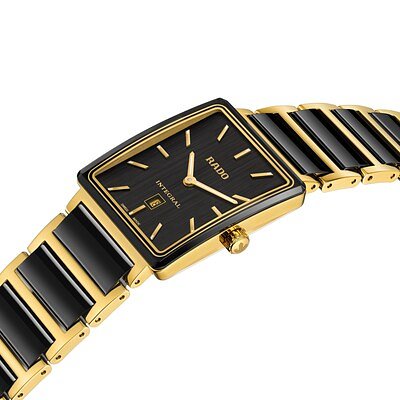
Rado's Ceramic Revolution: 40 Years of the Iconic Integral Watch
LENGNAU, Switzerland – April 10, 2026 – Rado, the Swiss watchmaker long celebrated as the ‘Master of Materials,’ is marking a pivotal 40-year milestone in horological innovation with the release of a special Anniversary Edition of its iconic Integral timepiece. The new watch commemorates the 1986 launch that saw Rado become the first brand to mass-produce high-tech ceramic watches on a global scale, a move that permanently altered the landscape of modern watchmaking and cemented the brand's identity for decades to come.
This anniversary is more than a product launch; it is a celebration of a material that has come to define the brand. As CEO Adrian Bosshard stated, "High-tech ceramic embodies everything Rado stands for: exceptional design, remarkable durability, and a smooth, silky touch." The new Integral serves as both a tribute to that legacy and a clear statement of the brand's continued commitment to material science.
A Legacy Forged in Ceramic
To understand the significance of the Integral, one must look back to the watch industry of the mid-1980s, a period dominated by traditional materials like stainless steel and gold. Rado, however, had already established a reputation for exploring unconventional materials with its 1962 DiaStar, the world's first scratch-proof watch made from ultra-hard tungsten carbide. This early work laid the foundation for a much larger ambition.
In 1986, that ambition was realized with the Rado Integral. It was a radical proposition: a watch with a stark, linear design where the case and bracelet flowed together seamlessly, crafted from a material previously seen only in high-tech fields like aerospace and medicine. While other brands like IWC also experimented with ceramic cases that same year, Rado's innovation was in its scale and integration. The Integral was the first collection to feature high-tech ceramic in a series-produced, globally available watch, crucially incorporating the material directly into the bracelet links. This holistic approach not only showcased the material's aesthetic potential but also its practical benefits of lightness and comfort on the wrist.
Originally launched as the DiaStar Anatom before being renamed Integral in 1988, the collection's clean lines and integrated construction became an instant design classic. Its success validated Rado’s risky but visionary bet on ceramic, setting the stage for subsequent icons like the fully ceramic Ceramica in 1990 and establishing a brand identity that remains inextricably linked to this futuristic material.
The Science of 'Feeling It'
Rado’s long-standing marketing tagline, “Feel it!”, is not merely a suggestion but an invitation to experience the tangible results of complex engineering. The high-tech ceramic used in the Integral and other Rado timepieces is a world away from traditional pottery. Its creation is a testament to meticulous scientific processes refined over four decades.
The journey begins with an ultrafine, high-purity powder of zirconium oxide. This powder is mixed with a specialized polymer binder and injected into precision molds under immense pressure, around 1,000 bar—nearly ten times the pressure at the deepest part of the ocean. After an initial baking stage, the polymer is chemically dissolved, leaving a fragile ceramic form. The critical transformation occurs during the sintering phase, where the components are heated in a high-tech furnace to an extreme 1,450°C. At this temperature, the individual ceramic particles fuse together, shrinking the component by about 23% and creating a material of incredible density and hardness.
The result is a material that measures approximately 1,250 on the Vickers hardness scale, making it five times harder than steel yet significantly lighter. This extreme hardness, which requires diamond tools for cutting and finishing, is what gives Rado watches their legendary scratch resistance. Beyond its durability, high-tech ceramic is hypoallergenic and possesses unique thermal properties, quickly adapting to the wearer's body temperature to provide a uniquely comfortable, skin-like feel. This combination of strength, lightness, and comfort is the science behind the sensation.
The Anniversary Edition: A Modern Icon Reborn
The new Integral 40-Year Anniversary Edition is a masterful exercise in balancing heritage with modernity. It faithfully captures the minimalist, geometric spirit of the 1986 original while elevating it with contemporary refinements. The watch retains its signature rectangular form and integrated bracelet, but the execution reflects 40 years of material evolution.
Polished black high-tech ceramic middle links—the direct descendants of the 1986 innovation—are framed by polished yellow gold-colored PVD-coated stainless steel, creating a timeless two-tone aesthetic that is both bold and elegant. The caseback features a special engraving, “SINCE 1986, ANNIVERSARY EDITION,” marking its commemorative status. A black, vertically brushed dial provides a subtle texture, while Super-LumiNova® coated hands ensure legibility. With sleek dimensions of 28.0 x 39.8 x 7.3 mm, the watch maintains a refined presence suitable for any wrist.
Navigating a Crowded Ceramic Landscape
While Rado pioneered the use of ceramic in watchmaking, the secret is long out. Today, the material is a staple in the luxury watch world. Brands like Omega and Rolex use it for durable, fade-proof bezels on their iconic dive watches. High-fashion houses like Chanel have built entire collections, such as the J12, around the material's chic appeal. Avant-garde brands like Hublot and IWC push the boundaries further, experimenting with brightly colored and complex ceramic cases.
In this crowded market, Rado's 40-year head start remains its greatest asset. While competitors often use ceramic as a high-performance feature, for Rado, it is the core of its identity. The brand's expertise is not just in using ceramic, but in mastering its every facet—from color and finish to the complex manufacturing that allows for its signature integrated designs. This deep, specialized knowledge allows Rado to offer the benefits of high-tech ceramic at a more accessible price point than many of its Swiss counterparts, democratizing a material that is still considered exotic elsewhere.
To celebrate this milestone, Rado is embarking on a series of global events, beginning with an exclusive tour of its high-tech ceramic production facility at Comadur in Switzerland. A key launch event will be held in New York City in partnership with Time+Tide, a leading global watch media platform. This strategic collaboration is designed to engage the dedicated community of watch enthusiasts and collectors, leveraging a trusted editorial voice to tell the story of the Integral's enduring legacy. By honoring the watch that started it all, Rado not only celebrates its past but also charts a confident course for its future, one forged in the enduring brilliance of high-tech ceramic.