
- Record Revenue: $522.9 million in Q3 2025, up 13.4% year-over-year
- AI Growth: Digital Health segment revenue surged 51.6%, with AI-specific revenue up 112% year-over-year
- Expansion: Acquisition of Radiology Regional adds 13 imaging centers, expected to bring $100 million in annual revenue
Experts would likely conclude that RadNet's strategic leadership promotions and AI-driven growth strategy position the company as a frontrunner in the shift toward proactive, data-driven healthcare.
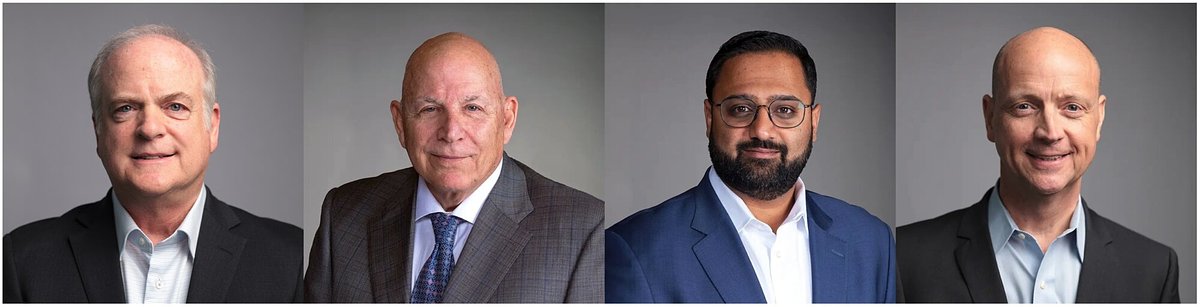
RadNet Taps Veteran Leaders to Drive AI-Powered Growth Strategy
LOS ANGELES, CA – January 07, 2026 – RadNet, Inc., a national leader in diagnostic imaging, today announced a significant restructuring of its executive team, promoting four veteran leaders to expanded roles. The move comes as the company leverages record-breaking financial performance to accelerate its strategic shift from reactive diagnostics toward a future of proactive, AI-driven disease prevention.
The promotions, effective immediately, elevate Stephen Forthuber to President and Chief Executive Officer of Eastern Operations and Norman Hames to President and Chief Executive Officer of Western Operations. Mital Patel has been named Executive Vice President and Chief Operating Officer, while Dr. Greg Sorensen, a key architect of the company's technology strategy, becomes Chief Strategy Officer. The appointments signal RadNet's intent to solidify its market leadership and aggressively pursue innovation across its vast network.
"RadNet has achieved industry-leading growth, including record financial performance across both our Imaging Center and Digital Health segments in recent quarters," stated Dr. Howard Berger, President and Chief Executive Officer, RadNet. "As we look ahead, we are boldly working to shape a future where healthcare moves from reactive detection toward proactive disease prevention. These leadership transitions position us well to continue our strong growth journey, while remaining focused on what matters most: delivering accessible, high-quality, patient-centered care."
Capitalizing on Unprecedented Momentum
The leadership shuffle is not happening in a vacuum. It is a direct response to a period of extraordinary growth for the imaging giant. In the third quarter of 2025 alone, RadNet reported a record total revenue of $522.9 million, a 13.4% increase over the prior year. More telling, its burgeoning Digital Health segment, which houses its artificial intelligence solutions, saw revenue soar by 51.6%, with AI-specific revenue rocketing an astonishing 112% year-over-year.
This financial strength is fueled by surging patient volumes, particularly in high-margin advanced imaging like MRI, CT, and PET/CT scans, which saw double-digit growth. The company's strong performance has led it to raise its full-year 2025 financial guidance multiple times, now projecting total revenues approaching $2 billion. This robust financial footing, combined with a strong cash position, provides the capital needed for both strategic acquisitions and internal investment in technology.
Just today, RadNet also announced the acquisition of Radiology Regional, a network of 13 imaging centers in Southwest Florida expected to add approximately $100 million in annual revenue. This move exemplifies the company's strategy: expand its physical footprint while simultaneously planning to deploy its proprietary DeepHealth AI portfolio to enhance clinical accuracy and screening programs in the newly acquired centers.
Deepening the Bench with Veteran Leadership
The promotions highlight RadNet's strategy of relying on seasoned, internal talent to navigate its ambitious path. The appointments of Stephen Forthuber and Norman Hames grant them CEO-level authority over their respective coastal operations, empowering regional leadership to drive growth more effectively. Both are long-serving executives with decades of experience. Forthuber has managed the company's Eastern operations, which account for roughly 60% of its revenue, since 2006. Hames has led the Western operations since 1996, having previously built and sold his own network of imaging centers to the company.
Stepping into the newly centralized role of Executive Vice President and Chief Operating Officer is Mital Patel. His promotion is a testament to his deep operational expertise and influence within the organization. Having joined RadNet in 2010 through an acquisition, Patel has been instrumental in driving day-to-day operational efficiency, managing budgets, and advising the board on corporate acquisitions. His new role will be critical in standardizing best practices and integrating new technologies across RadNet's national network of 407 centers.
This focus on experienced internal leaders is designed to ensure stability and seamless execution as the company tackles the dual challenges of rapid expansion and technological transformation in a competitive healthcare environment.
The Architect of a Proactive Future
Perhaps the most strategically significant promotion is that of Dr. Greg Sorensen to Chief Strategy Officer. A physician, engineer, and former CEO of Siemens Healthcare North America, Dr. Sorensen joined RadNet through its 2020 acquisition of DeepHealth, an AI startup he led. As the company's former Chief Science Officer, he has been the driving force behind its AI development, particularly in the realm of breast cancer detection.
His new role formally places him at the helm of RadNet's long-term vision. This vision is centered on the DeepHealth platform, which uses deep learning algorithms to improve diagnostic accuracy and efficiency. A prime example is the company's Enhanced Breast Cancer Detection (EBCD) program, which uses AI as a "second reader" for mammograms, a service that has seen rapid adoption and contributed significantly to the Digital Health segment's growth.
Dr. Sorensen's promotion codifies the company's commitment to moving beyond simply providing scans. The strategy is to leverage its massive trove of imaging data to build and deploy AI tools that can detect disease earlier and more accurately than humanly possible. This pivot aligns with the broader healthcare industry's push towards preventative care, aiming to identify risks and intervene before conditions become chronic and costly.
Redefining Diagnostics in a Competitive Market
RadNet operates in a crowded field, competing with other national providers like RAYUS Radiology and equipment manufacturers like Siemens Healthineers, which are also investing heavily in AI. However, RadNet's key differentiator is its unique position as both a massive provider of imaging services and a developer of proprietary AI solutions.
By integrating its DeepHealth tools directly into the workflow of its 407 imaging centers, RadNet creates a powerful feedback loop. It can rapidly deploy new algorithms, gather data on their performance, and refine them at a scale few competitors can match. This vertical integration allows the company to not only improve care within its own network but also to market its AI solutions as a service to other hospitals and imaging practices.
As healthcare continues its slow but steady march toward a model based on prevention and early detection, companies that can effectively harness data and AI will hold a distinct advantage. With its newly fortified leadership team and a clear strategic focus on technology, RadNet is positioning itself not just as a leading provider of diagnostic images, but as a technology company poised to shape the future of preventative medicine.
Topics & Related
Acquisition
Artificial Intelligence
Machine Learning
ESG
Revenue
Diagnostics
Medical Devices
AI & Machine Learning
Software & SaaS
ChatGPT
Related Company Pulse